Belgium's Tactical Comeback Against Senegal in World Cup Round of 32
Belgium’s 3-2 extra-time win over Senegal at Lumen Field in this World Cup Round of 32 tie was a tactical arm-wrestle that flipped twice: first in Senegal’s favour through a direct, transition-heavy 4-3-3, then decisively towards Belgium once Rudi Garcia reconfigured his 4-2-3-1 around Romelu Lukaku’s presence and Youri Tielemans’ late surges.
Belgium started in a textbook 4-2-3-1: Thibaut Courtois in goal, a back four of Timothy Castagne, Brandon Mechele, Arthur Theate and Maxim De Cuyper; Hans Vanaken and Tielemans as the double pivot; Leandro Trossard, Kevin De Bruyne and Jérémy Doku supporting Charles De Ketelaere as a nominal lone striker. On paper it offered central control and wide 1v1 threat, but the first hour exposed a structural problem: De Ketelaere’s tendency to drift away from the last line left Senegal’s centre-backs unpinned, allowing them to step into midfield and compress space around De Bruyne.
Bouna Thiaw Pape’s Senegal, in a 4-3-3, leaned into verticality. Full-backs Krépin Diatta and Ismail Jakobs stayed relatively conservative early, while the front three of Sadio Mané, Ismaïla Sarr and Iliman Ndiaye attacked the channels aggressively. The midfield trio of Habib Diarra, Idrissa Gana Gueye and Pape Gueye (before his substitution) were tasked with jumping on Belgian build-up triggers, especially when the ball travelled into Vanaken or Tielemans with their back to play.
That approach paid off with the opener: Diarra’s 25th-minute strike for Senegal came from precisely the pattern Senegal sought – a quick, direct attack that exploited Belgium’s rest defence before the double pivot could set a screen in front of Mechele and Theate. When Sarr made it 2-0 on 51 minutes, assisted by Moussa Niakhaté, it underlined Senegal’s plan: win the first duel, play early into the wide forwards, and attack Belgium’s back line before it could recover its shape.
Senegal 2 - 0 Belgium (51 minutes)
Statistically, Senegal’s strategy created the better quality chances. Their xG of 3.54 from 19 shots (5 on goal, 3 blocked) dwarfed Belgium’s 1.8 from an identical 19 attempts (5 on goal, 5 blocked). That Senegal produced more xG with the same shot volume points to the clarity of their chance profile: more shots from central, high-value zones and more situations where the final action came after beating Belgium’s initial press.
Belgium, however, compensated with territorial control and volume. They edged possession 52% to 48%, completed 602 of 699 passes (86%), and built long, multi-pass sequences that gradually wore down Senegal’s midfield line. Senegal were not passive in possession either – 536 accurate passes from 639 (84%) shows they could circulate the ball, but their game model was less about long spells of control and more about moving quickly from back to front once the pressing trap was sprung.
The turning point came with Garcia’s substitutions. At 46 minutes, Romelu Lukaku (IN) came on for Charles De Ketelaere (OUT), giving Belgium a true reference point. Lukaku’s presence forced Senegal’s centre-backs to defend deeper and more narrowly, opening half-spaces for De Bruyne and Trossard. On 56 minutes, Nicolas Raskin (IN) for De Bruyne (OUT) and Dodi Lukebakio (IN) for Doku (OUT) rebalanced the attacking line: Lukebakio offered direct running from wide, while Raskin provided fresh legs and more vertical passing from midfield.
These changes gradually shifted the game’s geography. Belgium’s full-backs could now push higher, with De Cuyper and Castagne stepping into wide midfield zones to pin Senegal’s wingers back. The shot map reflected this: 11 of Belgium’s 19 efforts came from inside the box, mirroring Senegal’s 10, but increasingly those Belgian shots arrived after sustained pressure rather than isolated breaks.
The late goals that forced extra time were a direct consequence of this structural shift. On 86 minutes, Lukaku finished from a Thomas Meunier cross after Meunier (IN) had replaced De Cuyper (OUT) at 78 minutes, a substitution that loaded Belgium’s right flank with crossing quality. Three minutes later, Tielemans arrived from deep to level at 2-2, finishing a move assisted by Trossard. Both goals showcased Belgium’s reconfigured attacking scheme: Lukaku occupying both centre-backs, wide full-backs delivering, and the double pivot staggering their positions so that one (Tielemans) could attack the box late while the other held the rest defence.
Extra time became a question of physical and mental resilience layered on top of these tactical patterns. Senegal’s bench rotations – Lamine Camara (IN) for Pape Gueye (OUT) on 66 minutes, Pape Matar Sarr (IN) for Diarra (OUT) and Ibrahim Mbaye (IN) for Ndiaye (OUT) at 73 minutes, El Hadji Malick Diouf (IN) for Jakobs (OUT), Nicolas Jackson (IN) for Mané (OUT) at 93 minutes, and Bara Sapoko Ndiaye (IN) for Idrissa Gana Gueye (OUT) at 96 minutes – refreshed legs but did not fundamentally alter the 4-3-3 structure. The front line still looked to run in behind, yet the distances to goal grew longer as Belgium compressed the field.
In goal, Thibaut Courtois (Belgium) made 3 saves, but the xG against figure of 3.54 combined with a goals prevented value of -0.61 indicates he underperformed relative to the quality of chances faced; Senegal will feel they could have scored more. At the other end, Mory Diaw (Senegal) also recorded 3 saves, with the same goals prevented value of -0.61 against Belgium’s 1.8 xG, suggesting that while he conceded three times, the underlying shot quality would have justified closer to two goals against on average.
Discipline subtly reflected the game’s intensity. Belgium committed 22 fouls to Senegal’s 12, a sign of how often they were forced to halt transitions, especially once chasing the game. The card ledger stayed light but telling: at 64 minutes, Brandon Mechele (Belgium) received a yellow card — Foul — emblematic of Belgium’s need to break up a Senegalese attack. Three minutes later, Lamine Camara (Senegal) was booked — Foul — as Senegal tried to stem Belgium’s growing momentum in midfield. The foul count underscores Belgium’s more reactive defending for large stretches, particularly before their late surge.
Belgium 2 - 2 Senegal (86 minutes)
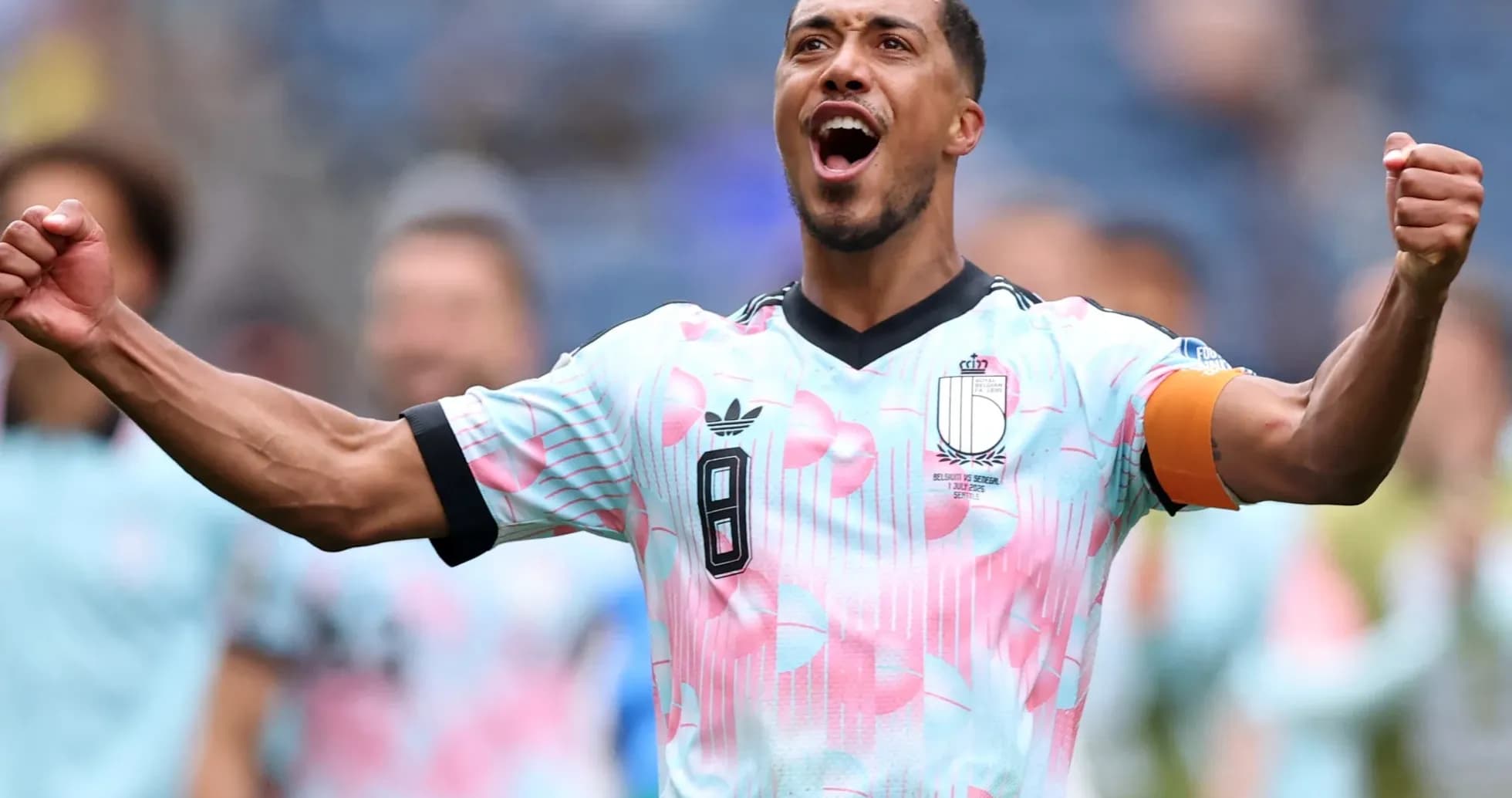
The decisive moment arrived deep into extra time. At 120+5 minutes, Tielemans converted from the penalty spot for his second goal of the night, capping Belgium’s comeback. The award was followed by a VAR check, with a “Penalty confirmed” event at 120 minutes, embedding video review directly into the scoring sequence. Tactically, the penalty was the culmination of Belgium’s sustained pressure and box occupation in the closing stages, with Senegal’s defence increasingly stretched and forced into last-ditch challenges.
From a statistical verdict, the match sits at the intersection of process and moments. Senegal’s higher xG and equal shot volume suggest their attacking plan was more efficient in generating clear chances. Their 3 blocked shots versus Belgium’s 5 also hint that Belgium’s back line was more often in last-second intervention mode. Yet Belgium’s superior pass completion, territorial dominance, and the impact of Garcia’s in-game adjustments delivered the decisive edge.
In season-style terms, Belgium’s overall form template — possession-heavy, pass-dominant, reliant on late surges from midfield and the penalty box gravity of Lukaku — held under knockout pressure, even if their defensive index on the night was shaky against elite transition. Senegal’s display, by contrast, was that of a high-ceiling, transition-oriented side whose game plan produced enough to win, but which ultimately could not withstand the cumulative territorial and structural pressure Belgium applied across 120 minutes.