Barcelona's Financial Crisis: From Bartomeu's Legacy to Laporta's Gamble
When Josep Maria Bartomeu finally walked away from the Barcelona presidency in October 2020, he left behind more than a political vacuum. He left wreckage. A club that had once defined excellence on and off the pitch was suddenly staring at sporting decline and financial collapse.
On paper, his spell in charge didn’t look like a disaster. Four Liga titles. A treble in 2014-15. But the numbers behind the trophies told a different story: Barca were skirting bankruptcy.
Bartomeu has always blamed the pandemic. This year, he again insisted to EFE that Covid-19 alone blew a hole in the club’s finances: no stadium, no ticketing, no museum, no merchandising, no football schools. Revenue vanished, he argued, and like “the vast majority of clubs in Europe”, Barca simply borrowed to get through.
The problem is, very few clubs were hit as brutally as Barcelona. And that was no coincidence.
The €1bn spree that broke Barca
From July 2015, when Bartomeu rode the treble wave to re-election, until his resignation in 2020, Barcelona signed 29 players for just over €1 billion. Not a single one could be called an unqualified success.
Some were outright disasters. Ousmane Dembele, Philippe Coutinho, Antoine Griezmann – marquee names, astronomical fees, and contracts that distorted the entire wage structure. The club’s payroll ballooned, even as La Liga quietly warned its members not to let salaries exceed 70 per cent of annual income.
Bartomeu brushed that off. “We are above what is recommended but the important thing is to be sustainable,” he said. “We can afford it.” They couldn’t. Not when the world shut down.
By the time Covid hit, Barca were saddled with an ageing squad on colossal wages and virtually no resale value. When Joan Laporta returned as president in March 2021, he walked into a crisis. The most painful decision came quickly: letting Lionel Messi, the club’s greatest player and its highest earner by a distance, leave for nothing when his contract expired that summer.
“I did what I had to do,” Laporta later told El Pais. Messi was nearing the end, he argued, and a new team had to be built. Laporta wanted to build it around Messi. Circumstances said no.
Messi’s departure, though, was only a symptom. The disease ran deeper. Barca needed a structural fix, not just one colossal salary off the books.
Laporta’s gamble: sell tomorrow to survive today
At that point, Laporta faced a fork in the road.
“Laporta basically had two options,” explains Marc Menchen Alba, CEO of Barcelona-based 2Playbook. One route: slash wages, sell anyone with a market, accept two or three years of mediocrity, and crawl back slowly. The other: drag in as much money as possible, as fast as possible, by selling off future assets – and try to win again immediately.
Laporta chose the second path.
The most dramatic move came in the summer of 2022. Barcelona raised €582m by selling 25 per cent of their Liga broadcasting rights for the next 25 years to Sixth Street. It was the biggest of several so-called “economic levers” Laporta pulled to plug the holes.
In simple terms, Barca mortgaged a chunk of their future income to cover present-day deficits. The logic was clear: short-term success would accelerate long-term recovery. Menchen remembers his reaction. “I remember thinking at the time, this is a bold move. But I didn’t like it because I thought there were safer ways to go about it.”
On the pitch, the early payoff was undeniable. Those levers funded a rebuild: Robert Lewandowski from Bayern Munich for €45m, plus Raphinha and Jules Kounde for a combined €108m. Barcelona went on to win La Liga in 2022-23, their first title in four years.
The bill, though, kept coming due every summer. “Laporta’s high-risk move led to Barca suffering nearly every summer,” Menchen notes. Registration battles became an annual soap opera. The summer of 2024 was especially fraught.
Fan revolt and the breaking point
The tension around Camp Nou – and around the stadium’s seemingly endless redevelopment – began to spill over. The Dani Olmo saga crystallised the frustration. Supporters had heard enough about levers, promises, and last-minute financial gymnastics.
Fan group Som un Clam went public with a blistering statement. They called the situation “inadmissible” and the damage to the club’s reputation “irreparable”. They accused the board of “continuous lies” and “false promises that are never fulfilled”.
Their charge sheet was damning: in just four years, they argued, Barca had “decapitalised” the club by selling strategic future assets to patch over “chaotic and improvised management”. They claimed there was still no solid medium- or long-term financial plan, and demanded an end to improvisation and “irresponsible” sales that threatened the club’s ownership model.
Som un Clam called for Laporta and the entire board to resign and urged fans to mobilise “before the institution degrades” further. For them, the vicious circle of short-term fixes was endangering both the club’s heritage and its member-owned identity.
Laporta, though, held his ground. He rode out the storm. And 18 months later, the picture looks very different.
Back to basics: La Masia and lean spending
Barcelona’s last campaign was defined by restraint. Only one major signing arrived: goalkeeper Joan Garcia from Espanyol, snapped up for his €25m release clause. A necessary addition, but hardly a galactico splash.
At the same time, Barca quietly cashed in. They sold a raft of players, many of them La Masia products, generating almost twice Garcia’s fee. Those academy graduates counted as pure profit on the balance sheet.
“You can see with the likes of Lamine Yamal and Pau Cubarsi just how important La Masia is,” Menchen says. These players step into the first team already attuned to Barca’s style, cutting the need for big transfer outlays.
But the academy now serves a second, equally vital function. “La Masia also means producing players with a relatively high market value,” Menchen points out. In recent windows, Barca have become far more ruthless – and efficient – in selling youngsters who won’t make the senior cut.
Where once prospects drifted away for nothing, now 18- and 19-year-olds barely known to most fans leave for €5m or €10m fees. Those sums matter when you are fighting to meet strict budget rules.
Real Madrid have followed a similar blueprint with La Fabrica, offloading academy talent to help fund major signings such as Yan Diomande. Between them, Barca and Madrid invest €20-30m annually in their youth systems. This year, both are cashing in.
Big sales, big exits – and the Alvarez question
This summer, Barca’s transfer business has again been aggressive, but more calculated. Spending has been heavy, yet offset by key departures.
Paris Saint-Germain’s decision to pay €48.5m for Ferran Torres delivered a crucial windfall. Lewandowski’s exit on a free transfer removed one of the biggest salaries from the books. Liverpool’s agreement to cover Ronald Araujo’s entire wage during his loan at Anfield eased the pressure further.
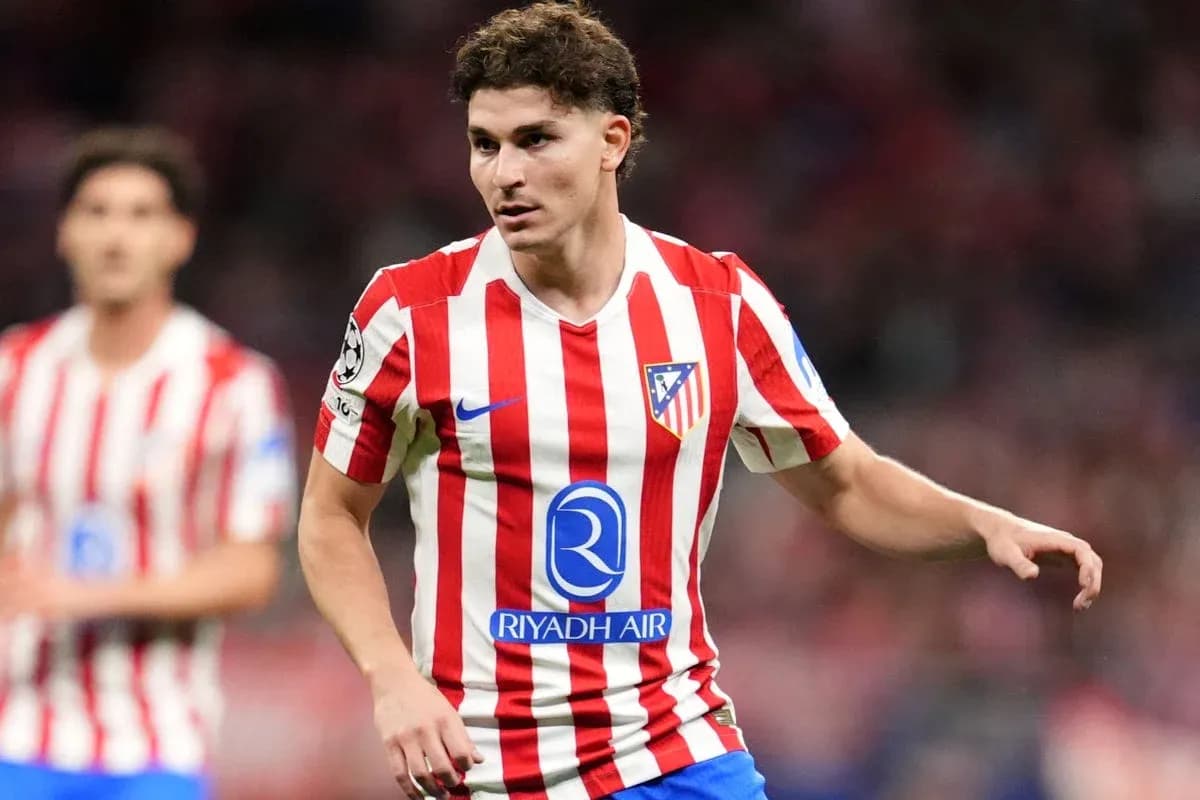
All of which raises the obvious question: can Barcelona now move for Julian Alvarez to replace Lewandowski up front?
Menchen is cautious. As things stand, he doesn’t see it as straightforward. But one more “pure profit” sale from La Masia could change the equation.
“This is a cash-flow business,” he explains. Sell someone like Marc Casado for €30m and you can effectively fund Alvarez’s cost for this season, because transfer fees are amortised over the length of the contract. The accounting mechanics turn one big sale into several years of manageable expense.
Combine that with the eventual reopening of the new Camp Nou, a surge in museum revenue, and the return of mass tourism to Barcelona, and the outlook shifts again. Menchen believes the club could finally operate with full financial freedom next summer for the first time since before the pandemic.
The end of the levers era?
So, are Barcelona’s financial nightmares over?
“For now,” Menchen says. His lingering concern is the €40m the club continues to pay annually to Sixth Street for those Liga rights. For a club aiming at €1bn in yearly revenue, it’s not a crippling figure. But at the very top, titles are decided on fine margins. That €40m could be the difference in a transfer battle with Real Madrid.
Even so, Menchen sees “the beginning of the end” of Barca’s most serious problems. Laporta’s decision to pull the levers was high-risk, the kind of move a president sometimes has to make. With Barcelona having won three of the last four Liga titles, he will feel vindicated.
Menchen still believes some of Laporta’s spending should have been avoided. Fewer speculative signings might have spared Barca from selling away future TV income. But the club is no longer living from lever to lever.
“We still don’t know exactly what will happen further down the line,” he warns. Yet one line now defines the new reality: Barcelona are no longer in a position where they have to pull any more levers.
For a club run in a “weird and crazy” way for far too long, the real test starts here. Can Barca stay disciplined when the next superstar comes onto the market – or will old habits drag them back into danger?