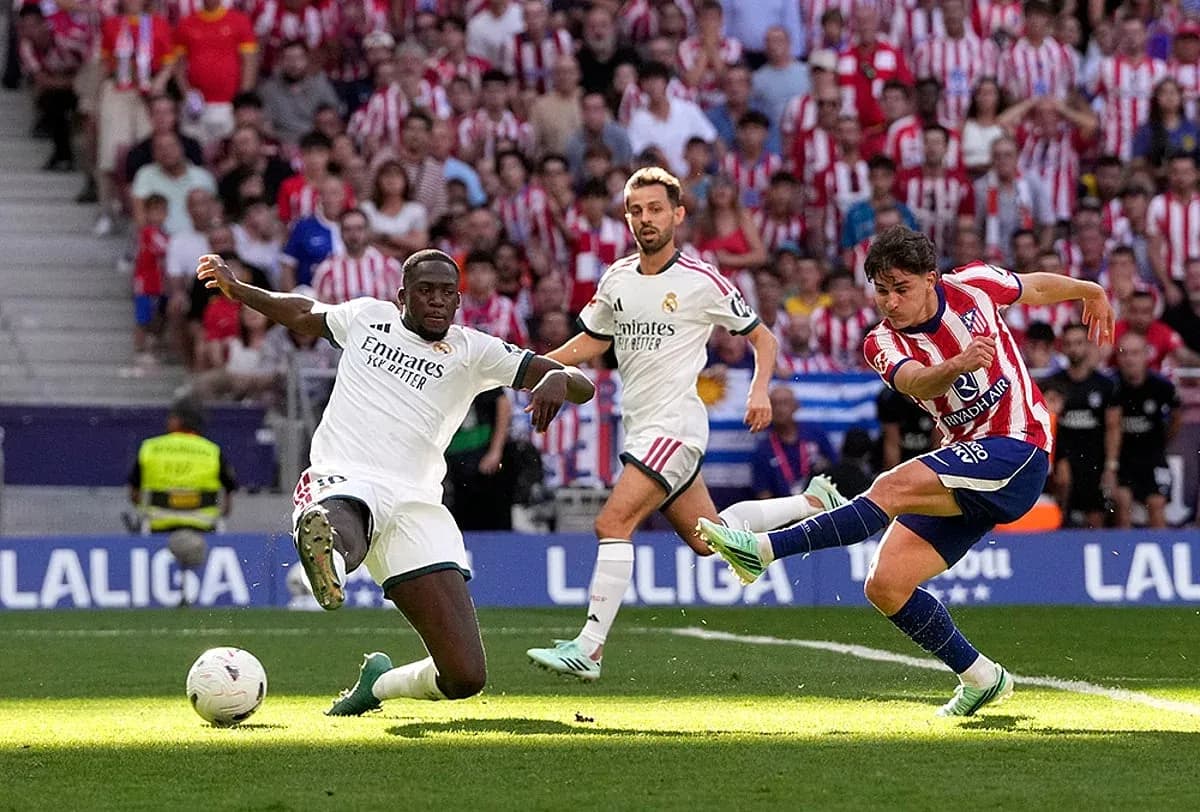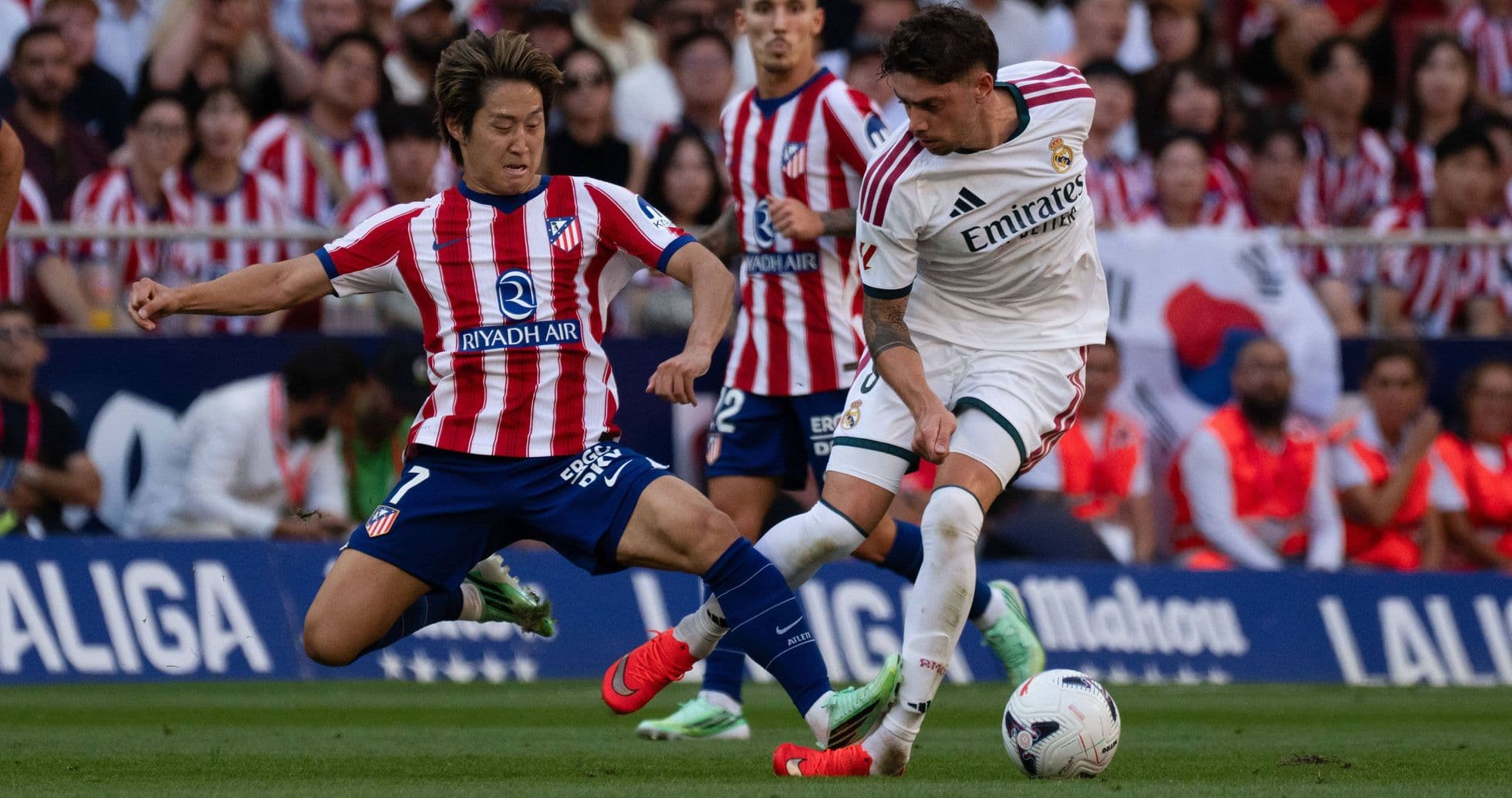
Barcelona vs Real Madrid: Title Decider at Camp Nou
Barcelona host Real Madrid at Camp Nou in La Liga on 10 May 2026 in Regular Season - 35, with the fixture carrying direct title-race weight: Barcelona sit 1st on 88 points and can all but close out the championship, while 2nd-placed Real Madrid on 77 points must win to keep any realistic pressure alive over the final three rounds.
Head-to-Head Tactical Summary
The recent meetings underline a high-tempo, chance-rich rivalry with both sides prepared to attack aggressively.
On 11 January 2026 in the Super Cup Final at King Abdullah Sports City in Jeddah, Barcelona beat Real Madrid 3-2 (HT 2-2), a game shaped by open defending and both teams trading blows in transition.
In La Liga on 26 October 2025 at Estadio Santiago Bernabéu, Real Madrid edged Barcelona 2-1 (HT 2-1), showing Madrid’s capacity to control a lead once established at home.
On 11 May 2025 in La Liga at Estadi Olímpic Lluís Companys in Barcelona, the hosts won 4-3 against Real Madrid (HT 4-2), reflecting Barcelona’s explosive attacking start but also some late-game defensive vulnerability.
In the Copa del Rey Final on 26 April 2025 at Estadio Olímpico de Sevilla, Barcelona defeated Real Madrid 3-2 after extra time: 2-2 in regular time (HT 1-0, FT 2-2) before Barcelona found a decisive goal in extra time, again underlining their capacity to outscore Madrid in long, open contests.
On 12 January 2025 in the Super Cup Final at King Abdullah Sports City in Jeddah, Real Madrid (home designation) lost 5-2 to Barcelona (HT 1-4), with Barcelona racing into a dominant advantage and sustaining a high-conversion attacking performance.
Across these five matches, Barcelona have four wins (3-2, 4-3, 3-2 after extra time, 5-2) and Real Madrid one (2-1), with no low-scoring encounters, pointing toward another tactically expansive El Clásico.
Global Season Picture
- League Phase Performance:
In the league phase, Barcelona lead La Liga with 88 points from 34 matches (29 wins, 1 draw, 4 losses), scoring 89 goals and conceding 31, for a +58 goal difference. Their home record is perfect: 17 wins from 17, with 52 goals for and 9 against.
In the league phase, Real Madrid are 2nd with 77 points from 34 matches (24 wins, 5 draws, 5 losses), with 70 goals for and 31 against, a +39 goal difference. Away from home they have 10 wins, 4 draws and 3 defeats, scoring 31 and conceding 17. - Season Metrics:
Scope detection: team_statistics games played (34) match the standings totals (34), so these metrics are also In the league phase.
Barcelona show an extremely productive attack and solid control structure: 89 league goals (2.6 per match on average) with only 31 conceded (0.9 per match). They have 14 clean sheets and have failed to score in 0 league games, underlining a consistently dangerous forward unit. Their typical shapes are 4-2-3-1 (24 matches) and 4-3-3 (10 matches), supporting a possession-first, high-positioning approach. Disciplinary output is manageable but concentrated in the second half, with yellow cards peaking between 46-60 and 76-90 minutes, indicating aggressive pressing phases late in each half.
Real Madrid mirror Barcelona’s defensive numbers with 31 conceded (0.9 per match) but are slightly less explosive in attack at 70 goals (2.1 per match). They have 12 clean sheets and have failed to score in 3 matches. Their tactical palette is broader, with 4-4-2 (16 matches) as the main reference, alongside 4-2-3-1 and 4-3-3, suggesting more flexibility but also less continuity than Barcelona. Their yellow cards also cluster after the half-hour mark, particularly between 61-75 minutes, pointing to increased defensive stress as matches open up. - Form Trajectory:
In the league phase, Barcelona’s standings form string is “WWWWW”: five consecutive wins, perfectly aligned with their broader statistics form run that features long winning streaks and only isolated setbacks. They are peaking at the decisive stage of the calendar.
In the league phase, Real Madrid’s standings form “WDWDL” shows a more uneven recent pattern: three wins, one draw and one loss in their last five. Combined with their season form sequence, it indicates strong medium-term performance but with occasional drops that have allowed Barcelona to open an 11-point gap.
Tactical Efficiency
With no explicit numerical Attack/Defense Index provided in the comparison block, the efficiency picture must be inferred from league-phase production and prevention.
Barcelona’s attacking efficiency is elite: 89 goals from 34 matches (2.6 per match) with no league game in which they have failed to score. The distribution of big wins (up to 6-0 at home and 0-3 away) and a high clean-sheet count suggests a side that converts territorial dominance into goals at a very high rate while maintaining structural balance (31 goals conceded, 0.9 per match). The repeated use of 4-2-3-1 and 4-3-3 supports an aggressive pressing and positional play model that has been consistently effective against both mid-table and top opponents, as reflected in their recent head-to-head superiority over Real Madrid.
Real Madrid’s Attack/Defense profile is strong but fractionally less efficient in attack: 70 goals (2.1 per match) with similar defensive output (31 conceded, 0.9 per match). Their clean-sheet count (12) and failure-to-score figure (3) indicate a more variable attacking conversion rate. The variety of formations (4-4-2, 4-2-3-1, 4-3-3 and others) points to tactical adaptability but also suggests that the optimal balance between control and penetration has been harder to lock in than Barcelona’s more stable blueprint.
In direct tactical terms, Barcelona’s capacity to sustain high-scoring outputs against Real Madrid in finals and league matches, combined with their perfect home league record (17 wins, 52-9 goals), gives them a superior “efficiency index” heading into this fixture: they turn chances into multi-goal margins more reliably, while conceding at the same rate as Madrid over the season.
The Verdict: Seasonal Impact
From a seasonal perspective, this Clásico is a potential title decider.
If Barcelona win at Camp Nou, they move to 91 points with three matches remaining, extending the gap to Real Madrid to 14 points. In practical terms, that would lock the title in Barcelona’s favour, given both the points margin and their overwhelming goal difference advantage (+58 versus Real Madrid’s +39). A draw would also heavily favour Barcelona, preserving an 11-point cushion and reducing the remaining fixtures to a formal confirmation exercise.
For Real Madrid, only a win keeps the title race mathematically and psychologically alive. Victory would cut the gap to 8 points with three matches to play, still a tall order but at least forcing Barcelona to maintain their current intensity and leaving a slim window for late-season volatility. Given Barcelona’s perfect home record and five-game winning streak in the league, Madrid must target an unusually high-level away performance, both tactically and mentally, to disrupt a champion-elect.
In strategic terms, this match is less about top-4 security—both teams are already clear in the Champions League positions—and entirely about the title axis. Barcelona can transform a dominant season into an unassailable position with a statement home result; Real Madrid are effectively playing for survival in the race. The seasonal impact is therefore asymmetrical: Barcelona can clinch control of the championship here, while Madrid’s objective is simply to delay the coronation and keep a narrow theoretical path open into the final weeks of 2026.