Australia Unites for Socceroos' World Cup Stalemate
Australia used to grind to a halt for a horse race. On Friday, it stopped for a stalemate.
Nil-nil. Paraguay held. Job done.
The Socceroos’ point was enough to punch their ticket to the World Cup knockout phase for a second straight tournament, and the country wrapped itself around 90 tense minutes played, for once, entirely inside Australian working hours.
A nation clocks off at kickoff
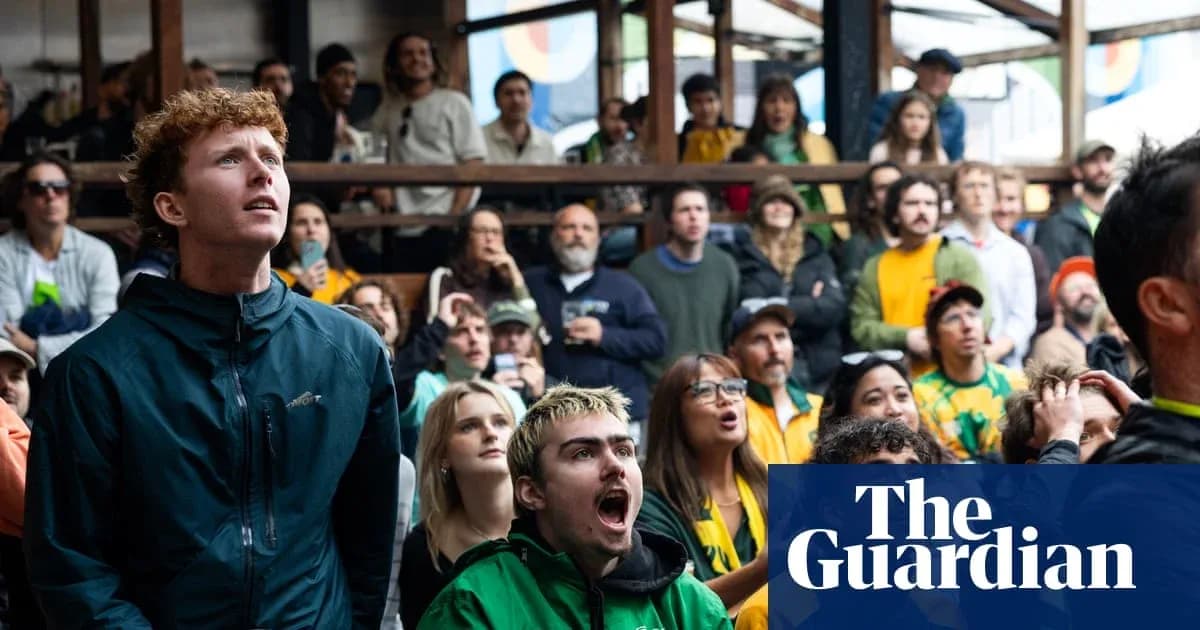
By late morning, city pubs looked less like watering holes and more like improvised fan zones. Gold and green shirts, office lanyards, high-vis vests and half-open laptops shared the same sticky tables.
At the Golden Barley in Sydney’s inner west, small business owners Jamie and Rick Hayman had long since decided that spreadsheets could wait. Rick, who runs a local construction company, tapped away at work admin between attacks, his staff crowded around the screen.
He has followed the Socceroos “forever”, but what struck him on this grey Friday was not tactics or formations. It was the crowd.
“It unites the community,” he said. “That’s what you notice. Pubs get filled up, there’s all the talk around town, it’s really good to see.”
Beside the brothers, four old friends had turned the front row of the bar’s TV into their own private terrace. Nick, Guinness in hand, had claimed his seat when the doors opened. He wore a relic of Australian football history: an authentic 1974 Socceroos jersey, the year the country first stepped on to the World Cup stage.
Nick and his partner Robyn have done the hard yards over the years, the 3am alarms, the bleary-eyed school runs, the familiar ritual of watching the national team on the other side of the world.
“We were just saying this morning, we used to wake up in the middle of the night, it used to be really good,” he said with a laugh. “It’s a unique experience. A family experience.”
This time, the family experience came with a lunch menu and a full-strength crowd.
Rain, nerves and a howling dog
Down the road at the Vic on the Park, the scene was more crush than comfort. Hundreds of fans packed in shoulder to shoulder, the air thick with that strange mix of hope and dread that only a goalless decider can produce.
When the rain swept through during the first half, jackets and Socceroos scarves doubled as makeshift umbrellas, ponchos were dragged from bags and pulled over heads. No one moved away from the screens.
Eighty minutes gone. Still 0-0. A few “Aussie, Aussie, Aussie” chants broke out, ragged but defiant, and somewhere in the front bar a dog joined in, its howl swallowed by the noise.
As the clock crawled into added time, the tension finally cracked. Cheers ricocheted off the walls. A bald man with a stick-on Australian flag tattooed to his head grabbed his mates in a bear hug. The result wasn’t glamorous, but it was enough. Everyone in the room knew what that meant.
Some had planned for this. Leave forms lodged as soon as the World Cup schedule dropped. Others winged it.
Sophie and her son Orson, a year 11 student, were among those who had already endured the pain of watching Australia lose 2-0 to the USA early last Saturday morning at the same pub. This time, Orson had skipped the last day of term. Sophie tapped away on her phone, working quietly while the match unfolded.
“This is of national importance,” she said. “I really want Oscar to hear a goal in the pub, just to hear us lift.”
He didn’t get the roar for a goal, but he got something else: the roar of survival.
Oscar, who dreams of becoming a football coach, looked around at the packed room and saw more than a match.
“Football’s growing,” he said. “It’s been brilliant, so cool to see so many people supposed to be working coming to support their country.”
Federation Square heaves
In Melbourne, the country’s unofficial outdoor fan park, Federation Square, turned into a sea of yellow and green hours before kickoff. Victoria Police put the crowd at 7,500. The square hit capacity by 10am. Those who came late were left to peer in from the edges.
Groups killed time with high-stakes games of bottle flip, the kind of trivial contest that suddenly feels epic when thousands are watching. Successful flips drew wild, almost tearful celebrations. Around them, teenagers bragged about “wagging” school, others about the parents who had waved them out the door with a nod and a “Go on then”.
When the national anthem rang out, seven flares burst into orange life, smoke curling over the square. The moment ended with the arrest of a 16-year-old.
Every so often, a surge rippled through the mass of bodies, sending fans stumbling in unison. Each time they regained their footing, thousands spun as one, turned towards the unseen culprit and let fly with a single, sharp insult.
“Wanker.”
Police later said three teenagers received penalty notices for riotous behaviour and were moved on. The square barely missed a beat.
Former Socceroo Craig Foster watched it all from the heart of the action. On the pitch, he saw a team doing exactly what the moment demanded.
He called it a “near perfect game” for Australia.
“The squad depth has been demonstrated,” he said. “They’ve done exactly what was required … Australia is managing well, learning very quickly, and it’s a beautiful day anytime the Socceroos get through to knockout rounds.
“We are here. We’re still in this tournament, and we’re fighting all the way. There’s nothing better in life.”
For teenager Ali Abolhasani and his friend, the day veered closer to chaos. They described being swept forward, crushed against the barricade, tumbling to the ground and losing their shoes in the scramble.
Asked how he felt after the final whistle, Abolhasani didn’t need long.
“Amazing.”
“I can’t wait to come back next week,” he said. “We did an all-nighter, we couldn’t sleep because we knew we’d make it … We’ll do it again.”
Capital fever
Even Canberra, often slow to show its colours, surrendered to World Cup fever. More than 500 fans crowded into Garema Place, craning their necks towards two modest screens that suddenly felt far too small for the occasion.
Among them, ACT senator David Pocock, a former Wallabies captain, watched the same story play out: a diverse crowd, united by a team that looks and sounds like the country it represents.
“The Socceroos, as it’s been talked about this week in parliament, represents what is so great about Australia,” he said. “We do have so many people from diverse backgrounds coming together, and you see the way that that resonates across the country.”
On a day when the scoreboard barely flickered, the real numbers were everywhere else – in packed pubs, in wagged classes, in overloaded squares and makeshift fan zones.
Australia didn’t win. It didn’t need to.
The Socceroos are still alive, and a nation that once woke in the dark for them is now wide awake, in the middle of the working day, ready to do it all again when the knockout rounds come calling.