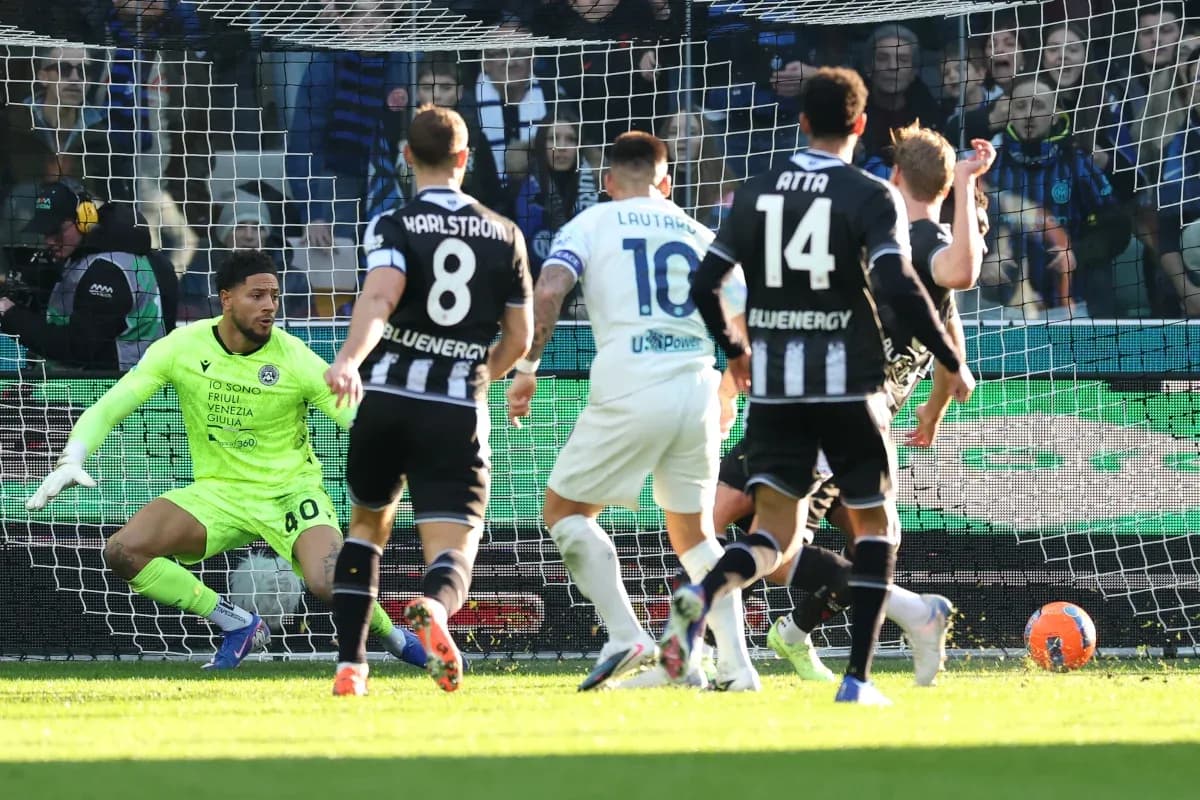
Atalanta vs Cagliari: Tactical Analysis of a 2-1 Defeat
The New Balance Arena closed its doors on a chill Bergamo evening with a sense of disquiet for the home crowd. Atalanta, under Maurizio Sarri, had led early in this Regular Season - 4 clash, only to see Cagliari turn the night on its head and walk away with a 2–1 away win. Following this result, the table tells a blunt story: Atalanta sit 11th with 6 points and a goal difference of 0 (5 scored, 5 conceded overall), while Cagliari climb in the early Champions League conversation, 4th on 9 points with a goal difference of 2 (4 scored, 2 conceded overall).
Yet the numbers only hint at the deeper tactical narrative that unfolded.
I. Atalanta’s structure: Sarri’s 4-3-3 searching for control
Sarri stayed loyal to the 4-3-3 that has defined Atalanta’s early season – they have used it in all 4 league matches. M. Carnesecchi anchored the side behind a back four of R. Bellanova, O. Kossounou, G. Scalvini and S. Kolasinac. On paper, this is a back line built to dominate territory: Bellanova and Kolasinac as aggressive full-backs, with Kossounou and Scalvini comfortable defending high.
In midfield, L. Samardzic, F. Kessie and Ederson formed a technically strong but physically demanding trio. Kessie, the natural pivot, was asked to both shield transitions and step into the half-spaces to support circulation. Samardzic and Ederson alternated between dropping to help build and pushing beyond the first Cagliari line.
Up front, the trio of C. De Ketelaere, G. Scamacca and J. Rowe offered a blend of size, link play and direct running. Scamacca was the reference point, with De Ketelaere drifting between lines and Rowe tasked with stretching the pitch wide and vertically.
Heading into this game, Atalanta’s season profile already contained a warning: at home they averaged 1.3 goals scored and 1.0 conceded, but overall their defensive record was fragile, with 1.3 goals conceded per match. They had yet to fail to score in any league game, but their clean-sheet count was only 1 in total. This match reinforced that fragility. Even with territorial control, the defensive line struggled to manage Cagliari’s vertical surges once possession was lost.
The disciplinary context also mattered. Gianluca Gaetano, Atalanta’s top red-card holder this season, was suspended after his dismissal earlier in the campaign. His absence removed a two-way midfielder who had contributed both intensity and control (6 tackles, 5 interceptions overall), forcing Sarri to lean more heavily on Kessie and Ederson to balance risk. Without Gaetano, Atalanta’s midfield lacked a natural “stopper” when Cagliari broke through the first press.
II. Cagliari’s compact defiance: Pisacane’s 4-4-1-1
Fabio Pisacane arrived in Bergamo with a quietly impressive record: Cagliari had 3 wins from 4 overall, conceding only 2 goals in total. On their travels, they had been ruthless – 2 away wins from 2, scoring 3 and conceding just 1, with an away defensive average of 0.5 goals conceded per match. This fixture followed that pattern: absorb, survive, and strike.
Pisacane’s 4-4-1-1 was pragmatic and disciplined. E. Caprile stood behind a back four of J. Pedro, A. Deiola, J. Rodriguez and A. Obert. The choice of Deiola as a central defender was significant: he is one of the league’s leading card collectors, but also a defensive specialist. Across the season he has made 8 tackles, 4 interceptions and blocked 4 shots, a profile that translated here into a rugged, front-foot style of defending against Scamacca.
Ahead of them, the midfield line of M. Adopo, A. Romano, H. Winks and J. Fazzini blended work rate and progression. Winks orchestrated from deep, while Adopo – one of Serie A’s leading assist providers with 2 assists and 8 key passes overall – offered vertical passes and late runs. D. Maldini operated off the front, linking to lone striker P. Mendy, whose job was to occupy Atalanta’s centre-backs and threaten in transition.
Cagliari’s season-long defensive discipline framed their approach. Overall they concede only 0.5 goals per match, with 2 clean sheets in 4 games. Their card distribution hints at where they like to disrupt: 20% of their yellows arrive in the opening 15 minutes, 40% between 46–60 minutes, and another 20% late (76–90), showing a side that is unafraid to foul in key phases to reset the game’s tempo. That edge was visible in Bergamo, where they repeatedly broke up Atalanta’s rhythm just as Sarri’s side tried to accelerate after half-time.
III. Tactical voids and absences
Atalanta’s missing list was heavy in midfield and defensive rotation: Gaetano (red card), I. Hien (muscle injury) and K. Sulemana (knee injury) all out. Hien’s absence reduced Sarri’s options for a more athletic, recovery-focused centre-back to counter Cagliari’s counters, while Sulemana’s energy in midfield was also unavailable. It forced Atalanta into a more possession-oriented, less destructive profile, which suited Cagliari’s counter-attacking script.
Cagliari, for their part, travelled without M. Felici and R. Idrissi (both knee injuries), M. Nzola (lacking match fitness) and Y. Trepy (injury). The absence of Nzola, a potential focal point up front, made Pisacane’s decision to start Mendy even more central: Cagliari had to rely on collective movement and the second line, rather than a pure target man, to hurt Atalanta.
On the Atalanta bench, the presence of N. Krstovic – one of the league’s more card-prone attackers with 1 yellow overall – hinted at a possible late, more direct plan. But Sarri’s core issue was not firepower; heading into this match, Atalanta had never failed to score this season. It was control without the ball that again betrayed them.
IV. Key matchups: Hunter vs Shield, and the engine room duel
The “Hunter vs Shield” duel centred on Atalanta’s frontline against Cagliari’s miserly defence. At home, Atalanta scored 4 goals in 3 matches (1.3 per game), while Cagliari’s away unit had conceded just 1 in 2. In Bergamo, the Shield won: Cagliari held Atalanta to a single goal, again matching their away average of 0.5 goals conceded per match when stretched over a small sample.
Individually, Scamacca’s battle with Deiola and Rodriguez was a bruising, attritional affair. Deiola’s season profile – 17 duels, 10 won overall – underpinned his willingness to step tight, challenge early and accept the risk of cards to deny clean touches into feet. With Bellanova and Kolasinac pushing high, Atalanta needed their centre-forward to both finish and connect; Cagliari’s central pairing largely prevented that.
In the engine room, Kessie and Ederson were pitted against Winks and Romano, with Adopo drifting inside to overload. Adopo’s season numbers – 148 passes with 8 key passes and 2 assists – were a clear indicator of his creative weight, and again he functioned as Cagliari’s vertical outlet. Whenever Atalanta’s press broke down, Winks and Adopo combined to bypass the first line and release Maldini between the lines, forcing Kossounou and Scalvini into uncomfortable backward running.
V. Statistical prognosis and what this result tells us
Following this result, the season’s statistical arc for both sides hardens. Atalanta remain a high-variance team: 2 wins and 2 losses from 4 overall, scoring 5 and conceding 5. Their home record – 2 wins, 1 loss from 3, with 4 scored and 3 conceded – confirms that they can impose themselves in Bergamo but are one mistake away from letting games slip. With only 1 clean sheet overall and a red-card history that includes Gaetano’s dismissal (their only red, arriving in the 91–105 minute band where their red-card percentage is 100.00%), discipline and defensive structure are their obvious fault lines.
Cagliari, by contrast, look like a side built from the back forward. Overall they have 3 wins and 1 loss, with 4 goals scored and only 2 conceded. On their travels they are perfect: 2 away wins from 2, 3 scored and 1 conceded, and a defensive average of 0.5 goals per away match. Their single penalty of the season has been converted, and with no penalties missed they carry a quiet efficiency in decisive moments.
If we project forward on the basis of these trends, the xG-style prognosis for similar fixtures would favour Cagliari’s defensive solidity over Atalanta’s attacking volume. Atalanta’s attacking metrics suggest they will continue to create enough to score roughly once per home match, but their concession rate of 1.3 goals overall leaves them constantly exposed to narrow defeats like this one.
The narrative of the night in Bergamo, then, fits the numbers: a possession-heavy Atalanta side, undermined by structural absences and defensive looseness, undone by a Cagliari team whose compactness, discipline and intelligent use of Adopo, Winks and Maldini between the lines turned half-chances into a decisive away win.