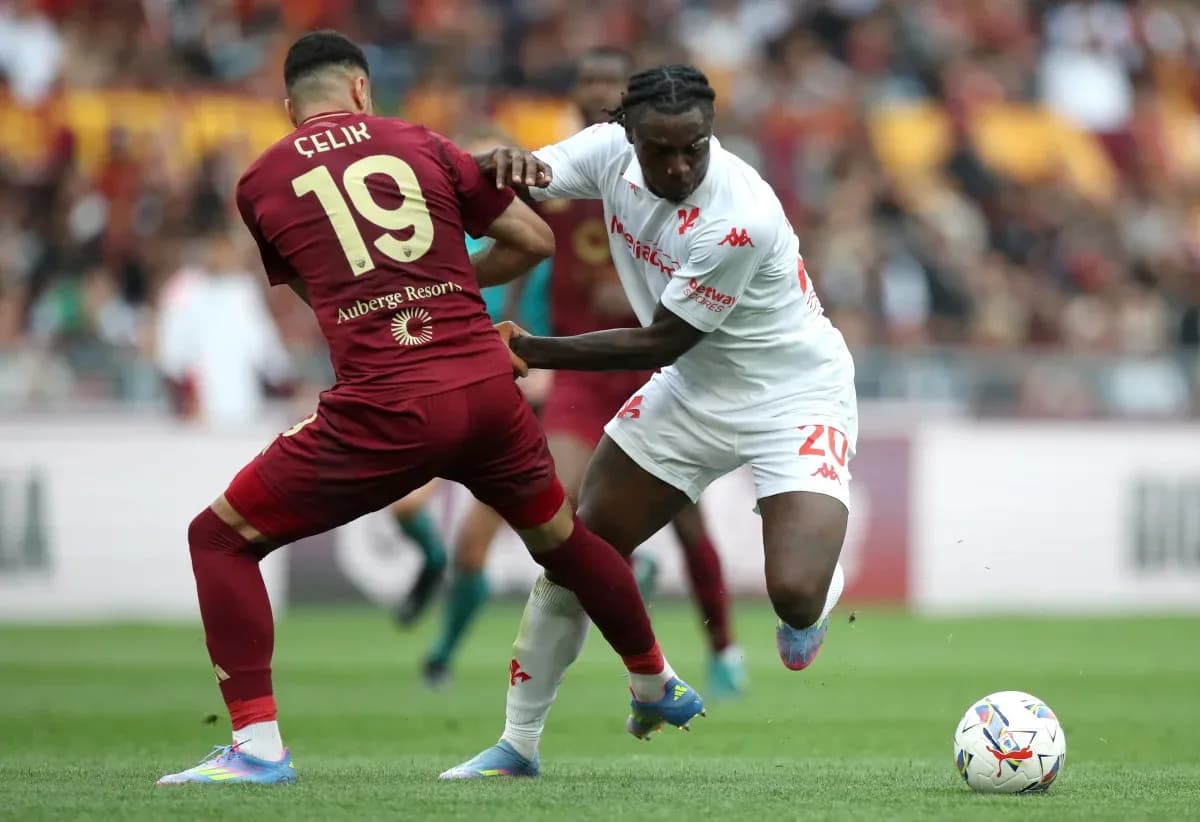
AS Roma Dominates Fiorentina 4-0 in Serie A Clash
Under the Roman lights of Stadio Olimpico, this Serie A night felt less like a routine league fixture and more like a statement of hierarchy. In round 35 of the 2025 season, AS Roma, sitting 5th with 64 points and a goal difference of 23, dismantled 16th‑placed Fiorentina 4‑0, a scoreline that matched both the table and the season-long identities of these two sides.
Roma came into the game with the swagger of a team whose campaign has been built on solidity and sharp edges. Overall this season they had scored 52 and conceded 29 across 35 matches, a balance that reflects a compact 3‑4‑2‑1 base and ruthless transitions. At home, they had been even more formidable: 31 goals scored and only 10 conceded in 18 outings, averaging 1.7 goals for and 0.6 against. That defensive parsimony framed everything about Piero Gasperini Gian’s selection and structure.
The back three of M. Svilar behind G. Mancini, E. Ndicka and M. Hermoso formed a tight triangle, the foundation for a side that prefers to defend in numbers and break with purpose. Ahead of them, Z. Celik and Wesley Franca stretched the pitch as wing‑backs, while N. Pisilli and M. Kone provided the central engine. In the half‑spaces, M. Soule and B. Cristante floated between lines, feeding and orbiting around D. Malen, Roma’s cutting edge and one of Serie A’s most efficient forwards this season with 11 league goals and 2 assists in just 15 appearances.
Fiorentina, by contrast, arrived in Rome as a team still searching for stability. Their overall record of 38 scored and 49 conceded, with a goal difference of -11, tells of a side too porous to sustain their attacking intentions. On their travels they had managed only 18 goals in 18 matches, conceding 29 at an average of 1.6 per away game. Paolo Vanoli’s choice of a 4‑3‑3 was bold but risky against a Roma side that thrives on exploiting space behind adventurous full‑backs.
The absences only deepened the tactical divide. Roma were missing a whole tier of attacking and creative options: A. Dovbyk (groin injury), E. Ferguson (ankle), L. Pellegrini (thigh) and B. Zaragoza (knee), with N. El Aynaoui suspended for yellow cards. On paper, that should have blunted their edge between the lines. In practice, it simply shifted more responsibility onto Soule and Cristante to knit play and onto Malen to finish.
Fiorentina’s own injury list stripped them of attacking alternatives and defensive flexibility. M. Kean, their leading scorer with 8 league goals, was out with a calf injury. R. Piccoli (muscle injury) and L. Balbo (injury) further reduced their forward depth, while T. Lamptey (knee) and N. Fortini (back injury) limited their full‑back rotation. It meant that the front three of J. Harrison, A. Gudmundsson and M. Solomon had to carry both the threat and the pressing burden, without the safety net of a proven scorer on the bench.
From the first whistle, the match became a showcase of Roma’s season-long DNA. The 3‑4‑2‑1 morphed into a suffocating 3‑2‑5 in possession, with Celik and Wesley Franca pinning Fiorentina’s full‑backs deep and Soule drifting into the right half‑space to dictate tempo. Soule’s season numbers – 6 goals, 5 assists, and 43 key passes – were reflected in his role as the creative metronome, constantly receiving between Fiorentina’s lines and threading passes into Malen’s diagonal runs.
Malen, already a top‑five scorer in the league, attacked the channels between centre‑back and full‑back, particularly targeting the spaces around M. Pongracic and L. Ranieri. Pongracic, a defender with 11 yellow cards this season and 66 fouls committed, is an aggressive front‑foot stopper who relishes contact. Against Malen’s acceleration and timing, that aggression became a liability: Roma repeatedly tempted him into stepping out, then played around him, opening corridors for through balls and cutbacks.
Defensively, Roma’s structure suffocated Fiorentina’s 4‑3‑3. Mancini, one of Serie A’s most combative defenders with 67 fouls committed and 9 yellow cards, set the tone in duels. His partnership with Ndicka and Hermoso allowed Roma to defend with three against Fiorentina’s front line while keeping wing‑backs high. When Fiorentina tried to build through Gudmundsson dropping off the front, Mancini or Kone stepped in to disrupt; when they went wide to Harrison or Solomon, Celik and Wesley Franca were aggressive enough to prevent sustained crossing pressure.
Fiorentina’s best hope lay in the interplay between Gudmundsson and the overlapping R. Gosens on the left. Gudmundsson, who has 5 goals, 4 assists and even a red card to his name this season, is at his best when he can receive to feet, turn and drive. But Roma’s compact mid‑block funneled him inside into traffic, where Cristante and Pisilli crowded him out. The visitors’ 4‑3‑3 often flattened into a 4‑5‑1 without the ball, yet their distances were too stretched to contain Roma’s rotations.
Discipline and card profiles underpinned the emotional texture of the game. Heading into this match, Fiorentina had a worrying late‑game disciplinary pattern: 25.00% of their yellow cards arriving between 76‑90', and both of their red cards this season also coming in that late window. Roma, by contrast, spread their cautions more evenly, with a noticeable cluster between 46‑75' (a combined 46.16% of their yellows). That contrast foreshadowed how the second half would unfold: Roma able to manage the tempo and aggression, Fiorentina increasingly ragged as they chased shadows.
Roma’s season‑long penalty record – 4 from 4, a perfect 100.00% – added a latent threat every time Malen or Soule drove into the box. Fiorentina’s defenders, already walking a disciplinary tightrope, could not afford the kind of desperate challenges that might have offered Roma a fifth from the spot.
By full time, the 4‑0 felt less like an outlier and more like the logical conclusion of the underlying numbers. Roma’s home averages of 1.7 goals for and 0.6 against met a Fiorentina away side scoring only 1.0 and conceding 1.6, and the gap in quality and cohesion was brutally exposed. The “Hunter vs Shield” duel between Malen and a Fiorentina defence anchored by Pongracic and Ranieri was decisively won by the Roma striker’s movement and Roma’s collective structure.
From an analytical standpoint, the Expected Goals story would almost certainly mirror the scoreboard: Roma’s sustained pressure, volume of box entries and high‑value chances against a defence that has shipped 49 overall this season suggests a clear xG advantage. Fiorentina, limited in both territory and shot quality, were reduced to low‑probability efforts.
Following this result, the trajectories of these two clubs diverge even more sharply. Roma, with 20 wins from 35 and 16 clean sheets overall, look every inch a Europa League side built on defensive solidity and incisive attacking patterns. Fiorentina, with only 8 wins and a negative goal difference of -11, remain trapped in a season where tactical ambition is repeatedly undercut by structural fragility and disciplinary frailty.
On this night in Rome, the numbers did not just sit in the background; they played out in real time, painted across 90 minutes of football that confirmed exactly what the season had been telling us all along.