Arsenal's Title Race: Lewis-Skelly's Remarkable Comeback
The roar inside the London Stadium never stood a chance.
Chris Kavanagh raised the microphone to his mouth, the big screen froze on Pablo Fornals and David Raya, and time seemed to drip rather than move. Ninety-fifth minute. Callum Wilson thought he had broken Arsenal hearts and blown a hole in their title charge. Then came the words that changed everything.
“Final decision, direct free-kick.”
For West Ham, devastation. For Arsenal, deliverance. For Ian Wright, pure theatre. Asked on Sky Sports if those were the sweetest words he had ever heard, the club legend reached straight for the grandest of comparisons. “The sweetest words since Martin Luther King’s ‘I have a dream’,” he said, half-laughing, half-ecstatic, fully committed to the moment.
Inside the away dressing room, Myles Lewis-Skelly could feel the walls shaking.
Relief, faith and a title race on the line
Arsenal’s 1-0 win did more than tighten the screw on West Ham’s relegation fight. It pushed Mikel Arteta’s side five points clear of Manchester City with two games left: Burnley at home, Crystal Palace away. City still have that game in hand and a run-in of Palace at home, Bournemouth away, Aston Villa at home. The margins are thin. The mood is not.
“It is just a huge sense of relief,” Lewis-Skelly said, before the adrenaline dragged more out of him. “Joy, excitement, fulfilment – everything you can describe. We are buzzing, but we know that the job is not done. We have got two more finals left.”
The VAR check felt endless. The replays, the angles, the murmur building in the stands. On the pitch, players walked, stretched, stared, prayed. When the verdict finally came, Lewis-Skelly reached for something higher.
“I don’t even know … it was just God on our side,” he said. “We are so grateful.”
It was a line that did not just fit the moment. It fit his season.
From prodigy to test case
There was a time, not long ago, when Lewis-Skelly looked like he was writing his own fairy tale in real time. Fifteen Premier League starts last season. A first Arsenal goal in a 5-1 demolition of Manchester City, capped with a cheeky imitation of Erling Haaland’s “Zen” celebration. A fearless England debut goal against Albania after 20 minutes. A coming‑of‑age performance at the Bernabéu in the Champions League quarter-final, so eye-catching that Real Madrid royalty in the posh seats were left asking: “Who is this kid?”
He did not shrink from any of it. He basked in it. A teenager walking into elite stadiums and playing as if he had always belonged.
Then this season arrived and the script flipped.
League minutes dried up. His place in the England squad disappeared. The buzz turned into background noise. When Arteta picked him to start against Bournemouth on 11 April, it was only his second league start of the campaign. Arsenal lost badly. The questions grew louder. This was no longer a rise. It was an examination.
Arteta has been open about it. He has been hard on Lewis-Skelly, demanding more, withholding opportunities, pushing him to respond. For months, the response sat in the shadows.
Then came Fulham.
The Fulham gamble that changed everything
Nine days before West Ham, Arteta went with a hunch. A “gut feeling,” he called it. He put Lewis-Skelly in the starting XI against Fulham and, crucially, he moved him into midfield – the role the youngster had played throughout his academy years before breaking into the senior side as a left-back.
It looked like a risk. It played like a revelation.
Lewis-Skelly drove through the lines, demanded the ball, snapped into duels. Arsenal won 3-0. Something that had gone missing in his game – that sense of inevitability when he was on the ball – flickered back into life.
“It feels so natural for me to be there [in midfield],” he said. “I have been training there a lot so [against Fulham] I felt comfortable. The boss told me: ‘You are going to play midfield, so go for it.’ That is what I did. I had to be bold and play with courage because that is what this league demands.”
Arteta trusted him again for the Champions League semi-final second leg against Atlético Madrid. Another step up, another test passed. Arsenal won 1-0 and booked a place in a blockbuster final against Paris Saint-Germain.
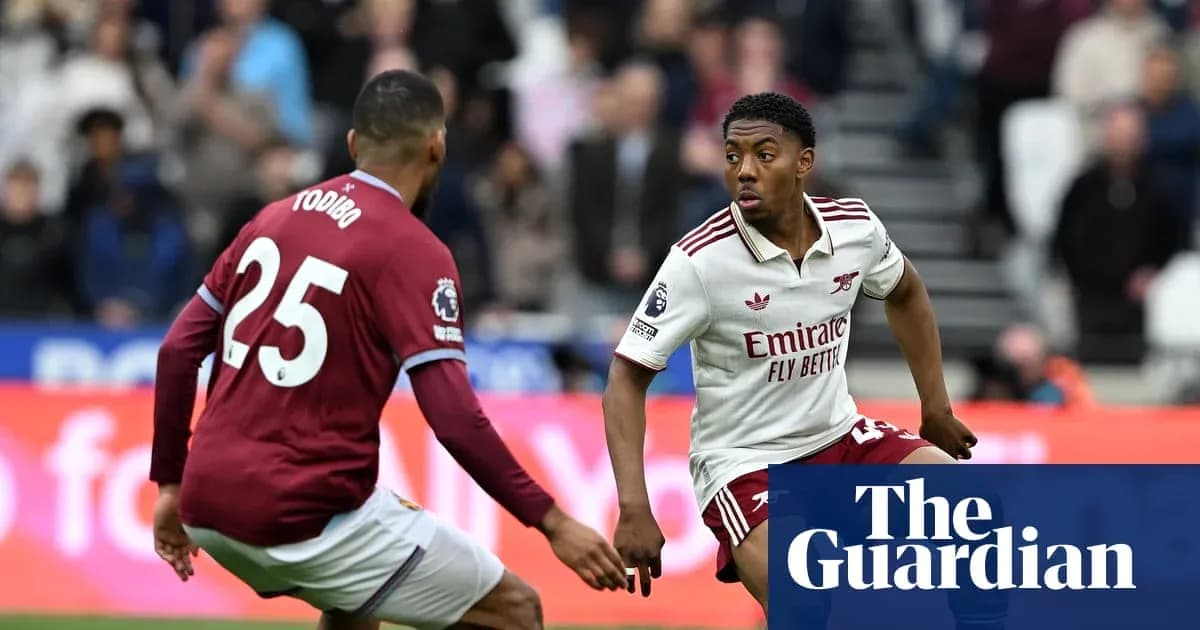
Then West Ham. Another start. Another night where his fingerprints were all over the contest.
Mental steel behind the resurgence
None of this, Lewis-Skelly insists, happened by accident. The months out of the team hurt, but they hardened him.
“It was tough for me initially,” he said. “But I pride myself on having mental strength. Sport is not one pathway because there are ups and downs. It’s how you bounce back from that, how you are in those moments when you face adversity. That is what defines you.”
So he shut out the noise. Or tried to.
“I spoke with my family and friends. I just told them: ‘I don’t want to hear all the noise that is coming from social media. Let me stay in this moment, let me continue to face this adversity and let me come out the other side of it.’”
He kept preparing as if he would start, even when the team sheet suggested otherwise.
“It is always being prepared, always feeling like I prepare as a starter because you never know when your time will come. Luckily enough, it came against Fulham. I took my opportunity and helped the team out as much as I can.”
That mindset has shifted more than just his own fortunes. Almost overnight, he has nudged ahead of Martín Zubimendi in the midfield hierarchy. Against West Ham, he even showed his versatility again, dropping back to left-back when Martin Ødegaard came on after 67 minutes and injected fresh control into a faltering Arsenal display.
Future questions can wait
The irony is that while he was struggling, talk around Lewis-Skelly’s future intensified. The cold language of modern football – “pure” and “profit” – hovered over his name, a reminder that academy products can be turned into balance-sheet wins as quickly as they can become first‑team fixtures.
For now, that debate is on ice.
Lewis-Skelly has forced his way back into the centre of Arsenal’s season at the very moment the stakes have never been higher. A title race with City. A Champions League final against PSG. Two league “finals” still to navigate. A club on the brink of something, or on the brink of another what-if.
“I am focused on the games we have got coming up,” he said. “And bringing this club back to glory.”
The VAR call in east London felt like fate. The real question now is whether Lewis-Skelly’s revival becomes part of the story Arsenal tell if they finally climb back to the summit – or a reminder of just how thin the line is between salvation and regret.