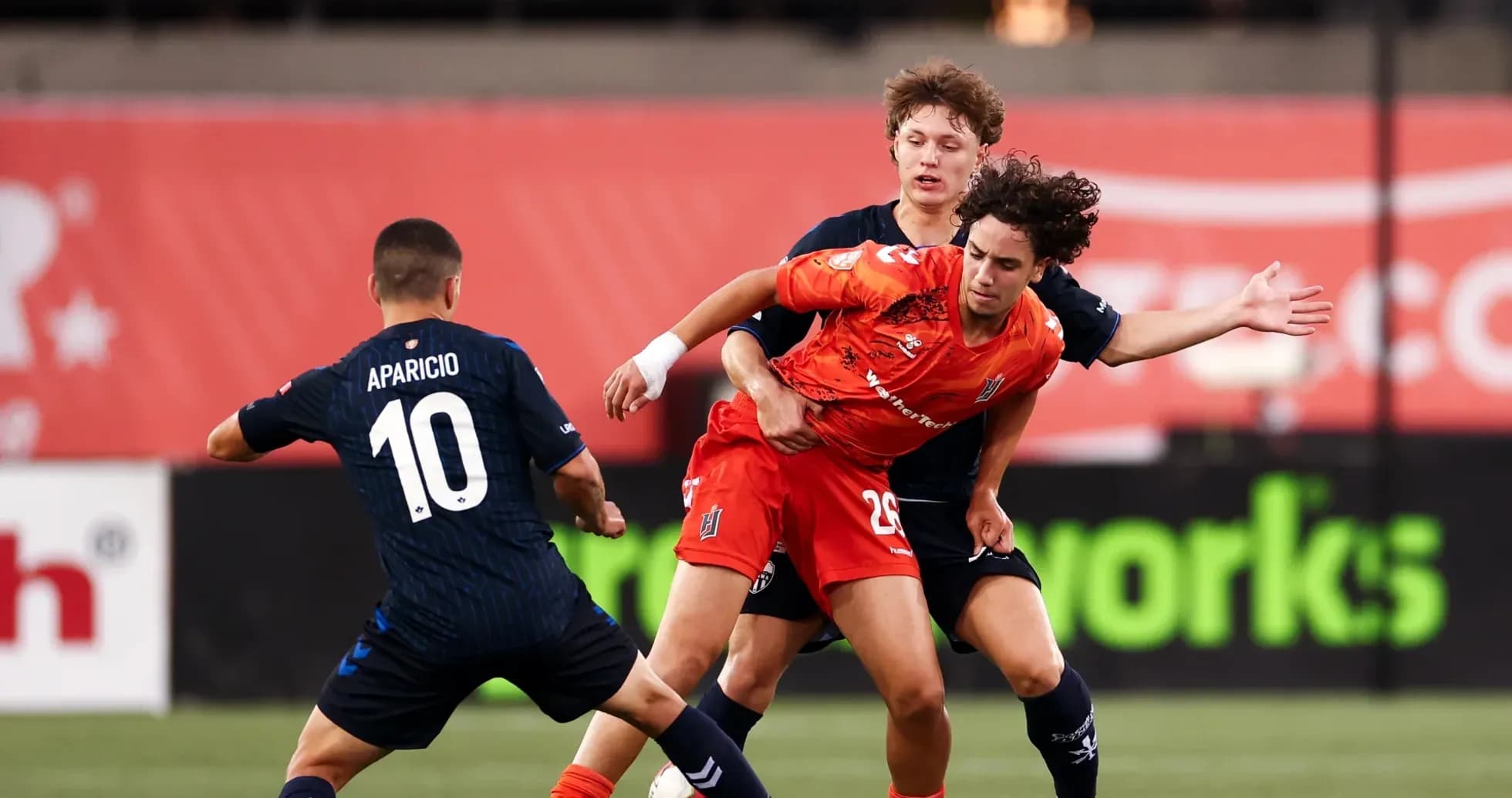
York United's Tactical Triumph Over Vancouver FC: A 3–1 Victory
York Lions Stadium had already told its story by full time: a 3–1 win for York United over Vancouver FC, a result that felt like a tactical correction as much as a scoreline. In the Canadian Premier League’s Group Stage, the numbers said these sides were close – Vancouver arriving 4th with 30 points and a positive goal difference of 2 (30 scored, 28 conceded), York in 6th on 23 points with a goal difference of -13 (29 for, 42 against). But on the night, York’s structural gamble and their front three’s cohesion bent the match to their rhythm.
I. The Big Picture – Systems and Seasonal DNA
York leaned into their 2026 identity, rolling out the 3-4-3 that has been their most-used shape this season (6 league matches in that setup). It is a high-variance system that mirrors their statistical profile: at home this campaign they have been prolific and chaotic, averaging 2.1 goals scored and 2.3 conceded. That volatility was visible again – three goals scored, one allowed – but this time tilted decisively in their favour.
Vancouver, by contrast, stayed with their own comfort blanket: a 4-2-3-1 they have used in 7 league matches. Overall this season they have been the more balanced side, scoring 1.4 goals per match in total and conceding 1.3. Yet the split between home and away is stark: at home they score 1.5 and concede 1.0 on average; on their travels that drops to 1.2 scored and 1.5 conceded. York’s aggressive home profile met Vancouver’s more fragile away persona – and it showed.
York led 1–0 at half-time and never really relinquished control, stretching the game into the spaces that their system is built to exploit.
II. Tactical Voids – Discipline, Risk and the Edges of Control
Neither side came into this fixture with listed absences, so the story was not about who was missing but about who was exposed.
York are one of the league’s more combustible sides. Overall this campaign they have drawn 23 yellow cards in the 61–75 minute window alone, accounting for 23.73% of their total bookings – a clear mid-second-half spike when fatigue and tactical fouls converge. They also carry a notable red-card risk: one dismissal this season, shown in that same 61–75 band, which accounts for 100% of their reds. That profile underlines how knife-edge their 3-4-3 can be when they are forced to defend for long spells.
Vancouver’s card map is different but just as telling. Their heaviest yellow-card window is 76–90 minutes, where 25% of their bookings arrive. The closing stretch of games often finds them chasing, pressing higher and fouling more. In a match like this, with York’s home scoring power, that late-game indiscipline risked turning pressure into punishment.
On an individual level, York’s edge is personified by T. Skublak. Across the season he has collected 8 yellow cards without a red, the league’s second-highest yellow tally, while playing as an attacker. His game is all elbows and duels – 97 contests, 49 won – and that physicality is both a weapon and a disciplinary fault line.
For Vancouver, the disciplinary core sits deeper. Marcello Polisi has 6 yellows from midfield, and Thierno Bah has 5, combining combative defending with high duel counts. In a match where York wanted to overload central pockets, that pair’s ability to foul without crossing the red line was always going to matter.
III. Key Matchups – Hunter vs Shield, Engine Room vs Enforcer
The headline duel was always going to feature Skublak. Heading into this game he had 5 goals and 2 assists in league play, with 20 shots (12 on target). York’s home average of 2.1 goals per match is built heavily on his presence as the central reference point in that front three. Against Vancouver’s back four – with M. Campagna and Thomas Geoffrey Field at the heart of the line – the question was whether they could handle his constant backing-in, channel runs and aerial presence.
Behind him, the flanking forwards L. Accettola and J. Almagro gave York width and secondary creativity. Almagro’s season numbers – 1 goal, 2 assists, 10 key passes – mark him as a subtle connector, and his starting berth on the left of the front line ensured that Vancouver’s right side, marshalled by M. Doner, could never simply double Skublak without consequence.
In midfield, the “engine room” battle was nuanced. For York, S. Yeates and O. Bassett are the ball-progressors. Yeates’ campaign output – 420 completed passes at an 87% success rate, with 10 key passes and 19 tackles – paints him as the metronome who also bites in the press. Alongside him, C. Guzmán and K. Kibato provided legs and cover, allowing the wing-backs to push high and pin Vancouver’s wide players back.
For Vancouver, the double pivot of Polisi and D. Pecile was tasked with both screening and launching. Polisi’s 415 passes at 85% accuracy and 7 key passes show a player who can break lines, but in this match he was often turned into a firefighter, shuttling laterally to plug gaps as York’s front three rotated and dropped into half-spaces.
Higher up, Vancouver’s attacking quartet in the 4-2-3-1 carried real threat on paper. Bah – 3 goals, 1 assist, 21 tackles, 119 duels (63 won) – is their chaos agent between the lines, while N. Mezquida and M. Amissi offer craft and movement. Up front, L. Mousset arrived with 3 goals, 1 assist and a 6.95 average rating, plus a perfect penalty record (1 scored, 0 missed). Yet they were feeding into a game state that quickly tilted against them.
York’s back three of F. Sturing, L. Singh and O. León benefited from the extra cover of a compact midfield four, and with Campos Ralston Kai Antonio behind them, they largely restricted Vancouver to snatches rather than sustained waves.
IV. Statistical Prognosis – xG Echoes and Defensive Solids
Even without explicit xG numbers, the season data sketches a clear probabilistic picture. York at home, scoring 2.1 and conceding 2.3 on average, are almost guaranteed a goal-heavy environment. Vancouver away, scoring 1.2 and conceding 1.5, tend to be dragged into tight margins they often lose.
Layer on Vancouver’s away vulnerability late in matches – where their yellow-card surge from 76–90 minutes hints at stretched defensive phases – and York’s aggressive, three-forward structure was always likely to generate multiple high-quality chances as legs tired.
York’s penalty profile also matters. Overall this campaign they have had no penalties, scored or missed, while Vancouver have won and converted 2 penalties with a 100% success rate and no misses. The fact that Vancouver’s most reliable route to high xG shots never materialised here underlined York’s discipline in the box, even if they flirted with risk further out.
In the end, the 3–1 scoreline at York Lions Stadium feels like the logical intersection of those trends: York’s home attacking ceiling, Skublak’s centrality and the front three’s movement overcoming a Vancouver side whose away defensive solidity is respectable but not elite. Vancouver’s season-long goal difference of 2 remains slender, and matches like this show why; York, for all their negative goal difference overall, continue to be a different proposition entirely on their own turf.
Following this result, the narrative of these two squads hardens: York as the wild-card entertainers whose 3-4-3 can slice open almost anyone at home, Vancouver as a technically sound side whose away fragility and late-game discipline issues keep dragging them back toward the pack.