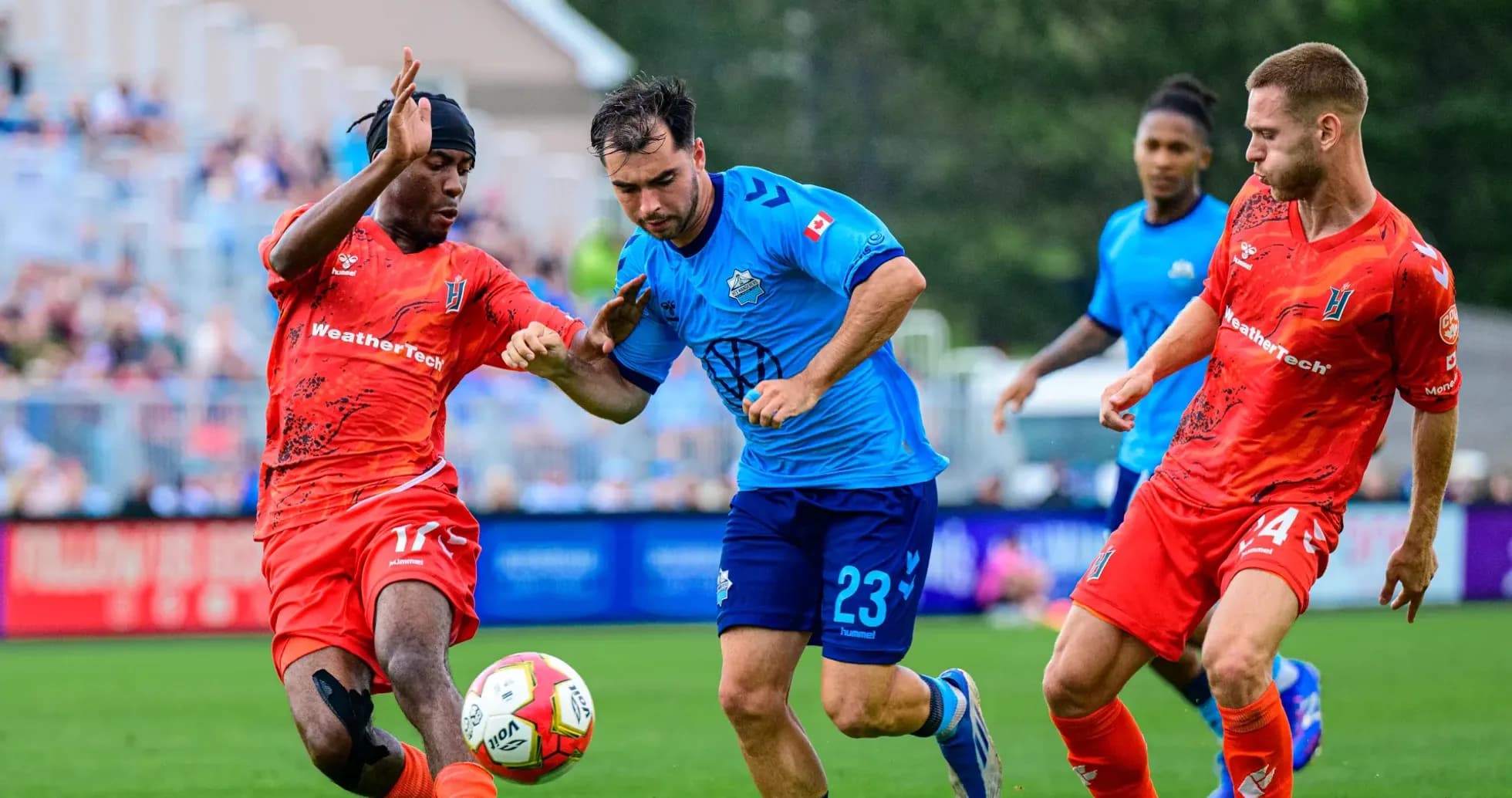
Cavalry FC vs Atlético Ottawa: A High-Scoring Clash in the CPL
Under the floodlights at TD Place Stadium, this Group Stage clash in the Canadian Premier League brought together two sides whose seasonal identities could not be more sharply drawn. Cavalry FC arrived as league leaders, first in the table with 53 points and a fearsome overall goal difference of +34, forged from 50 goals scored and only 16 conceded across 24 matches. Atlético Ottawa, third with 40 points, have lived a more volatile campaign: 38 goals for, 41 against, and a negative goal difference of -3 over 25 games that speaks to their high‑risk, high‑reward approach.
The final scoreline – a 3–2 home win after trailing 0–1 at half-time – felt like a distillation of those profiles. Ottawa’s season has been defined by turbulence and late drama, and their home record underlines why TD Place has become a fortress: 8 wins from 13 at home, with 24 goals scored and 17 conceded. On their travels, Cavalry had been ruthless, winning 7 of 12 away with 20 goals for and just 9 against. To put it simply, this was the league’s most balanced home attack against its most complete travelling side.
Both coaches mirrored each other on the tactical board, rolling out 4‑2‑3‑1 systems. For Ottawa, Gustavo Leal leaned into a familiar spine: C. Kalongo in goal behind a back four of T. Arnaud, J. Dunn‑Johnson, Sergei Kozlovskiy and Joaquim Coulanges. Ahead of them, the double pivot of M. Aparicio and D. Gutiérrez provided structure for a fluid band of three – E. García, B. Tabla and K. Habibullah – supporting central forward N. Fleuriau Chateau.
Tommy Wheeldon Jr. answered in kind: N. Ingham in goal; a back line of A. Pearlman, D. Klomp, A. Didic and B. Kamdem; a midfield shield of H. Paton and E. Kobza; and an attacking quartet of N. Edwards, T. Warschewski and G. Ntignee behind front man A. Musse. It was a lineup that embodied Cavalry’s season-long blend of defensive steel and attacking variety.
The tactical voids in this contest were less about absences and more about structural risk. Ottawa’s season numbers paint a side that leans heavily into attacking phases, often at the expense of control. Overall, they average 1.5 goals scored per match and 1.6 conceded, and they have failed to score only 5 times in 25 outings. Yet that aggression comes with disciplinary and defensive edges: their yellow-card profile shows a pronounced late-game spike, with 33.33% of their cautions arriving between 76–90 minutes and another 16.67% between 91–105. This is a team that pushes the line when games open up.
Cavalry, by contrast, have built their campaign on a near-elite defensive platform. Overall, they concede just 0.7 goals per match while scoring 2.1, and they have already collected 10 clean sheets – 5 at home and 5 away. The red-card history, however, hints at flashpoints: G. Ntignee, T. Warschewski and E. Kobza have all seen red this season, and Cavalry’s dismissals are spread across the 31–45, 76–90 and 91–105 windows. Their aggression in duels, especially in midfield, sometimes spills over.
Key Matchup
In the “Hunter vs Shield” duel, this match was headlined by Ballou Tabla against the Cavalry back line anchored by Klomp and Didic. Tabla has been Ottawa’s attacking talisman: 9 goals and 2 assists in 25 appearances, underpinned by 43 shots (21 on target) and 27 key passes. He is not just a finisher but a creator, with 23 successful dribbles and 39 fouls drawn that tilt games in Ottawa’s favour. Around him, N. Fleuriau Chateau (5 goals, 2 assists in 12 appearances) offers a more vertical, penalty-box presence, while E. García (4 goals) adds a secondary scoring threat from wide areas.
Against them stood a Cavalry defence that has been almost unmatched this season. D. Klomp, with 4 goals and 1 assist from centre-back, is not only a stopper but a set-piece weapon. He has blocked 7 shots and won 59 of 96 duels, while completing 900 passes at 89% accuracy. Alongside him, A. Didic brings similar authority: 2 goals, 3 assists, 6 blocked shots, and 872 passes at 89% accuracy. With Pearlman and Kamdem flanking them, Cavalry’s back four is comfortable defending high, compressing space for Tabla and Habibullah between the lines.
Further forward, the away side’s “Shield” in midfield – Paton and Kobza – is as combative as it is functional. Paton has committed 29 fouls and collected 9 yellow cards, while still completing 436 passes at 83% accuracy. Kobza mirrors that blend: 28 fouls committed, 7 yellow cards and 1 yellow-red, but also 506 passes at 84% and 14 interceptions. Together, they are designed to disrupt players like García and Habibullah before they can feed Tabla or Fleuriau Chateau.
Cavalry’s Hunter
On the other side of the ball, Cavalry’s “Hunter” is Tobias Warschewski. With 7 goals and 3 assists, 38 key passes and 21 shots on target, he is both finisher and primary chance creator. His duel volume (188 total, 84 won) and 51 dribble attempts speak to a player who thrives in chaos. Around him, Ali Musse (3 goals, 4 assists, 22 key passes) and Goteh Ntignee (2 goals, 3 assists, 45 dribble attempts) ensure Cavalry can overload either flank, particularly targeting full-backs like Arnaud and Coulanges.
The engine room battle was always going to be decisive. For Ottawa, M. Aparicio and D. Gutiérrez had to balance ball progression with screening. Aparicio has been a workhorse this season: 1,209 completed passes at 84% accuracy, 41 tackles, 8 blocked shots and 25 interceptions, but also 30 fouls committed and 6 yellow cards. He is both metronome and enforcer. Around him, creative midfielders like G. Antinoro and K. Habibullah – even when starting on the bench – give Leal the option to tilt the game with ball-carrying and line-breaking passes. Antinoro, in particular, combines 711 passes at 86% accuracy with 27 key passes and 75 dribble attempts, making him an ideal second-half disruptor.
Disciplinary undercurrents ran through every matchup. Kozlovskiy, with 7 yellow cards in just 13 appearances, walks a permanent tightrope in the back line. Ntignee’s 5 yellows and 1 red, and Warschewski’s own red card earlier in the season, meant Cavalry’s wide threats also carried risk in transition fouls. Ottawa’s season-long record of 2 missed penalties from 4 attempts added another psychological wrinkle: even when they reach the spot, certainty is not guaranteed. Cavalry, by contrast, have been perfect from the spot so far, converting all 4 of their penalties.
From a statistical prognosis, Cavalry’s profile – 2.1 goals scored per match and 0.7 conceded overall – would usually tilt any preview in their favour, especially given their 7 away wins and 10 total clean sheets. Ottawa’s leaky defence, conceding 1.6 goals per match overall and 2.0 on their travels, suggested the league leaders would find joy, particularly through Warschewski and Musse attacking Ottawa’s full-backs and exploiting any late-game indiscipline.
Yet Ottawa’s home attacking average of 1.8 goals, combined with the individual brilliance of Tabla and the emerging threat of Fleuriau Chateau, always offered a route to an upset. Their tendency to come alive in chaotic finales – reflected in that surge of late yellow cards – hinted at a team that grows more dangerous as structure breaks down.
In the end, a 3–2 home victory against the league leaders fits the underlying tension between numbers and narrative. Cavalry’s defensive solidity and attacking balance made them favourites on paper, but Ottawa’s home strength, star power in the final third, and willingness to play on the edge turned this into the kind of high-variance contest that suits them. As the Group Stage narrative continues, Cavalry remain the benchmark over 24 matches, but Atlético Ottawa have once again shown that, at TD Place, form lines can be bent by sheer attacking conviction.