Xabi Alonso's Journey: From Neverkusen to Chelsea's Future
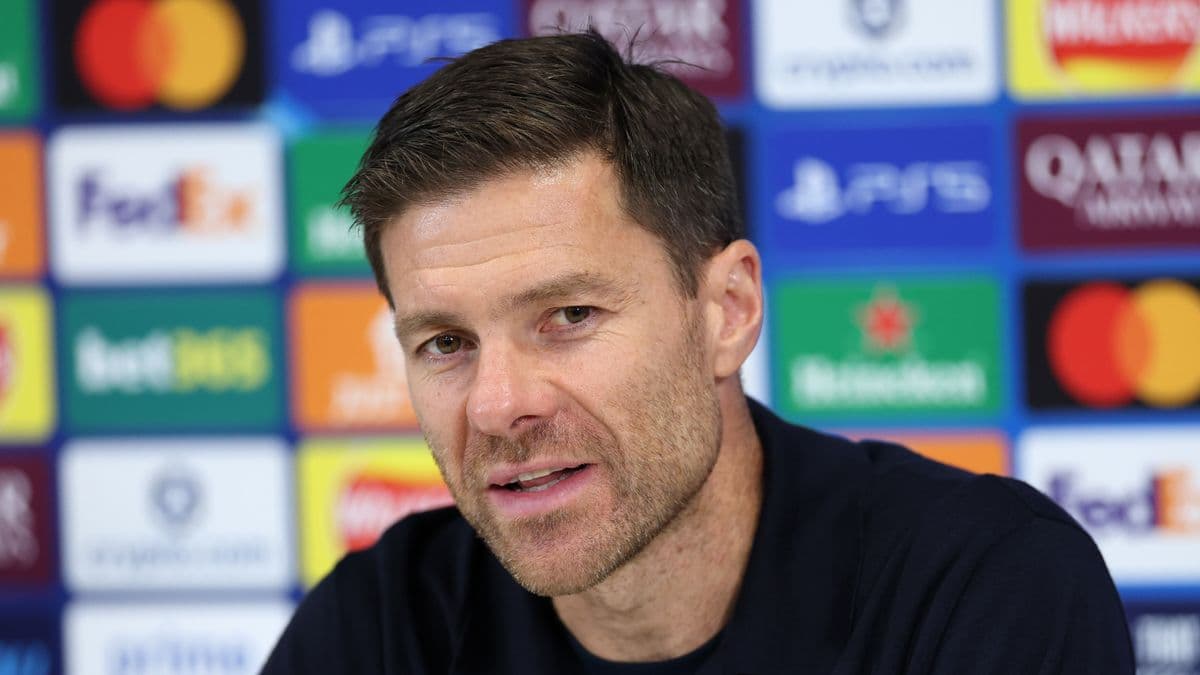
When the whistle went at the BayArena on May 18, 2024, Xabi Alonso didn’t punch the air or beat his chest. He turned around, almost instinctively, and headed straight for his staff. The noise, the history, the scale of what Bayer Leverkusen had just done – all of it swirled around him, but Alonso’s first instinct was to share it.
Leverkusen, the club long mocked as “Neverkusen”, had just completed the first unbeaten Bundesliga season in history. Thirty-one years after their last major trophy, they had become “Neverlusen”. A curse flipped into a crown. And at the centre of it all stood a 44-year-old in only his second managerial job, his first with a senior side.
He had walked into a relegation fight in October 2022, with Leverkusen sitting 17th. He spoke then about playing an “important role”. Even he could not have foreseen this.
From Neverkusen to Neverlusen
Alonso’s rise at Leverkusen felt like a fast-forwarded career. In less than two seasons he turned a fragile, drifting side into a ruthless machine. Tactically flexible, relentlessly intense, beautifully balanced between control and chaos.
The style was clear. A 3-4-2-1 base, but with constant rotation, players stepping into lines, defenders stepping into midfield, forwards doubling as first defenders. With the ball, expansive and brave. Without it, ferocious. His team did not just press; they hunted.
The results were historic. Unbeaten in the league. Just 24 goals conceded in the 2023/24 Bundesliga season. The next best defence, Stuttgart, let in 39. Titles, as Sir Alex Ferguson once said, are won by defences. Alonso agreed. “Defence is a fundamental part of our identity. Defence wins titles,” he said during his time in Madrid. Leverkusen were his proof of concept.
Florian Wirtz became the poster boy of that project. Under Alonso, the gifted No.10 exploded: 18 goals and 20 assists in 49 games in all competitions during that unbeaten campaign. Alonso’s explanation for unlocking that kind of talent was deceptively simple: support the player, build the structure around him, and let the talent breathe.
“I only have to support that talent,” he said. “I only need to create players that will help him shine and to show that talent, because if you don't provide that sustainability, that talent won't be consistent.”
It sounded straightforward. It rarely is. Yet with Wirtz, it worked to devastating effect.
Madrid, the madhouse, and a sudden exit
Success at that level does not go unnoticed. Europe’s giants circled. For Alonso, the choice narrowed quickly and ruthlessly: Real Madrid or Liverpool, two clubs where he had once owned the midfield as a player.
Liverpool moved first. They wanted him in the summer of 2024 as Jürgen Klopp’s successor. The fit looked perfect on paper. The romance was obvious. Alonso said no. He chose to stay at Leverkusen, insisting it was the “right place to develop as a coach”.
The long game, though, was already mapped out. Real Madrid would come 12 months later. And they did.
He arrived at the Santiago Bernabéu at the start of the 2025/26 season, stepping into arguably the most scrutinised role in world football. Less than eight months later, he was gone. Another manager chewed up by the Madrid machine.
The reputation, crucially, survived. The sense across Europe is that Madrid did what Madrid often does – and that even the most gifted coaches are not immune to the chaos. Alonso, in many eyes, has been granted a kind of free pass. The Leverkusen work still speaks louder than the Bernabéu noise.
Liverpool hesitate, Chelsea move
When Madrid announced in January that Alonso would be leaving, the next chapter seemed almost pre-written. Liverpool fans, already restless with Arne Slot after a poor defence of their Premier League title, began to dream again. They wanted the hero back, this time in the dugout, and they wanted him now.
The mood at Anfield turned sharper as results dipped. Yet the hierarchy chose to hold their nerve. Slot, they decided, would stay until the end of the season. The plan, according to reports, is to back him again in the summer window and give him another crack at it next term.
That decision has left a gap. Not in the stands – where Alonso’s name still carries enormous weight – but in the market.
Liverpool and Chelsea have collided repeatedly over recent years: Moisés Caicedo, Romeo Lavia, most recently Jeremy Jacquet. This time, though, the familiar tug-of-war has not materialised. Despite Alonso’s obvious emotional and tactical connection to Liverpool, Chelsea are, for once, being allowed a clear run.
From Stamford Bridge, that looks like a gift.
BlueCo’s ideal candidate
On paper, Alonso is everything BlueCo claim to want. Young, modern, tactically sharp, comfortable developing talent, and brave enough to build a team identity rather than simply manage one.
Talks have already taken place between Chelsea and Alonso’s representatives, with the club keen to have a head coach in place before the World Cup kicks off next month. The pitch is straightforward: a big club, a big budget, and the promise of backing in the summer after a dismal Premier League campaign that has exposed the squad’s flaws.
Chelsea know the team needs surgery. Not cosmetic tweaks. Structural work.
Alonso’s track record will tempt them. He built a side that suffocated opponents without the ball and sliced through them with it. He protected his defence with organisation, not just individual brilliance. He coaxed peak performances from attackers who thrived with responsibility and freedom.
For Chelsea, the parallels are obvious. They have attacking talent. They have energy. What they do not have is coherence.
Palmer, Wirtz, and the freedom to create
Cole Palmer is the name that will keep coming up in west London living rooms if Alonso walks through the doors at Cobham.
Palmer’s best football for Chelsea came under Mauricio Pochettino, who gave him licence to drift, combine, and improvise. This season, injuries have disrupted him and the system has often caged him. The freedom that once defined his game has felt restricted.
Alonso’s work with Wirtz is the clearest reference point. At Leverkusen, the No.10 was not just indulged; he was supported by a structure that allowed him to roam while the rest of the team shifted around him. Wing-backs pushed high, midfielders covered, centre-backs stepped out. Wirtz floated in the gaps and destroyed teams.
Chelsea supporters reading Alonso’s words about “supporting talent” and “creating players that will help him shine” will immediately picture Palmer in those spaces, receiving the ball between the lines, surrounded by runners rather than traffic.
The temptation is obvious. The question is whether Chelsea can build that kind of stability around him.
Defence: Alonso’s non‑negotiable
For all the talk of attacking freedom, Alonso’s Leverkusen were built on discipline. Twenty-four goals conceded in a league season is not an accident. It is the product of structure, intensity, and a refusal to accept sloppiness.
Chelsea, by contrast, have been wide open. This season they have already let in 49 league goals, six more than they shipped in the entire 2024/25 campaign, with two matches still to play. Only eight Premier League teams have a worse defensive record.
Enzo Maresca and Liam Rosenior have both lamented the nature of those concessions – cheap errors, poor organisation, a lack of control in key moments. It is not one problem; it is a pattern.
Chelsea know this has to change before they can even talk seriously about challenging again. A starting-calibre centre-back is high on the summer agenda, and sources indicate the club want the new head coach – Alonso or otherwise – to have a say in that recruitment.
For Alonso, that detail will matter. He is not a coach who simply takes what he is given. His Leverkusen side was carefully constructed, line by line. If Chelsea restrict the manager’s influence on squad building, they risk losing him before talks get serious.
A crucial decision on both sides
Alonso’s next move carries weight. He is still seen as one of the most exciting coaches of his generation, but another misstep could chip away at that aura. The Madrid stint has been filed under “madhouse” by many observers, an occupational hazard rather than a reflection of his ability. He will not get unlimited free passes.
Chelsea, meanwhile, are trying to convince the football world that they have learned from recent chaos. Managers have come and gone under BlueCo with dizzying speed. Promises of patience have often collided with reality.
Alonso will know all of this. He will have watched the turnover, the mixed messages, the public backing followed by sudden exits. If the past is any guide, he has every reason to hesitate.
Yet the timing might suit both parties. Alonso wants to return to management this summer. Chelsea need a figurehead who can impose a clear identity on an expensively assembled but inconsistent squad. BlueCo are hoping the opportunity, the resources, and the chance to build something in the Premier League will outweigh the doubts.
If they hand him the keys – real authority, real input, real time – Alonso has shown what he can build. The question now is whether Stamford Bridge becomes the stage for his next masterpiece, or just another stop on a journey that still feels destined for something bigger.