World Cup Portraits: A Study of Personalities
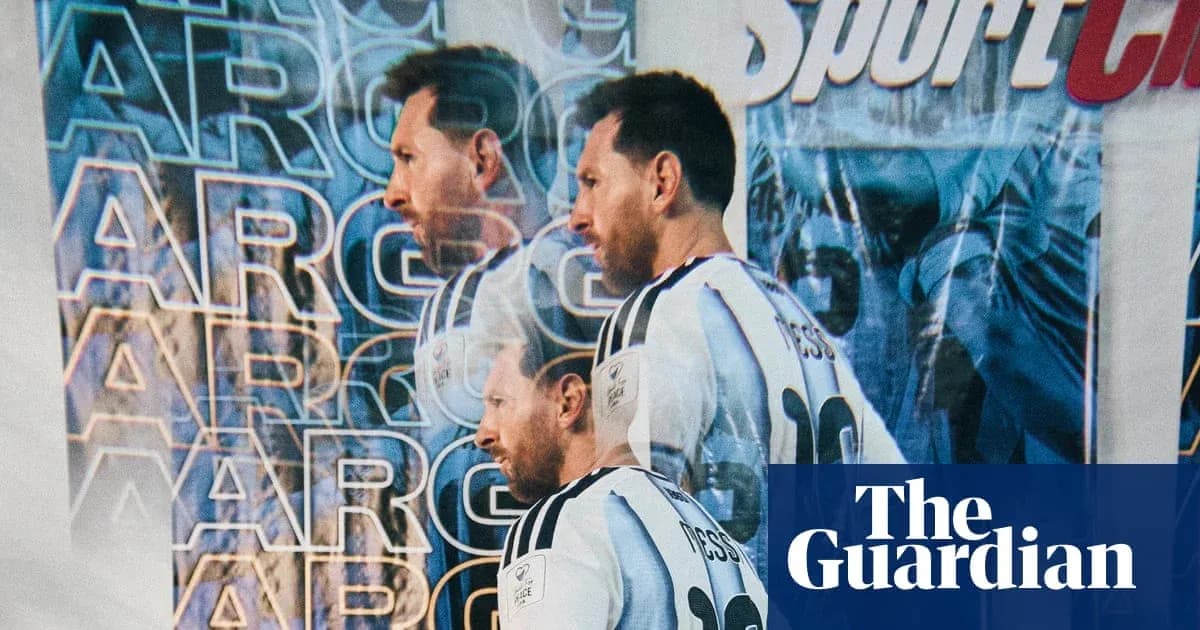
Lionel Messi freezes. Shoulders square, eyes fixed, Argentina’s captain stands bolt upright in front of the lens, as if a single twitch might shatter the illusion.
Marc Cucurella does the opposite. The Spain defender whips his hair, loosens his body and looks as though he’s about to start dancing. Diego Moreira, listed here as Belgium’s man of mystery, lifts his forearm to cover his eyes, unveiling an unsettling tattoo. Harry Kane drops awkwardly to one knee, caught somewhere between school photo and sponsorship shoot.
Welcome to the World Cup’s quietest ritual: the official portraits. All 1,248 players. All 48 managers. Nobody gets a pass.
A production line of personalities
Shot by Getty Images on behalf of Fifa in the weeks leading into the tournament, this year’s portraits form a sprawling gallery of football’s global cast. Some stare you down. Some smirk. Some look as if they’d rather be anywhere else. Each frame, though, offers a small clue about how these players want the world to see them.
Behind-the-scenes images, released by Getty, peel back the curtain. They show the cramped makeshift studios inside team bases, the quick-fire instructions barked across the set, the tiny windows of time in which something real has to happen.
Two photographers were assigned to every squad. Not a luxury, a necessity. One ran a plain backdrop, the other a more distinctive set, allowing players and coaches to be shuffled, rotated, fired through like a conveyor belt. In they came, out they went. Next.
The lighting remained deceptively simple: a big studio strobe with a softbox washing over the subject, a couple of rim lights carving a clean outline from behind. Nothing extravagant, nothing that could go wrong under pressure. The drama had to come from the faces and the lenses.
The backdrops themselves were more muted than the bold, saturated walls of 2022. The colour may have been dialled down, but the imagination wasn’t. Photographers reached for special lens filters, chasing unpredictable blurs and kaleidoscopic streaks that bent light around players’ heads. That Messi image, the one that looks half footballer, half apparition, didn’t happen by accident.
“You only get a few minutes”
Tom Jenkins, The Guardian’s long-serving sports photographer, knows this drill too well. Photographing the game’s biggest names is hard enough on a quiet day; doing it when the schedule turns into a stopwatch is something else.
“With these kinds of shoots, you only get a few minutes with each player and you have to bash out various pictures and think incredibly quickly,” he says.
There’s no time to warm anyone up. No time to experiment endlessly. You hit your marks or you miss them.
“You want some shots that are dead plain like a school photo – that’s how player portraits always used to be done – but these days you also want pictures that are more emotive and fun. A lot of players will have their own poses and goal celebrations already but you’ve also got to have a list in mind.”
The power dynamic flips for a moment. The superstars, usually insulated by agents, press officers and security, suddenly fall under the photographer’s command.
“The interesting thing is that you’re in control of these superstars and every aspect of the shoot. There’s a lot of pressure that comes with that. You have to make sure you’ve set things up and tested everything before they arrive, so that when the shoot starts you can just focus on them.”
Footballers as brands
On a nearby table sit the name cards. Every player has one. Even Messi. Not because anyone might genuinely fail to recognise him, but because the images will flow through editing teams, databases, archive systems. The process must be watertight, even when the subject is the most famous footballer on the planet.
Once the shutter falls, the power swings back again. Players crowd around the monitor, checking angles, hair, posture. Approving or rejecting, sometimes with a shrug, sometimes with the intensity of a VAR review.
“Most football players are very aware of their own image these days and they know how powerful it can be, especially through Instagram,” Jenkins explains.
They’ve done this before, not just for clubs and federations but for global brands. Eberechi Eze for Burberry. Declan Rice for L’Oreal. The modern player is as comfortable in a studio as in a mixed zone.
“They’ve done this kind of thing before for big brands – Eberechi Eze did Burberry and Declan Rice did L’Oreal – so actually they’re much more comfortable with being in front of the camera and some of them really enjoy it.”
Of course, that doesn’t always save them from the court of public opinion.
Some of England’s squad discovered that the hard way. Rice’s sunburn drew mocking attention. Anthony Gordon’s portrait sparked comparisons to Princess Diana. Dean Henderson’s sidelong glance was labelled unsettling. The internet, as ever, showed no mercy.
Yet when the chemistry clicks – as it did with Jude Bellingham and others – the portraits show what can be done in-camera without pyrotechnics or gimmicks. Even when the player offers little, the right lens, angle and timing can tease out something striking.
Bielsa, as Bielsa as it gets
And still, the image that has dominated discussion isn’t of a player at all.
It belongs to Marcelo Bielsa.
The Uruguay manager, shot by Michael Regan at the team’s base in Cancún, Mexico, delivered a portrait that instantly cut through the noise. Asked to face the camera, he refused. Or rather, he simply looked down at his feet and stayed there.
No eye contact. No performative pose. Just a man staring at the floor, absorbed in his own thoughts, radiating reluctance.
The result is an oddly powerful frame. It says everything about Bielsa’s relationship with spectacle: present, but not playing along. The unorthodox Argentinian later brushed it off with a line that felt entirely on brand. “I’m not a model,” he protested.
For Jenkins, that’s exactly the point.
“Ultimately I think the best portrait is one that displays the individual’s personality, and that’s why the Bielsa picture is so brilliant. It’s perfectly him.”
In a World Cup of rehearsed celebrations and managed messages, the most memorable image might be the one where a coach simply refuses to look up.