World Cup 2026: Messi, Mbappe, and Haaland Shine
The World Cup has its storylines. This one has an overload.
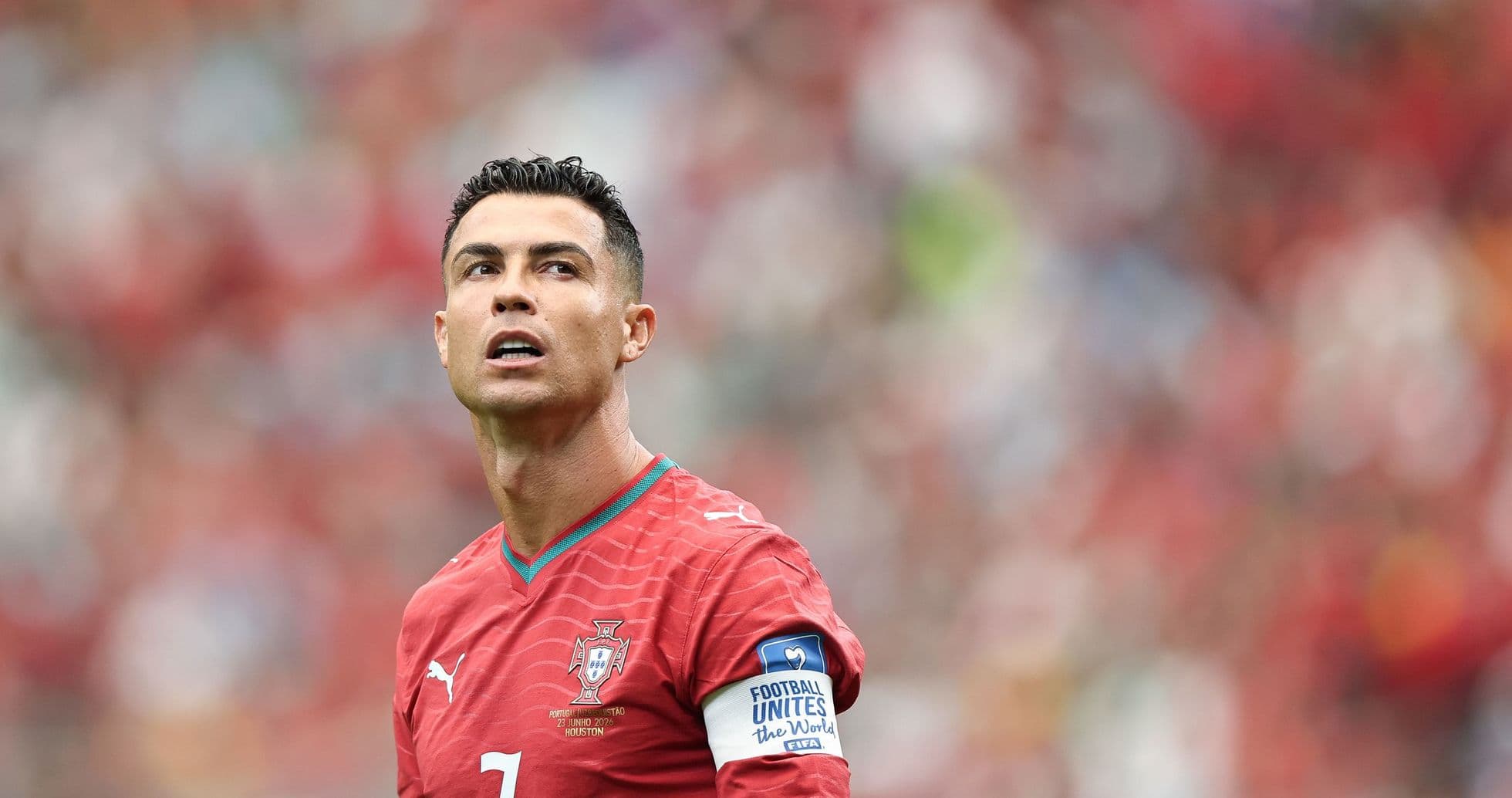
By the time Cristiano Ronaldo stroked home a ruthless brace against Uzbekistan, the 2026 FIFA World Cup already belonged to Lionel Messi’s ageless genius, Kylian Mbappe’s tournament swagger and Erling Haaland’s raw power. The 48‑team format that many feared would dilute the spectacle has instead thrown up Cape Verde, Japan, Egypt and a string of lower-ranked nations who refuse to play the role of extras. The script is busy, noisy, thrilling.
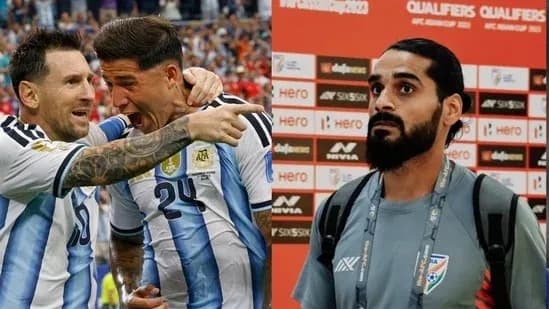
Watching it all, and dissecting it with the calm of a seasoned centre-back, is India defender Sandesh Jhingan, part of Zee5’s expert panel for the tournament. Speaking to Hindustan Times Digital, he moved from wonder to analysis with the ease of a man who has lived the grind of elite football.
Messi at 39: making time look foolish
At 39, Messi should be gliding into nostalgia territory. Instead, he’s terrorising defences with hat-tricks and braces, and sitting on five goals from his first two games.
“I think it’s incredible, first of all, to have that longevity and that consistency to keep doing well,” Jhingan said, zooming in on the trait every pro respects most. For him, the magic is not just in the nutmegs or the curled finishes, but in the relentlessness. “The hardest thing to do, or the greatest talent you can have, is to have that consistency, performing at such a high level in the best way you can and having the longevity with it.”
He knows the privilege of being a contemporary. “We are fortunate that we… have seen his whole career in front of our eyes, and it’s brilliant.”
Then came the image that stayed with him. A 100‑year‑old woman in the stands during his Zee show, utterly absorbed by Messi. “When you watch Messi, it gives you that feeling of being a kid,” Jhingan said. In his mind, that centenarian must have felt “like a 10‑year‑old watching him play”. That, he insisted, is Messi’s greatest gift: he drags every generation back to childhood for 90 minutes.
The machine behind the magician
Messi’s numbers dominate the headlines, but Jhingan’s defender’s eye goes straight to the platform beneath him: a ruthless, disciplined Argentina.
Scaloni’s side are yet to concede, their defenders throwing themselves in front of shots, their midfielders chewing up space. Jhingan sees a structure built with one purpose: let Messi live as high up the pitch as possible.
“The reason Messi is doing so well is because the team's shape and compactness are so good,” he said. For him, the coaching staff deserve a huge slice of credit. The key, as he framed it, is tactical humility. The best coaches, he argued, “adapt their tactics around the players they have rather than forcing their own ideas”.
Argentina switch gears on demand: sometimes sitting deep, sometimes holding a mid-block, always organised. That clarity liberates their captain. The message to the rest is simple: win it, give it to Messi, trust him to bend the game.
“The defenders and midfielders know their job is to win the ball back and get it to Messi because they trust that he can create something special,” Jhingan said. That belief, he added, feeds the entire squad’s confidence.
“Reliant on Messi”? Jhingan doesn’t see a problem
The criticism is familiar: Argentina lean too heavily on their No. 10, and the strikers aren’t scoring enough. Lautaro Martinez ran himself into the ground against Austria, dropping deep, pressing, linking, making selfless runs, yet the noise continues.
Jhingan’s response is blunt.
“If I’m an Argentine player or a fan, I wouldn’t mind being called reliant on Messi as long as the team is winning,” he said. For him, the narrative misses the point. This is not a one-man band; it is a hardened system tuned around its best instrument.
“Their organisation, defensive discipline, and ability to stay compact are just as important,” he stressed. They know when to sit back, how to hunt in packs, how to create the ideal stage for Messi and the rest of the attack. The evidence is on the table: consistent wins, progression already secured, roles understood across the pitch.
“A lot of credit goes to the coaching staff for creating a system where everyone understands their role,” he added. Reliance, in this context, sounds less like a flaw and more like a plan.
Mbappe and the weight of history
On the other side of the bracket, another storyline runs hot. Mbappe, still only in his late twenties, continues to treat World Cups like his personal arena.
“With his goals and his numbers, it’s incredible,” Jhingan said. The France forward’s body of work is already staggering, yet the Indian defender senses a player still climbing, still chasing the unreachable standards set by Messi and Ronaldo.
“How do you put him in that bracket,” Jhingan asked, “because everyone will have that judgment with Messi and Ronaldo now, because they are the pillars, or they are the standard.”
For Mbappe, the challenge is not talent. “He has all the credentials; he has all the qualities to do it,” Jhingan said. The battle is with time and hunger: staying fit, staying motivated, sustaining this level for a decade or more.
One detail stands out for him. “Whenever the World Cup is there, that guy just brings an extra level,” he observed, recalling 2018 and 2022. That, in his eyes, is the mark of a true heavyweight: the bigger the stage, the sharper the edge.
Lamine Yamal and the defender’s dilemma
World Cups also mint new obsessions, and Lamine Yamal has already joined that list. He hasn’t started every match or gone the full 90, but his cameos have been electric, his first instinct always to attack his marker.
From a defender’s perspective, Jhingan knows the nightmare.
“If you’re in a one-on-one situation with Lamine, most of the time he’s going to get past you because that’s his biggest quality,” he admitted. Yamal, for him, is one of those rare players “you pay to watch because he brings so much joy to the game”.
The mistake, he warned, is to turn it into a personal duel. “The wrong approach is to think only about stopping him one-on-one.”
You can shut down a winger for 89 minutes, he pointed out, then a single shot or deflection flips the narrative. So he thinks in terms of probabilities, not perfection. Keep the team compact. Shrink the pockets he receives the ball in. Starve the supply line.
“That means the midfielders have to press, the forwards have to press, and the defensive line has to stay high,” he explained. Yamal will still get his moments; the job is to reduce them to a minimum, not chase the impossible clean sheet in every duel.
Ronaldo, the critics and a “bold statement”
No World Cup is complete without a Ronaldo debate. At 41, with questions over his mobility and pressing, calls to bench him have grown louder.
Jhingan’s answer carried an edge.
“I’m going to give a bold statement,” he began, “but all this debate is from the ones who never played professional football, or in case who never played much of it professionally.” Opinions are fine, he acknowledged, but the only one that truly matters sits on the touchline.
“At the end of the day, it’s Martinez who decides. He’s the head coach. If he thinks he’s good enough, he will play.”
Ronaldo, like Messi, lives under a harsher spotlight than anyone else. If a rival scores and he doesn’t, the same themes return: age, legs, decline. Jhingan feels too many people conveniently ignore the full picture.
“At the club level, he scored a lot, I think he was the top scorer in the Saudi league,” he pointed out. Ronaldo also delivered heavily in the qualifiers. Those numbers, he suggested, get brushed aside when it suits the narrative. “People tend to forget that and just pinpoint.”
Jhingan expects a familiar response from the Portuguese captain. “I think today Ronaldo will kind of open his account as well in a big way,” he said, backing the veteran to use the doubt as fuel and “shut those critics up”.
Golden Boot race: giants in full stride
With the group stage still settling, the Golden Boot race already crackles. Jhingan sees the usual suspects circling.
“I think it could be between Messi and Mbappe,” he said, though he underlined it is “still an early stage, two games”. Messi’s five-goal head start looks ominous, but Haaland lurks, exactly where fans wanted him: in the thick of it.
“It’s all three of the biggest names which people wanted to score,” Jhingan said, before looping Ronaldo back into the conversation. If the Portugal captain does explode into form, the race tightens even more.
“So it’s going to be a tight race. Messi is there, Mbappe is there, Haaland is there,” he summed up. The conclusion came with a grin you could almost hear: more goals, more fun, more chaos for the rest of us.
A defender’s heart, an Asian dream
Ask a football romantic who will win the World Cup and you get names like Argentina, France, Brazil. Ask Sandesh Jhingan and you get something different.
“I’m going to be biased. I’m going to root for Japan,” he said without hesitation. The Samurai Blue have become one of the tournament’s most watchable sides, fearless on the ball, relentless without it, and a symbol of Asia’s growing weight on the global stage.
“Of course, Argentina and all are there,” he admitted, but his allegiance for this World Cup is clear. “I’m going to be biased, going for an Asian team, so I’ll say Japan. I want them to go as high as they can.”
In a World Cup dominated by familiar giants and legendary No. 10s still bending time, that wish for an Asian breakthrough feels like the next twist waiting to happen.