Valencia and Rayo Vallecano Share Points in Tactical Stalemate
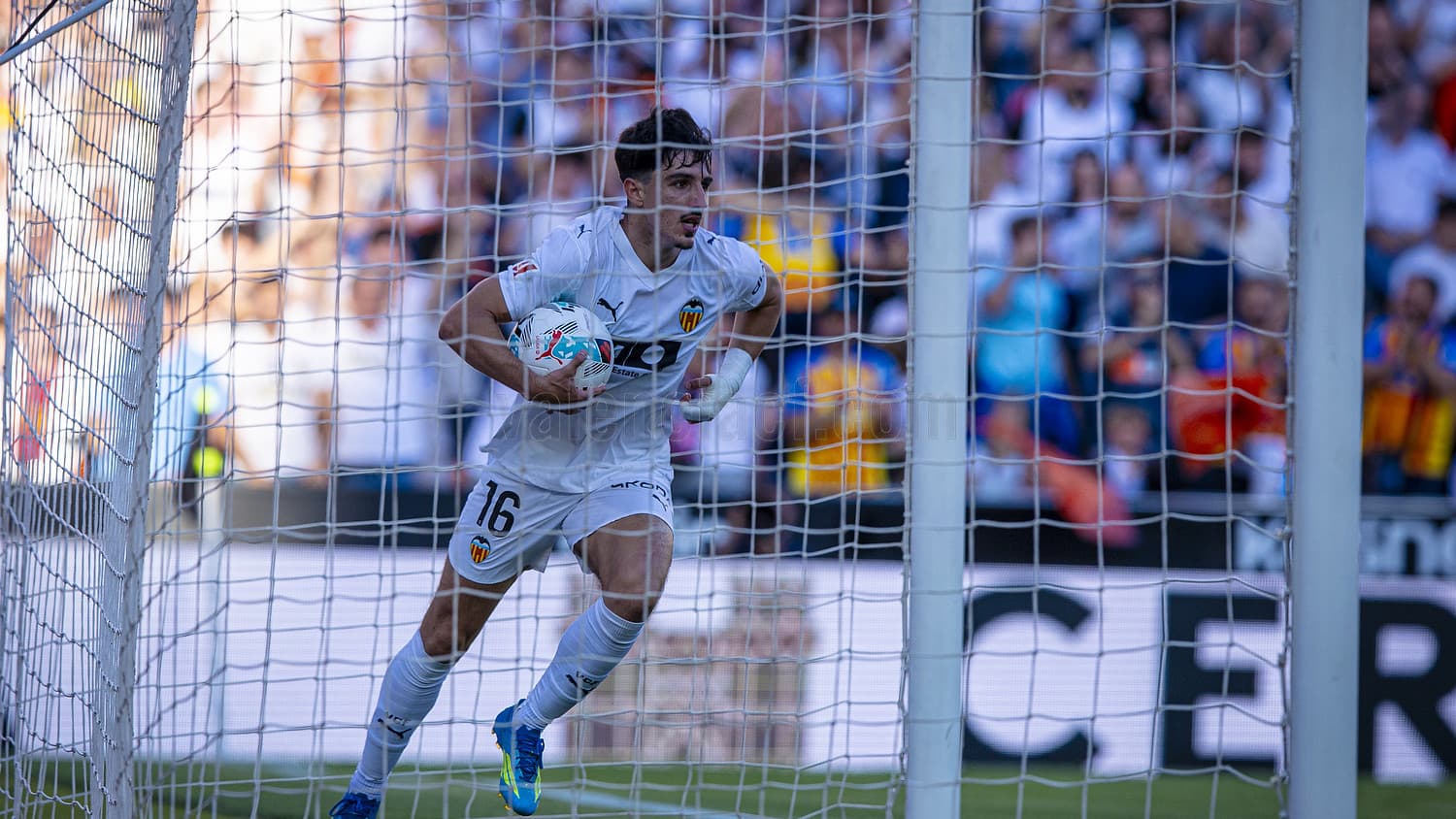
The Mestalla floodlights dim on a 1–1 stalemate, but the story of Valencia versus Rayo Vallecano runs deeper than the scoreline. Following this result, two sides separated by a single point in La Liga’s table – Valencia 11th on 43 points, Rayo Vallecano 10th on 44 – revealed contrasting identities that explain why both hover in mid-table rather than breaking higher ground.
This was Round 36 of the regular season, a late-spring fixture where fatigue, suspensions and accumulated habits shape the script as much as tactics. Valencia leaned again on their most-used template of the campaign, a 4-4-2, while Rayo Vallecano arrived with the 4-2-3-1 that has underpinned 22 of their league outings. The draw mirrored their seasonal balance: Valencia now stand at 11 wins, 10 draws and 15 defeats in total; Rayo Vallecano at 10 wins, 14 draws and 12 losses.
Home and Away Profiles
At home, Valencia’s profile is clear. They have played 18 league games at Mestalla, winning 7, drawing 6 and losing 5, with 24 goals for and 22 against. That home goal difference of +2 contrasts sharply with their overall goal difference of -12, a reminder of how badly they have travelled. Rayo Vallecano, meanwhile, have been defined by resilience rather than brilliance: in total this campaign they have scored 37 and conceded 43, a goal difference of -6, underpinned by a remarkable 10 draws at home and 4 away.
Team Selection and Tactical Approaches
Carlos Corberan’s starting XI was a study in pragmatism shaped by absences. Valencia were without L. Beltran (knee injury), J. Copete (ankle injury), M. Diakhaby (muscle injury) and D. Foulquier (knee injury), stripping depth from both their defensive and midfield rotations. The response was a clean, almost old-fashioned 4-4-2: S. Dimitrievski in goal; a back four of Renzo Saravia, C. Tarrega, E. Comert and José Gayà; a midfield line of D. Lopez, Pepelu, G. Rodriguez and Luis Rioja; and a front pairing of H. Duro and Javi Guerra.
The tactical voids were subtle but significant. Without Diakhaby and Copete, Corberan had to trust Tarrega and Comert as his central pairing, sacrificing some aerial dominance and recovery pace. Foulquier’s absence removed a flexible defensive option who can lock down a flank late on. In midfield, the lack of Beltran’s control placed even more responsibility on Pepelu as the single true organiser, with G. Rodriguez and D. Lopez asked to shuttle and compete rather than dictate.
Rayo Vallecano’s problems were more concentrated but just as telling. I. Akhomach (muscle injury), A. Garcia, Luiz Felipe and D. Mendez (knee injury) were all missing, but the most symbolic absence was Isi Palazón, ruled out by a red-card suspension. Isi’s season has been defined by edge – 10 yellow cards and 1 red – and his disciplinary line was finally crossed at the wrong time. His suspension stripped Rayo of their most combustible creative presence, a player who had also scored 3 and assisted 3 in the league and even missed a penalty, underlining his high-risk, high-impact profile.
Inigo Perez responded with a 4-2-3-1 built on structure: A. Batalla in goal; a back four of I. Balliu, F. Lejeune, N. Mendy and P. Chavarria; a double pivot of O. Valentin and G. Gumbau; an attacking trio of F. Perez, P. Diaz and Pacha behind lone forward R. Nteka. Without Isi, the creative burden shifted heavily onto the line-breaking passes of Gumbau and the between-the-lines movement of F. Perez and P. Diaz.
Key Tactical Battles
The “Hunter vs Shield” duel of the evening was less about a single Valencia finisher and more about their collective front four against Rayo’s away defensive record. On their travels, Rayo Vallecano have conceded 28 goals in 18 games, an average of 1.6 per match, but they also keep 4 away clean sheets and are capable of long spells of disciplined defending. Against that, Valencia at home average 1.3 goals scored per game and 1.2 conceded, numbers that almost point to a 1–1 draw by themselves.
H. Duro and Javi Guerra formed a complementary front pair: Duro’s penalty-box instincts and near-post runs dovetailing with Guerra’s tendency to drop off and link play. Guerra’s season as a creator – 6 assists in total and 6 shots on target from 16 attempts – hints at a forward comfortable orchestrating as much as finishing. Their challenge was to pull Lejeune and Mendy into uncomfortable zones. Mendy, in particular, is an aggressive defender: across the season he has made 27 tackles and blocked 21 shots, but his card record – 8 yellows and 1 red – shows how fine the line is when he steps out to engage.
Behind them, the “Engine Room” battle was defined by Pepelu and Luis Rioja against O. Valentin and Gumbau. Pepelu, as Valencia’s tempo-setter, had to manage transitions while protecting a defence that, in total this campaign, has conceded 51 goals at an average of 1.4 per game. Rioja, one of La Liga’s most productive wide creators this season with 6 assists and 37 key passes, offered width and incision. His duel with Balliu down the left flank was central: Rioja’s 61 dribbles attempted and 35 successful underline a winger who relentlessly tests full-backs, while Balliu’s job was to channel him away from the half-space where Duro and Guerra could profit.
For Rayo, Gumbau’s left foot and F. Perez’s positioning were the counterweights. They were tasked with finding R. Nteka early, using his physicality to pin Tarrega and Comert, then feeding second balls to P. Diaz and Pacha. Without Isi Palazón’s chaos, Rayo had to be more patterned, relying on their season-long habit of staying in games – 11 clean sheets in total and only 15 goals conceded at home – and transporting that defensive discipline into Mestalla.
Disciplinary Trends and Statistical Overview
Disciplinary trends added another layer of tension. Valencia’s yellow cards spike late, with 22.86% of their cautions arriving between 76–90 minutes and another 15.71% between 91–105. Rayo’s profile is similar, with 19.19% of yellows from 46–60 and another 19.19% from 61–75, then a late flurry: 15.15% from 76–90 and 16.16% from 91–105. Both sides are at their most combustible as legs tire and spaces open, and that pattern fed directly into a second half where tactical control gave way to emotional management.
From a statistical prognosis perspective, the draw feels almost preordained by the numbers. Heading into this game, Valencia’s total scoring average sat at 1.1 goals for and 1.4 against, while Rayo Vallecano’s total averages were 1.0 scored and 1.2 conceded. Two mid-table sides, both slightly negative in goal difference, both more solid than spectacular, were always likely to share territory rather than seize it.
If an xG model had been laid over this contest, it would likely have told the story of two teams generating moderate chances but lacking the extra layer of quality in the final third – precisely what the absences of Isi Palazón for Rayo and the creative injuries for Valencia foreshadowed. The 1–1 scoreline at half-time and full-time underlines that neither side could sustain pressure long enough to tilt the balance.
Tactical Lessons
Following this result, the tactical lessons are clear. Valencia’s 4-4-2 remains structurally sound at Mestalla, but their ceiling is limited without more cutting edge beyond Rioja and Guerra’s creativity. Rayo Vallecano, meanwhile, reaffirmed their identity as a compact, draw-heavy side whose season hinges on small margins – the kind Isi Palazón so often influences, for better and for worse.
In the end, this was a match where structure beat chaos, but neither side found enough of either to claim more than a point. The table barely shifts, yet the narrative sharpens: two teams locked not just in the standings, but in their struggle to turn organisation into ambition.