U.S. Women's National Team Faces Challenging Match in Brazil
The U.S. women’s national team are used to being the destination. Opponents fly in, crowds file into American stadiums, and the noise – supportive, familiar, largely comfortable – wraps around them.
This June, the roles flipped.
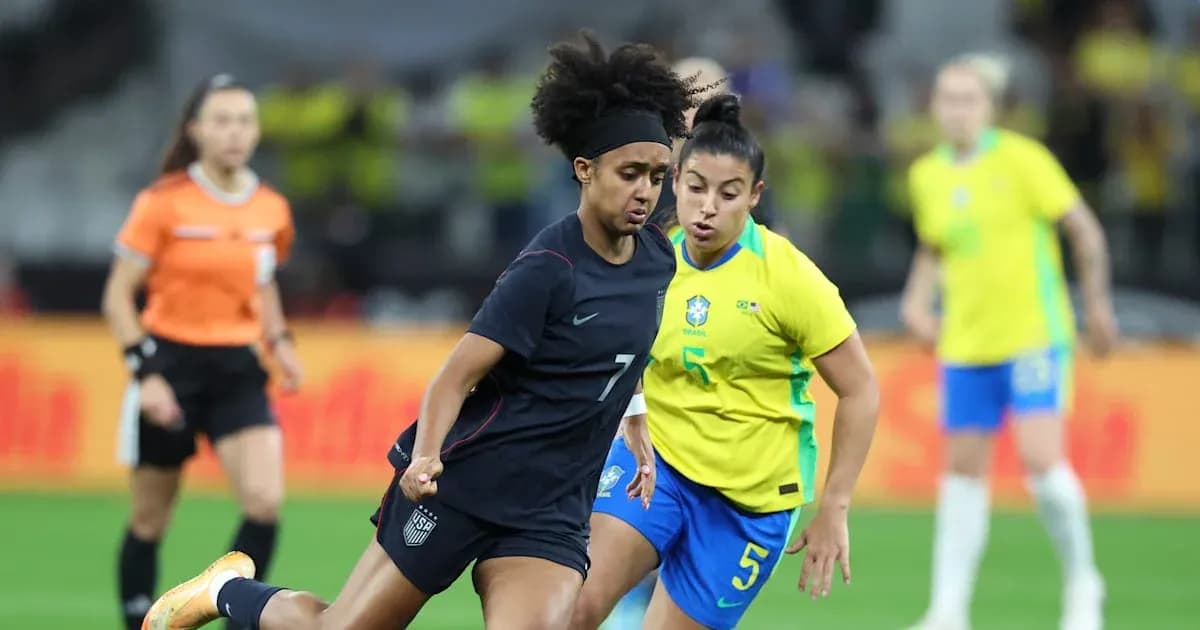
Emma Hayes took her reshaped squad into the heart of Brazil, into a cauldron that sounded more like a World Cup knockout than a June friendly, and watched her players get a crash course in what life away from home really feels like.
“It was an amazing atmosphere,” Hayes said afterward, a touch of admiration in her assessment. You can talk about it in team meetings, you can show clips, you can warn players about whistles and hostility. But until you’re standing in it, until every touch is greeted with derision and every decision is contested by 40,000 voices, you don’t really know.
From the first whistle to the last, the U.S. got no peace.
The crowd rode every challenge. Every U.S. misstep drew howls. Every Brazilian tackle brought the house down. Coupled with Brazil’s trademark physical edge and a brand of “chaos ball” that thrives on broken play and second balls, it dragged the visitors into a type of contest they rarely face on home soil.
Hayes wanted exactly that.
“If we want things to be easy, we stay at home and play in LA or somewhere else,” she said. “We don’t want easy.”
This is the rebuild in its rawest form: uncomfortable, uneven, occasionally bruising. With World Cup qualifiers looming in November and the 2027 tournament set for these very shores if they make it back, the U.S. chose to lean into the hardship now rather than hide from it.
For a few minutes, it looked like they might tame the noise.
Sophia Wilson struck early, her first goal since returning to the national team, briefly puncturing the atmosphere and giving the U.S. a 1-0 lead. It should have settled them. Instead, it woke Brazil up.
The response was ruthless. A quick-fire double from the hosts flipped the game inside 15 minutes, the stadium surging with each goal as the U.S. staggered under the shift in momentum. From there, Brazil dug in. They defended with aggression, managed the rhythm, and rarely allowed Hayes’s side to carve out truly clear chances.
The U.S. huffed, probed, and occasionally threatened, but the final pass never consistently arrived. The game became a mental test as much as a tactical one.
“It’s difficult when it’s a game like that, when you’re being thrown to the ground multiple times and calls aren’t going your way,” captain Lindsey Heaps admitted. The frustration was obvious, yet she framed it as a challenge the team must own. “It’s up to us – it’s that mental capacity to stay in a game like that.”
Heaps saw progress in the chaos. She pointed to the group’s composure, the refusal to unravel completely even as decisions went against them and the clock ticked down.
“I’m really proud of our team because we stayed level-headed and we still created opportunities,” she said. The missing piece, in her eyes, is the ruthless edge to turn that composure into points. “It’s about having that experience to get that goal back and walk away with a result from this kind of game.”
“It’s hard but I think that emotional control has gotten so much better throughout this past year.”
Wilson echoed her captain’s view. The forward’s goal should have been the platform for a statement away performance; instead, it became a lesson in game management.
“We needed to do a better job of controlling the game and keeping that lead,” she said. Still, she refused to see the night as anything other than a vital step. “It was a really good test for us, and we felt what it is like to play here in their home country. I think we can take what we need to from this game and the nice part is we get to go again in a few days.”
That “again” comes quickly.
On Tuesday, the U.S. and Brazil meet for the 45th time, this time in Fortaleza, where another charged crowd will be waiting and another hostile soundtrack will follow every U.S. touch. Hayes’s side arrive under pressure: two defeats in recent meetings, and the specter of a third straight loss to Brazil hanging over them.
But this is exactly the point of the trip. No comfort. No shortcuts. No illusion that the road back to the top can be paved entirely on home turf.
They have seen what Brazil can do, felt the weight of an away crowd, and learned how thin the margins become when control slips. On Tuesday, in another Brazilian stadium and another wall of noise, we find out how quickly this new-look U.S. team can turn those lessons into a response.