Union Omaha Triumphs 4–2 Over Fort Wayne in USL League One Cup
Under the lights at Werner Park, Union Omaha and Fort Wayne closed out their USL League One Cup group-stage stories in a match that mirrored their broader campaign identities. The 4–2 home win for Union Omaha was not just a flourish of attacking intent; it was a crystallisation of what these sides have been all tournament: Omaha, chaotic but ruthless in the final third; Fort Wayne, adventurous yet fatally porous.
I. The Big Picture – Group 4 in microcosm
This was a Group Stage tie in the USL League One Cup, but it carried the intensity of a knockout night. Heading into this game, Union Omaha sat 2nd in Group 4 with 6 points from 3 matches, their overall goal difference a precarious -1, built from 7 goals scored and 8 conceded. On their travels they had been perfect; at home, volatile. At Werner Park they had played 2, winning 1 and losing 1, scoring 5 and conceding 7.
Fort Wayne arrived as the group’s strugglers, 6th with 1 point and a goal difference of -6, their overall record reading 0 wins, 0 draws, 3 losses, with 5 goals scored and 10 conceded. Away from home they had lost both matches, scoring 3 and conceding 7. The numbers painted them as a side willing to trade blows but unable to withstand sustained pressure.
The match itself followed that script. A 2–2 half-time scoreline hinted at Fort Wayne’s capacity to punch back, but Omaha’s second-half surge turned the evening into a statement: this is a side that can live with high-scoring chaos and still come out on top.
II. Tactical Voids and Discipline – Edges at the margins
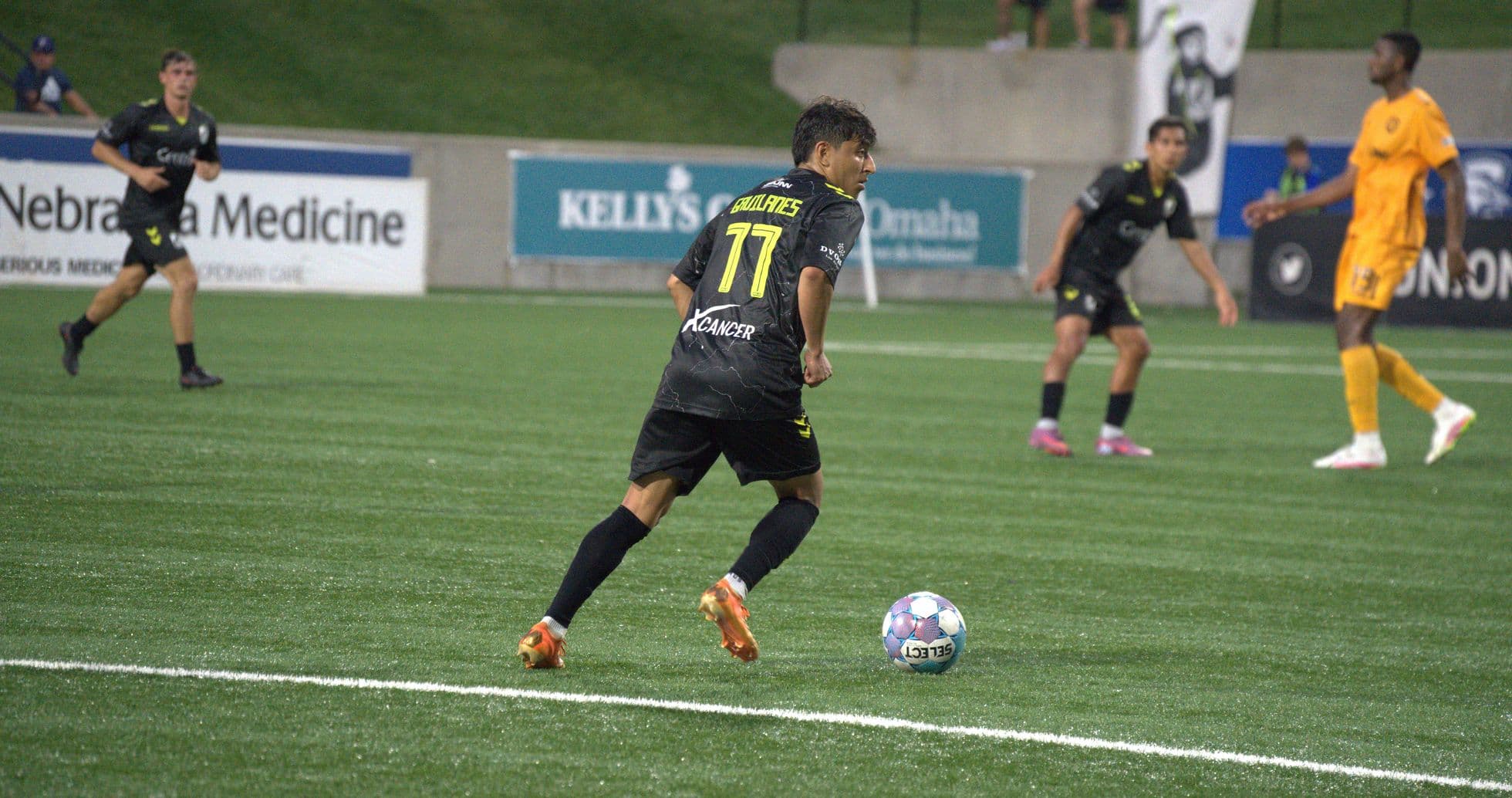
Officially, there were no listed absentees, so both coaches had the luxury of their full squads. Marco Candela Lopez Vincenzo leaned into Union Omaha’s attacking depth: C. Jensen (99) led the line, supported by the creative band of A. Gavilanes (77), D. Borczak (11), A. Gomez (21) and the metronomic Gabriel Cabral (8). Behind them, the defensive axis of C. Lawrence (19), S. Owusu (4), B. Malone (3) and R. Jiba (27) was tasked with stabilising a side that, heading into this game, had conceded an overall average of 2.7 goals per match.
Fort Wayne’s setup reflected a similar balance of ambition and risk. A. Echevarria (96) anchored from the back, with J. Smith (2), R. Sproat (5), J. Solis (19) and A. Hernandez (22) forming the defensive core. In midfield and attack, the likes of E. Nieto (18), J. Garay (8), K. Gafar (12), J. Thomas (23), D. Oyetunde (9) and R. Becher (21) provided verticality and direct threat.
Where the teams diverged most clearly was in their disciplinary and psychological profiles. Union Omaha’s yellow-card timing this campaign has been concentrated in the middle and late phases: 25.00% of their cautions between 31–45 minutes, 50.00% between 61–75, and 25.00% between 76–90. There is also a flashpoint: a red card in the 61–75 window, underscoring how their intensity can spill over as matches open up.
Fort Wayne, by contrast, have spread their cautions across the game but with a stark late-game tilt. Their yellow cards are distributed 22.22% between 16–30 minutes, 22.22% between 31–45, 11.11% between 46–60, and a striking 44.44% in the final 76–90 stretch. That late-game spike suggests a side that tires, chases, and fouls as games slip away. In a match that finished 4–2, that pattern likely re-emerged: chasing Omaha’s tempo, Fort Wayne again lived on the disciplinary edge as the clock wound down.
III. Key Matchups – Hunter vs Shield, Engine vs Enforcer
Without individual scoring charts, the “Hunter vs Shield” duel is best understood through team profiles. Union Omaha’s attack has been one of the group’s most incisive: overall they averaged 2.3 goals per match, with 2.5 at home. Fort Wayne’s defensive record made them the ideal prey: they conceded an overall average of 3.3 goals per match, with 3.5 on their travels.
That imbalance defined the night. Jensen, supported by the roaming movement of Botello Faz (9) and the creative thrust of Gavilanes and Borczak, repeatedly stretched a Fort Wayne back line that has not kept a single clean sheet all campaign. Omaha’s biggest home win in this competition, a 4–2 scoreline, is now both a statistic and a template: when they get their front line firing, they can simply outscore their own defensive frailties.
In the “Engine Room”, Gabriel Cabral’s role was pivotal. As Omaha’s central conduit, he had to manage transitions for a side that, overall, had failed to keep a clean sheet and conceded an average of 3.5 goals at home. Opposite him, J. Garay and E. Nieto tried to stitch Fort Wayne’s phases together, feeding the direct runs of Oyetunde and Becher. Fort Wayne’s overall goals-for average of 1.7 – with 1.5 on their travels – shows they can create and finish, but their midfield lacks the control to protect a fragile defence.
The bench options underscored Omaha’s edge in depth. L. Wootton (16), D. Gutierrez (17), K. Tekiela (22) and R. Nuhu (24) gave Candela Lopez Vincenzo multiple vectors to either close out or further tilt the game. Fort Wayne’s substitutes – including B. Schipmann (1), L. Ricol (7), J. Jordan (6) and C. Awoudor (10) – offered energy, but not the structural reinforcement their defence so desperately required.
IV. Statistical Prognosis – What this result tells us
Following this result, the numbers and the narrative align. Union Omaha remain a high-variance, high-ceiling side: overall, they score freely, fail to keep clean sheets, and lean into chaos. Their penalty record – 1 taken, 1 scored, 100.00% conversion, no misses – hints at composure in key moments, even as their card profile shows a team that lives on the emotional edge.
Fort Wayne’s story is harsher. Overall they have lost all 3 matches, with 5 goals scored and 10 conceded, no clean sheets, and no penalties won. Their late-game yellow-card surge and away average of 3.5 goals conceded underline a structural frailty rather than bad luck.
If we project this forward in Expected Goals terms, Union Omaha’s attacking volume and Fort Wayne’s defensive leakage would almost certainly have produced a high xG figure in Omaha’s favour. A 4–2 scoreline is not an anomaly; it is the logical outcome of a matchup where one side’s offensive strengths are perfectly aligned with the other’s defensive weaknesses.
At Werner Park, Union Omaha confirmed they are built for wild nights and big scores. Fort Wayne, for all their bravery in attack, leave the group stage as a cautionary tale: in this competition, you cannot simply outscore your problems if your defensive structure is this porous.