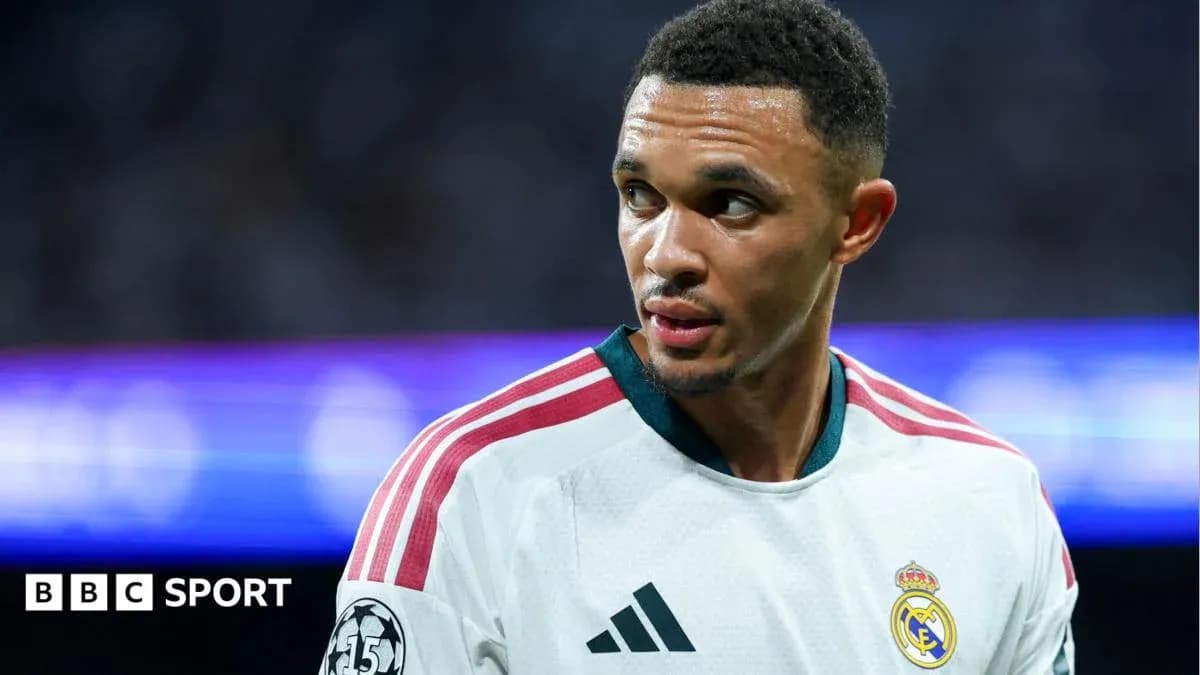
Trent Alexander-Arnold's Midfield Debate Continues
The Trent Alexander-Arnold midfield debate refuses to die. It just keeps circling back.
England tried it at Euro 2024. Gareth Southgate pushed him inside, handed him the keys for two group games, then quietly shelved the idea. At Liverpool, Jurgen Klopp built an entire structure that let him wander into central areas and dictate play – but always from a starting berth at right-back.
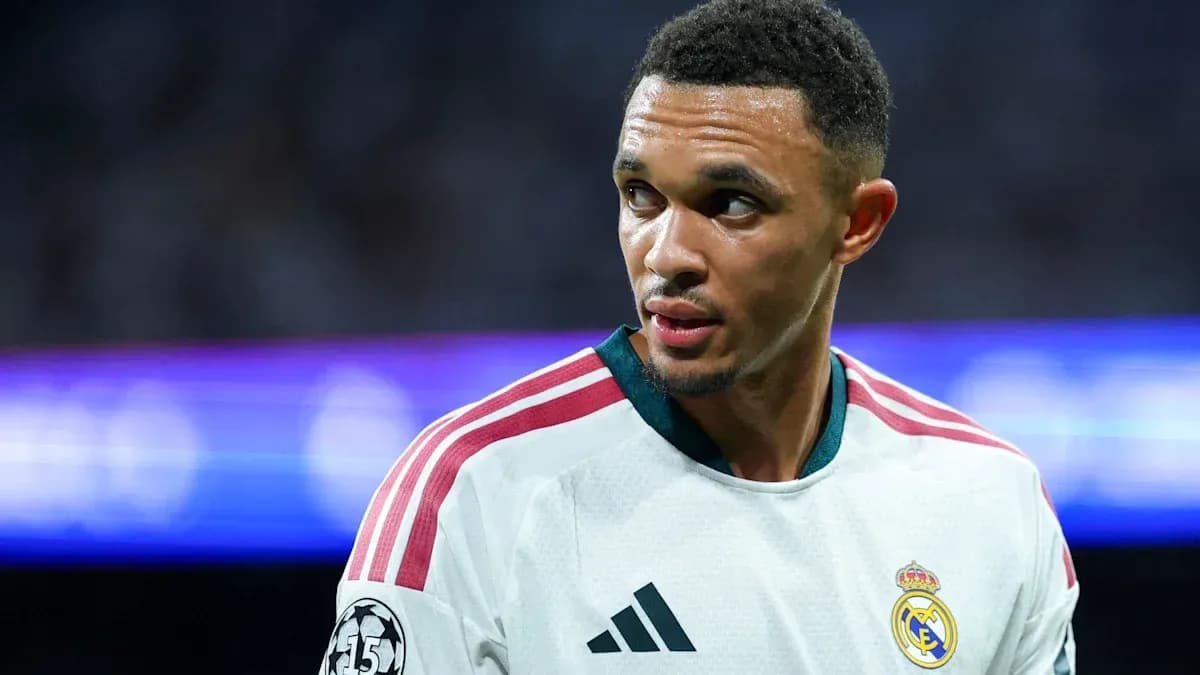
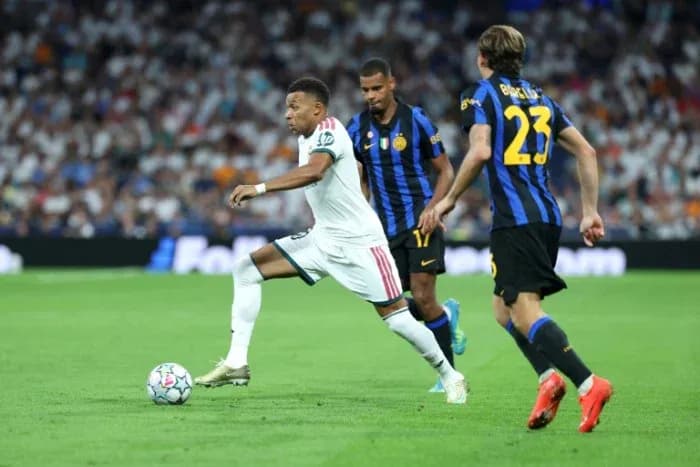
Now it’s Real Madrid’s turn to wrestle with the question. On Tuesday night, in a tight Champions League win over Inter Milan, Jose Mourinho pushed Alexander-Arnold fully into midfield from the start.
Was this the night the experiment finally took off? Not quite. Not yet.
Mourinho’s reluctant midfielder
Mourinho’s verdict was blunt.
“He has played midfield with England and Liverpool... but he is not a midfielder,” he said after the 2-1 victory, the word “not” landing with particular weight.
The Portuguese coach praised the performance, though. He talked about how Alexander-Arnold “interpreted what he needed to really well, tactically” and bracketed him with Federico Valverde as having “worked very well at this level.”
Mourinho also made it clear: this was a solution, not a revolution.
Suspensions to Eduardo Camavinga, Arda Guler and Bernardo Silva stripped Real’s midfield of depth and forced a rethink. Alexander-Arnold, with his passing range and experience stepping inside from full-back, became the obvious emergency option.
It was necessity, not some grand positional rebrand.
Mixed night in the middle
On the pitch, the performance matched the story of his career in this role: flashes of quality, questions about the fit.
Alexander-Arnold lined up next to Valverde and immediately took responsibility on the ball. He created two chances, slung in more crosses than any other Real player and tried to open the game up with his delivery. The right foot that once powered Liverpool’s title charges still carries menace.
But the numbers told a more complicated tale. He failed to win a single tackle. His passing accuracy dipped to 83.3%, lower than you would expect from a central midfielder at this level. In a game where control mattered, there were loose touches and risky balls.
When Inter pulled a goal back on 77 minutes, Mourinho turned to his bench. Alexander-Arnold’s number went up. As he walked off, whistles rolled around the Bernabeu. They sounded more like a verdict on Real’s jittery display than on one man, but the timing made it hard to ignore.
He had emptied the tank. The crowd wanted more from the team.
Right-back battle still unresolved
This was also the first competitive match in which Alexander-Arnold and fellow right-back Denzel Dumfries started together. Mourinho had tried it once in pre-season against Fiorentina, with Alexander-Arnold at right-back and Dumfries ahead of him on the same flank.
On Tuesday, the roles split differently. Dumfries stayed in his lane; Alexander-Arnold stepped into the centre.
The bigger picture is clear: Mourinho still hasn’t settled on a first-choice right-back. Last season, Alexander-Arnold had to scrap with Dani Carvajal for minutes. This year, the fight is with Dumfries. The England international is again living on the fault line between starter and rotation option.
Yet inside the club, the view is positive. Mourinho, BBC Sport understands, has been impressed by Alexander-Arnold’s attitude, his professionalism and the variety he brings. He sees a player who doesn’t fit the traditional full-back mould, someone who can step into central pockets and shape attacks from unusual angles.
His passing, crossing, through balls and set-piece delivery remain elite tools. The question is where to best deploy them.
The long-running midfield question
This is not a new debate for Alexander-Arnold. Southgate’s Euro 2024 trial ended with the player out of the starting XI after that flat 1-1 draw with Denmark, withdrawn before the hour as England laboured.
But there have been high points. In June 2023, he wore the England number 10 shirt in Malta for a Euro qualifier. England won 4-0. Alexander-Arnold scored from midfield and looked at ease in those central zones.
“I haven't played it too much, but it feels comfortable,” he told Channel 4 afterwards. “It feels natural, I will say that. It's somewhere I can see myself playing.”
Southgate kept flirting with the idea for another year, then backed away when it failed to fully convince at tournament level.
Mourinho sounded a similar note of caution after the Inter win. “He has lost some balls because it is not the same to play in this position compared to at right-back,” he said. The physical demands are different, the spaces tighter, the decisions quicker.
“The intensity of physical work is quite difficult. He has a different engine. He has given 100%. He left the pitch with nothing left to give.”
That last line matters. No one doubts the effort. The question is whether effort and talent can align into a complete midfielder, or whether Alexander-Arnold’s true power still lies in arriving in those central areas from the flank, not living there.
For now, Real Madrid have a world-class right-back who can cover midfield in a crisis, not a midfielder who once played right-back. How long that remains the case may define the next chapter of his career.