The Town Dominates Vancouver Whitecaps II 6–1 at PayPal Park
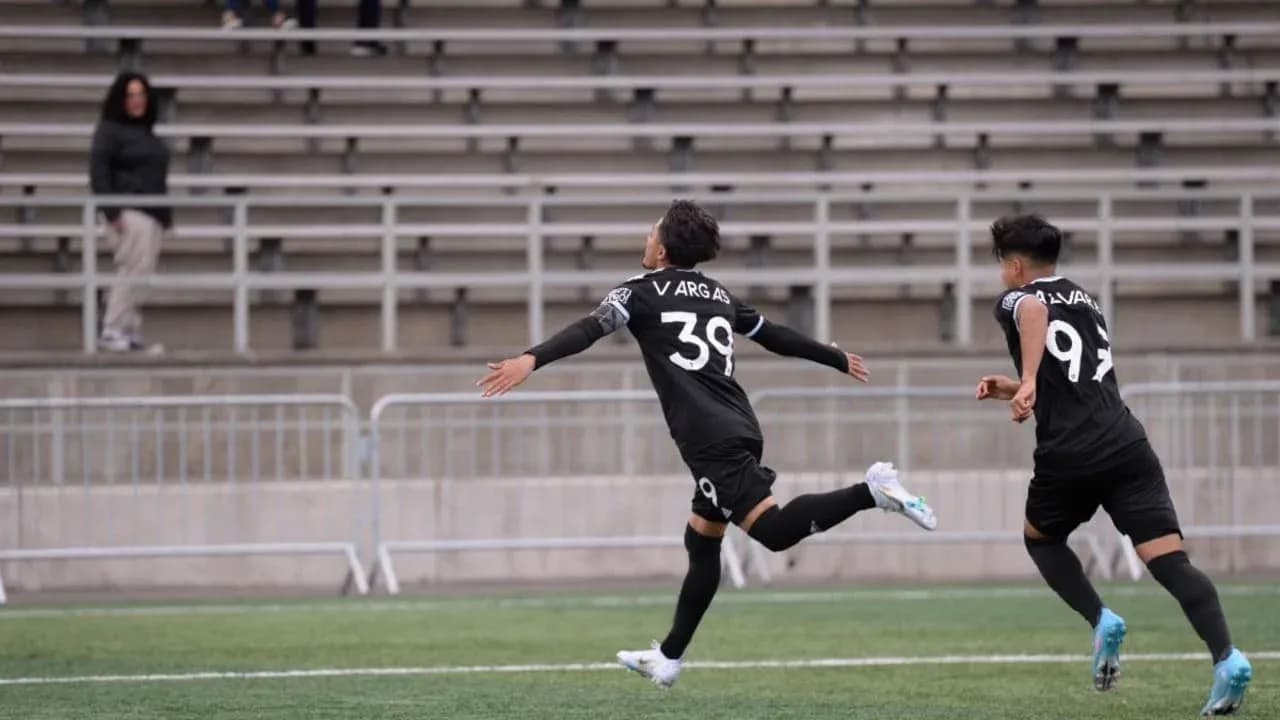
Under the lights at PayPal Park, this MLS Next Pro Group Stage fixture turned into a statement of intent. The Town, already carving out a reputation as one of the Pacific Division’s sharpest attacking sides, dismantled Vancouver Whitecaps II 6–1, a scoreline that felt like the logical conclusion of two contrasting seasonal identities.
Heading into this game, The Town were riding high. Across the season overall, they had 5 wins from 8, with 20 goals scored and just 8 conceded, a goal difference of +12 that matched their standing near the top of both the Pacific Division (2nd) and the broader Eastern Conference table (4th). At home, they were perfect: 3 wins from 3, 11 goals for and only 2 against, an attacking average of 3.7 goals at home and just 0.7 conceded. This was a side built to dominate at PayPal Park.
Vancouver Whitecaps II arrived with a very different story. Overall, they had played 10 matches, winning 3 and losing 7, with 15 goals scored and 24 conceded in the standings snapshot, and 16 for and 25 against in the detailed stats, another goal difference of -9 that underlined their fragility. On their travels they had been brutally exposed: 6 away games, 6 defeats, 8 goals scored and 18 conceded, shipping an average of 3.2 away goals while managing only 1.3 themselves. This was not just a bad run; it was a structural weakness.
I. The Big Picture: Systems and DNA
The Town’s season-long profile is clear. They are an aggressive, front-foot side whose biggest home win before this fixture was already 6–1, and whose most prolific home outing featured 6 goals scored. Their overall attacking average of 2.5 goals per match and defensive average of 1.1 conceded paints them as a high-output, relatively controlled team. The clean sheet data (1 overall, and none conceded more than 2 in a single match at home) suggests that while they are not purely defensive specialists, they manage risk effectively.
Vancouver Whitecaps II, by contrast, are chaos merchants away from home. Their heaviest away defeat before this was also 6–1, and their “biggest” away loss category confirms that when things go wrong, they go very wrong. With no clean sheets at all this season and 1 match where they failed to score, they tend to be open, stretched, and exposed, particularly outside their own ground.
The lineups reflected those identities. Daniel de Geer trusted a consistent core: F. Montali between the posts, with a defensive line built around the likes of J. Heisner, A. Cano, and N. Dossmann. In front of them, the energy and creativity of D. Baptista, R. Rajagopal, G. Bracken Serra, and E. Mendoza supported a front unit led by Z. Bohane, T. Allen, and S. de Flores. Even without a listed formation, the selection screamed balance: enough technical players to dominate the ball, enough runners to stretch Vancouver’s brittle back line.
Rich Fagan’s Vancouver side, meanwhile, leaned on youth and potential. S. Rogers anchored the defense, flanked and supported by S. Deo, Trevor Wright, P. Amponsah, and M. Garnette. The midfield and forward areas, with C. Bruletti, Y. Tsuji, C. Rassak, L. MacKenzie, D. Ittycheria, and R. Sewell, were designed to be industrious and vertical rather than controlling. But the structural frailty that has haunted them away from home was never far from the surface.
II. Tactical Voids: Discipline and Risk
The disciplinary trends heading into this game hinted at how the contest might tilt. The Town’s yellow cards were spread across the match, but with clear spikes: 30.00% of their yellows came in the 16–30 minute window, and another 30.00% in the 76–90 minute period. Crucially, their only red card of the season had arrived between 31–45 minutes, a reminder that their intensity can occasionally spill over just before half-time.
Vancouver Whitecaps II, though, carried a heavier disciplinary load. Their yellow cards were distributed almost across the full 90, with 15.79% in the opening 15 minutes and a late-game surge: 21.05% between 76–90 minutes and another 21.05% in 91–105. That pattern suggests a team that tires, chases games, and fouls more as they lose control.
Those late yellow surges intersected brutally with The Town’s habit of staying aggressive throughout. With no missing players listed for either side, both coaches had full squads, but only one had a structure capable of managing the emotional and tactical tempo.
III. Key Matchups: Hunter vs Shield, Engine Room
The “Hunter vs Shield” duel was not about a single star striker, but about The Town’s collective firepower against Vancouver’s porous away defense. At home, The Town’s 11 goals in 3 matches (an average of 3.7) met a Vancouver unit conceding 19 away goals across the season overall, at an average of 3.2 per away match. The numbers almost foretold a multi-goal home performance; the 6–1 scoreline simply amplified the trend.
At the back, Montali’s presence allowed The Town to hold a higher line, compressing the pitch and forcing Vancouver’s forwards to receive under pressure. Heisner and Cano were central to that, stepping into midfield lines to suffocate transitions. For Vancouver, Trevor Wright’s role as a defender with league recognition in the statistical tables placed him as the de facto organiser of a back line that has been repeatedly overrun on their travels. His task was enormous: marshal a unit that concedes heavily, against one of the league’s most fluent home attacks.
In the engine room, players like Baptista, Rajagopal, and Bracken Serra became the game’s quiet dictators. Their job was to pin C. Rassak and Y. Tsuji deep, denying Vancouver the chance to build through the thirds. Once that press took hold, L. MacKenzie and D. Ittycheria were often forced to chase long balls rather than join structured moves, isolating R. Sewell and blunting any counter-attacking threat.
IV. Statistical Prognosis and xG Logic
Even without explicit xG values, the expected goals narrative is written in the season data. A home side averaging 3.7 goals at PayPal Park and conceding just 0.7, facing an away team conceding 3.2 and scoring 1.3 on their travels, points to a pre-match model heavily skewed towards The Town. The likely xG balance would have leaned decisively to the hosts, with a high probability of multiple high-quality chances.
Vancouver’s one statistical pillar of reliability was from the spot: 3 penalties taken, 3 scored, 100.00% conversion, and no penalties missed. But in a match where they were outplayed so comprehensively, even that weapon never realistically promised to bridge the gap. The Town, for their part, had not yet taken a penalty this season overall, with 0 total and therefore no misses, but their open-play production rendered that almost irrelevant.
Following this result, The Town’s attacking metrics at home become even more intimidating, and their goal difference swells beyond an already impressive +12 baseline. Vancouver Whitecaps II’s away story, meanwhile, hardens into a cautionary tale: no away points, heavy concessions, and a structural fragility that no amount of individual promise can disguise.
This was not just a 6–1 win. It was a tactical and statistical confirmation of who these two squads are right now: The Town, ruthless and coherent at PayPal Park; Vancouver Whitecaps II, brave but badly exposed whenever they leave home.