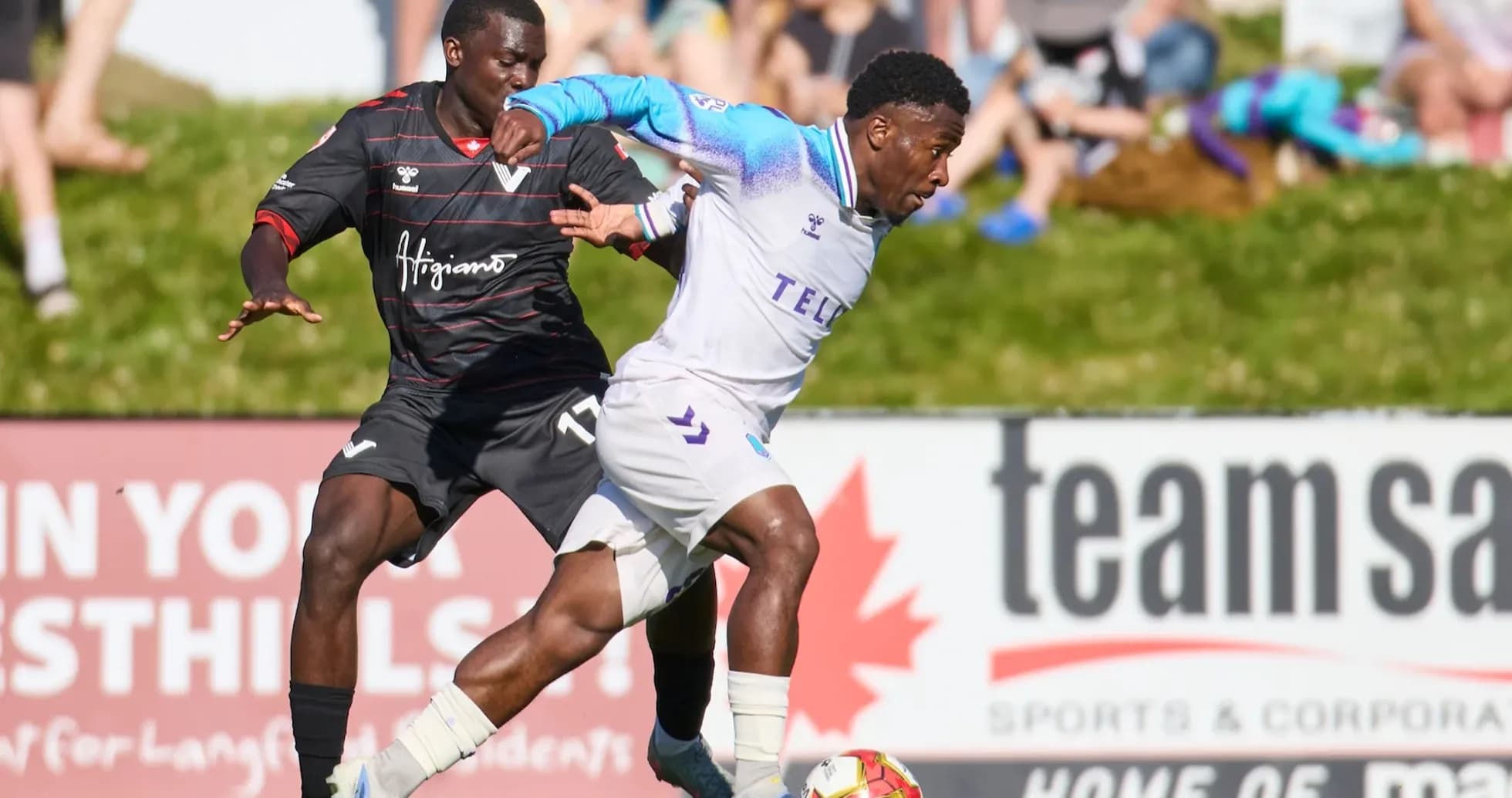
Supra du Quebec Stuns Atlético Ottawa with 2-0 Victory
Under the late-summer light at TD Place Stadium in Ottawa, a Group Stage meeting in the Canadian Premier League ended with a jolt to the established order. Atlético Ottawa, third in the table with 34 points and a goal difference of -5 (34 scored, 39 conceded) over 23 matches, were beaten 2–0 at home by Supra du Quebec, who arrived in sixth with 25 points and a goal difference of -7 (31 scored, 38 conceded) from 22 games.
The narrative going in was clear: Ottawa, strong at home with 7 wins from 12 and 21 goals scored at 1.8 per match at TD Place, against a Supra side that lives more dangerously on their travels, with 20 away goals at an average of 1.8 but also 21 conceded at 1.9. Ottawa’s season has been streaky – their overall scoring rate of 1.5 goals per game is offset by 1.7 conceded – while Supra’s profile is similar: 1.4 goals for and 1.7 against overall, a team that rarely dies wondering.
Leaning into that identity, Supra du Quebec set up in an assertive 4-3-3, while Gustavo Leal’s Ottawa went with a 4-2-3-1 that has become one of their staple structures this season. On paper, it was control versus chaos; on the pitch, it became a story of how Supra’s verticality and edge in key duels suffocated Ottawa’s creative core and flipped the script in the capital.
Tactical Voids and Discipline
The absences sheet offered no clues – there was no listed injury or suspension data – so we work from who actually stepped onto the pitch. For Ottawa, the spine was entrusted to C. Kalongo in goal, with a back four of Joaquim Coulanges, Sergei Kozlovskiy, Loïc Cloutier and Rony Mbomio. In front of them, the double pivot of D. Gutiérrez and T. Arnaud was tasked with both shielding and launching transitions, while an attacking trio of G. Antinoro, B. Tabla and E. García operated behind lone forward N. Fleuriau Chateau.
This selection left one notable creative void: Manuel Aparicio, one of the league’s leading yellow-card collectors and a key tempo-setter for Ottawa this season, was not in the listed matchday squad. Without his 671 passes and 11 key passes this campaign, Ottawa’s ability to dictate rhythm and break Supra’s press through the middle was blunted. Instead, the responsibility to knit play fell more heavily on Antinoro and García.
Antinoro, who has already walked the disciplinary tightrope with a red card this season, again had to balance aggression with control. Ottawa’s team profile shows a pronounced late-game disciplinary spike: 34.00% of their yellow cards arrive between 76–90 minutes, with a further 18.00% in added time. That late volatility has already produced one red card overall. In a match where they were chasing, that tendency risked turning frustration into self-sabotage.
Supra, meanwhile, are no strangers to the referee’s notebook. D. Abzi leads the league for yellows with 9 and a yellow-red, while centre-back C. Auguste has 7 yellows. As a team, Supra’s yellow cards are spread but peak in the 31–45 and 76–90 minute ranges (both at 20.00%), and their red-card profile is striking: one dismissal in 76–90 and a remarkable cluster of four reds in 91–105. This is a side that lives on the edge in the closing phases.
On this day, though, Supra’s aggression felt more controlled than chaotic. With Alessandro Biello – already a red-card holder this season – anchoring midfield and screening, they managed to bring bite without tipping over. Ottawa’s lack of a true metronome in the engine room meant they were often second to loose balls, forced into fouls rather than drawing them.
Key Matchups – Hunter vs Shield, Engine Room
The headline duel was always going to be Supra’s front line against Ottawa’s back four. Loïc Adrien Kwemi, with 6 goals and a rating of 7.15, arrived as one of the league’s form attackers. His 28 shots (16 on target), 59 dribble attempts and 13 key passes paint the picture of a forward who doesn’t just finish moves; he initiates them. Flanking him, I. Conde – 3 goals and 1 assist – offers subtle movement and link play, while N. Santos stretches the line.
Ottawa’s defensive numbers suggested vulnerability. At home they concede 1.3 goals per match, and overall 39 against in 23 games at 1.7 per match. Sergei Kozlovskiy, with 6 yellows this season, is still learning how to manage space and timing at this level. Up against Kwemi’s constant probing and Conde’s off-shoulder runs, the young centre-back pairing with Cloutier was always going to be under siege.
Supra’s “shield” at the back, by contrast, is more robust than their raw goals-against tally suggests. M. Chretien has been one of the league’s standout defenders: 711 passes at 89% accuracy, 11 successful blocks and 9 interceptions, plus 5 yellow cards and a yellow-red that underline how often he operates on the front foot. Alongside Auguste and the marauding Abzi, they formed a line that was proactive rather than reactive.
Their task was to contain Ottawa’s “hunter” in B. Tabla and the surging threat of N. Fleuriau Chateau. Tabla’s 5 goals and 1 assist, built on 19 shots (13 on target) and 30 dribble attempts, usually make him Ottawa’s primary outlet in broken play. Fleuriau Chateau, with 3 goals and 2 assists in limited minutes, is a penalty-box forward who thrives on early service and cut-backs.
Supra’s answer was to compress the central lane. Biello, with 548 passes at 92% accuracy and 27 tackles, acted as a pivot, helping the back four step in front of passes into Tabla and Antinoro. Chretien’s willingness to step out and block – he has 11 blocks this season – cut off the shooting lanes Ottawa usually find at the top of the box. As a result, Fleuriau Chateau was often isolated, forced to drop into zones where he is less dangerous.
In the engine room, the duel between Ottawa’s double pivot and Supra’s trio of Biello, S. Rea and A. Sissoko was decisive. Rea, one of the league’s premier creators with 3 assists, 37 key passes and 2 goals, drifted into half-spaces, drawing Gutiérrez and Arnaud out of position. Sissoko’s 16 tackles and 8 interceptions this season gave Supra a second ball-winner, allowing Rea to receive in advanced pockets rather than having to drop deep to build.
Statistical Prognosis and Tactical Verdict
If we translate the season-long numbers into a notional xG narrative, the pattern that unfolded at TD Place makes sense. Ottawa at home are typically good for close to 1.8 goals, but they also allow 1.3. Supra on their travels score 1.8 and concede 1.9. This is the profile of a match tilted towards a high-event contest where the more ruthless transition side wins.
Supra’s penalty record – 4 scored from 4, a perfect 100.00% with no misses – contrasts sharply with Ottawa’s more fragile relationship from the spot: 4 penalties overall, only 2 scored and 2 missed, a 50.00% conversion rate. In a tight game-state, the psychological weight of that difference matters. Supra step up to the spot with confidence; Ottawa carry the memory of failure.
Defensively, both teams concede 1.7 goals per game overall, but the underlying structures differ. Ottawa’s late-game disciplinary spikes and one red card this campaign hint at a side that can unravel under scoreboard pressure. Supra’s cluster of reds in added time is more extreme, but on this day they managed to keep their nerve and their shape.
Tactically, the 2–0 away win can be read as the triumph of Supra’s vertical 4-3-3 over Ottawa’s more possession-leaning 4-2-3-1 stripped of its main conductor. With Biello and Sissoko anchoring, Rea linking, and Kwemi leading the line, Supra exploited Ottawa’s soft centre and their reliance on wide individualism from Tabla and García.
Heading into future fixtures, the prognosis is clear for both: Ottawa must restore control to their midfield and manage their late-game discipline if they are to turn their strong home averages back into points. Supra du Quebec, meanwhile, have shown that their away attacking numbers are no mirage; when their back four, led by Chretien and Abzi, holds firm, their front three and creative midfielders have the tools to tilt xG and results alike in their favour.