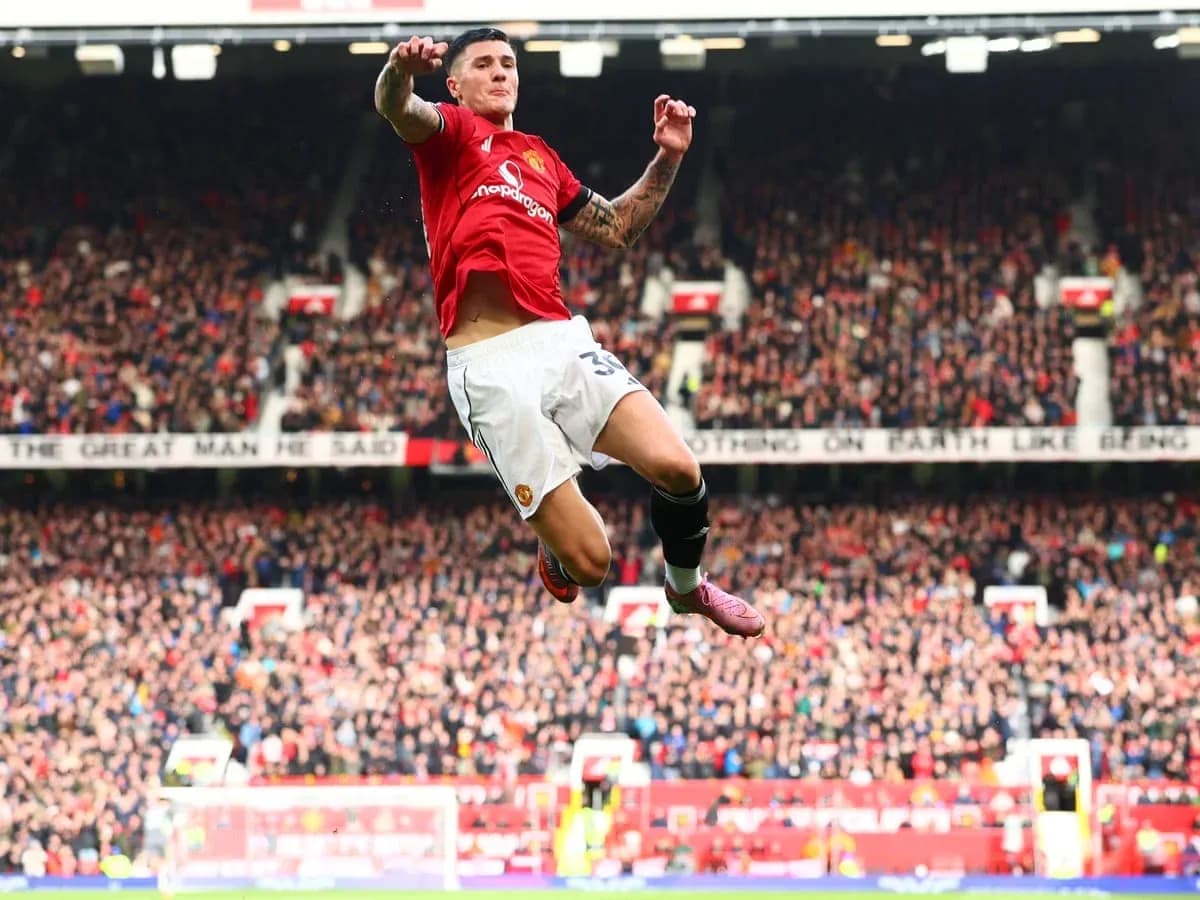
Sunderland vs Manchester United: Premier League Clash on May 9, 2026
Under the grey May sky on Wearside, the lights of the Stadium of Light in Sunderland will frame a meeting of different ambitions on 9 May 2026. Sunderland, safely in mid-table but still chasing a statement result, welcome a Manchester United side pushing to lock in a top‑three finish and Champions League football. For the hosts it is about proving they belong back among the elite; for the visitors, it is about avoiding a costly slip with the finish line in sight.
Season Context
Sunderland arrive in this late‑spring fixture sitting 12th with 47 points from 35 matches, built on 12 wins, 11 draws and 12 defeats (all: played 35, goals for 37, goals conceded 46). A negative goal difference of -9 underlines a campaign of fine margins, but a solid home return of 8 wins from 17 and 23 goals scored on Wearside shows why the Stadium of Light has been a difficult stop for visiting sides (home: 23 scored, 19 conceded).
Manchester United travel north in a far more elevated position, 3rd in the table with 64 points from 35 games (18 wins, 10 draws, 7 defeats). Their attack has been one of the most productive in the league with 63 goals scored and a positive goal difference of +15 (all: 63 for, 48 against). Away from Old Trafford they have been competitive if occasionally vulnerable, winning 6 of 17 on the road while scoring 27 and conceding 26, numbers that speak to both threat and openness in their away performances.
Form & Momentum
Sunderland’s recent league run of DLLWW paints a picture of a side that has mixed inconsistency with timely surges (form: DLLWW). Two wins in the last two games suggest momentum, but the three‑match spell without victory immediately before that points to a team still learning to string together longer positive sequences (all: 12 wins, 11 draws, 12 defeats).
Manchester United arrive with the more convincing recent record, WWWLD in their last five (form: WWWLD). Three straight victories in that sequence underline a strong push into the run‑in, even if the subsequent draw and defeat are reminders that this is not an invincible side (all: 18 wins, 10 draws, 7 defeats). Their attack remains consistently dangerous, with 63 league goals testifying to their ability to decide games even when performances are uneven.
Head-to-Head Patterns
The modern chapter of this rivalry has tilted towards Manchester United, particularly in league meetings. The most recent clash came at Old Trafford, where Manchester United beat Sunderland 2-0 in the Premier League in October 2025, a controlled home win that underlined the gap between the sides at that stage ([2-0] (Premier League, October 2025)).
On Wearside, Manchester United have also enjoyed success in recent top‑flight visits. In April 2017 at the Stadium of Light, they ran out 3-0 winners in the Premier League, a result that showcased their ability to impose themselves away from home when in rhythm ([0-3] (Premier League, April 2017)). Sunderland, however, have shown they can bloody the nose of the giants here: back in February 2016, also at the Stadium of Light, they edged a 2-1 Premier League victory, a reminder that this ground can still produce upsets against illustrious visitors ([2-1] (Premier League, February 2016)).
Tactical Preview
Sunderland’s statistical profile points to a flexible but generally compact approach, with a clear preference for a back four. Their most-used system is 4-2-3-1 (18 matches), complemented by spells in 4-3-3 and 5-4-1 (5 matches each), plus occasional shifts to 4-4-2, 4-1-4-1 and even 3-4-3. That spread suggests a coach willing to adapt structure to opponent while keeping a core identity built on two screening midfielders and wide support for a lone forward (home: 23 goals scored, average 1.4 per game). With 10 clean sheets and only 19 goals conceded at home, Sunderland have shown they can protect their box effectively when the structure is right (clean sheets: 10, home goals conceded: 19).
In possession, the creative axis is likely to run through G. Xhaka and E. Le Fée. Xhaka has delivered 6 assists and attempted 1,599 passes at 83% accuracy, combining progression with bite in midfield (46 tackles, 19 blocks, 27 interceptions). Le Fée adds energy and verticality, with 4 goals and 5 assists plus 44 key passes, making him a natural link between deeper build‑up and the attacking line. Out wide or between the lines, Sunderland’s younger midfielders and attackers — from C. Rigg to B. Brobbey and B. Traoré — give them the option of attacking transitions, especially at home where their scoring average is notably higher than away (home average 1.4 vs away 0.8).
Defensively, Sunderland’s numbers hint at a side that can bend but not always break. They have failed to score in 12 matches, which increases pressure on a back line that has faced 46 goals against overall. The presence of aggressive defenders like D. Ballard and Reinildo, both among the league’s leading red‑card recipients for the club (one red card each), underlines a back unit that defends on the front foot. T. Hume’s 9 yellow cards and 64 tackles show a willingness to engage duels high and often, which could be both an asset in disrupting Manchester United’s rhythm and a risk against their dribblers.
Manchester United’s tactical identity this year has revolved around two main structures: 3-4-2-1 (18 matches) and 4-2-3-1 (17 matches). The back three system gives them an extra central defender to manage transitions, while wing‑backs and a double pivot allow them to flood midfield zones. In 4-2-3-1, they can release an extra attacking midfielder without losing too much stability, which helps explain their strong scoring record of 63 goals (average 1.8 per game).
In the final third, the visiting threat is well signposted. B. Šeško has 11 league goals from 51 shots, providing penalty‑box presence and aerial threat, while Matheus Cunha and B. Mbeumo have each added 9 goals, combining dribbling and movement from deeper or wider starting positions. Cunha’s 41 successful dribbles and 155 duels won highlight his role as a carrier between lines, while Mbeumo’s 46 key passes and 9 goals show a dual function as creator and finisher.
Behind them, Bruno Fernandes remains the creative heartbeat. With 19 assists and 121 key passes, he is the league’s standout supplier, dictating tempo and delivering the final ball from central pockets and half‑spaces. Casemiro anchors the midfield with a blend of defensive presence and goal threat (9 goals, 88 tackles, 27 blocks), even if his 9 yellow cards and one yellow‑red underline a combative edge that can spill into risk. At the back, L. Shaw’s 1,609 passes at 86% accuracy and 71 tackles point to a full‑back comfortable both building play and defending wide channels, crucial in dealing with Sunderland’s wide rotations.
Discipline could be a subplot. Sunderland’s defenders Reinildo and D. Ballard, plus Manchester United’s H. Maguire, all have one red card each, while key figures like Casemiro, T. Hume and L. Shaw sit high on the yellow‑card lists (Casemiro 9 yellows, Hume 9, Shaw 8). In a match where transitions and duels will be intense, card management may shape how aggressively each back line can defend space.
Statistical Snapshot
- Competition: Premier League, season 2025 — 9 May 2026.
- Venue: Stadium of Light, Sunderland.
- Prediction: Win or draw — Double chance : draw or Manchester United.
- Win Probabilities: Home 10% / Draw 45% / Away 45%.
- Model: Sunderland 35.5% — Manchester United 64.5%.
Betting Verdict
The prediction models lean clearly towards Manchester United avoiding defeat, with only a 10% implied chance for a home win and the visitors backed in the comparison metrics (total: Sunderland 35.5% vs Manchester United 64.5%). Market prices broadly agree, with away odds clustered around 1.90–1.97 and Sunderland out at roughly 3.7–4.0, reflecting United’s stronger league position (3rd vs 12th) and superior scoring record (63 goals vs 37). Given Manchester United’s recent head‑to‑head control — including the 2-0 win in October 2025 and the 3-0 success at the Stadium of Light in April 2017 — combined with their current form line of WWWLD, the analytical case supports the conservative angle of “Double chance: draw or Manchester United”. For those seeking a primary position, siding with the prediction advice and using the double‑chance on the visitors looks the most grounded play in this matchup.