Spain's Dominance: A Statement Win Against Saudi Arabia
Spain did not just respond. They roared.
Four days after a lifeless stalemate against Cape Verde had the knives out and the doubts swirling, La Roja tore into Saudi Arabia with a 4-0 win that felt less like a group game and more like a declaration. This was Spain as they want to be seen at this World Cup: sharp, ruthless, unapologetically on the front foot.
At the heart of it all, a teenager who only recently watched World Cups from a classroom.
Yamal lights the fuse
Lamine Yamal was restored to the starting XI after his brief but blistering cameo in the opener. He did not wait long to justify it. Within seconds he was demanding the ball, whipping in a cross from the right, asking questions. Spain’s tempo rose with every touch he took.
By the 11th minute, he had his moment. The goal itself was not one for the museum: a stabbed finish at the back post from Mikel Oyarzabal’s low, skidding cross, squeezed in from a tight angle. No dribble past three men, no postage-stamp curler. Just instinct, timing, and a killer’s composure.
It was his first World Cup start. His first World Cup goal. The boy who watched Qatar 2022 from school now scoring with his mother and family in the stands. The symbolism wrote itself; the finish underlined something else. This is not just a creator of highlight reels. This is a forward ready to rack up numbers.
By the time Yamal’s shot hit the net, Spain had already strung together 39 passes in the move. No team at this tournament had put together such a sequence before scoring. It was the old Spain, the passing carousel, but with a sharper edge.
And the pressure that had built since Monday? It began to melt away.
Oyarzabal takes over
If Yamal lit the fuse, Oyarzabal swung the hammer.
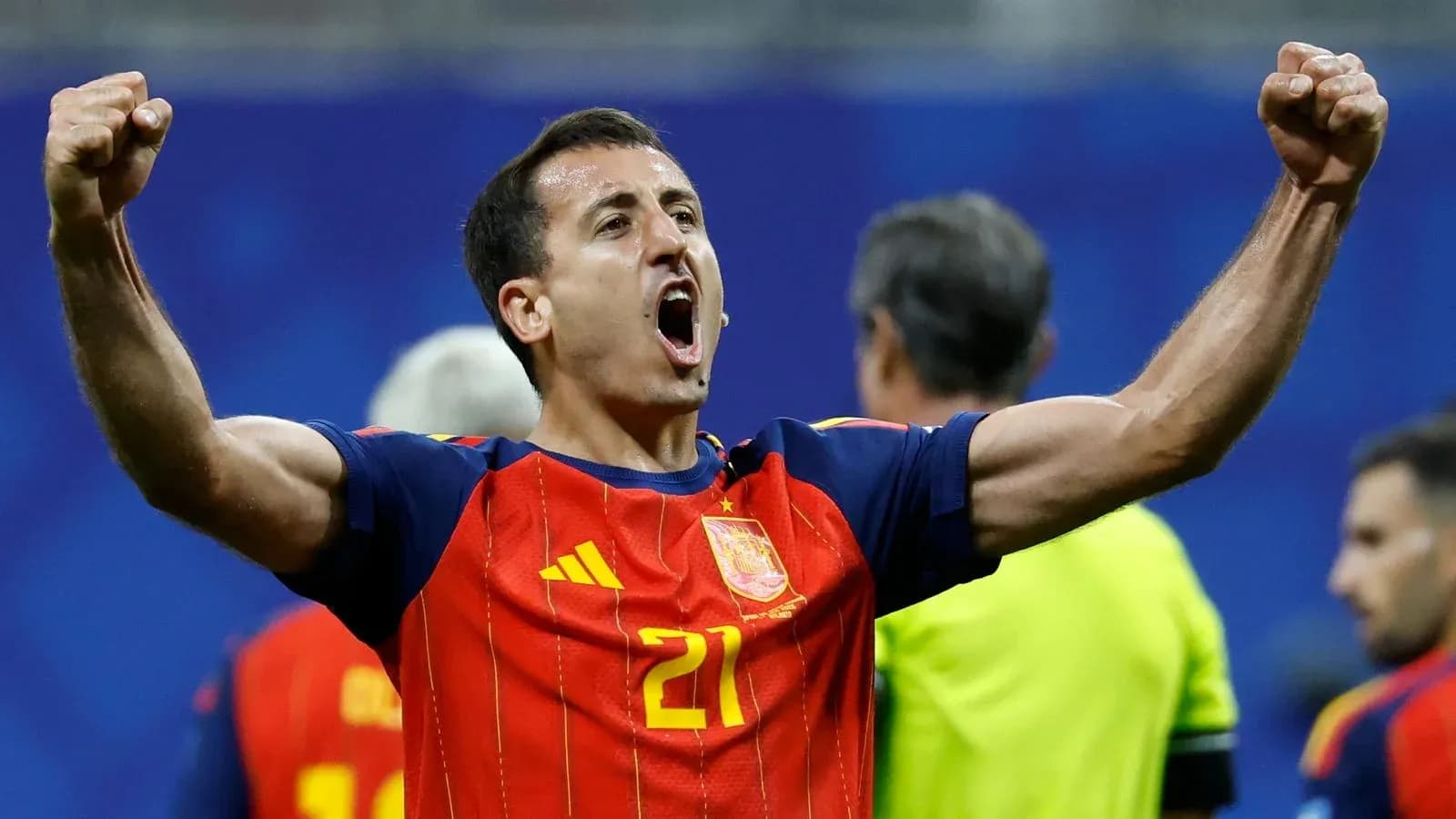
Spain sensed Saudi Arabia reeling and went for the throat. Ten minutes after the opener, chaos in the box ended with Oyarzabal poking in at the back post for 2-0. Untidy, yes. Devastating, absolutely. Saudi defenders looked at each other; Spain were already looking for the next attack.
Two minutes later, they had their third. Again it was Oyarzabal, again from close range, this time with more control and certainty as he turned the ball past Mohammed Al Owais. Three goals inside 25 minutes. No one had done that at a World Cup since Germany in 2014.
Spain were not just winning. They were sending a message.
Oyarzabal nearly walked off with the match ball before half-time. A dreadful back pass left Al Owais stranded and Oyarzabal bearing down. His first-time strike beat the goalkeeper but crashed off the top of the crossbar. A hat-trick chance gone, a reminder that Spain could have made the scoreline even uglier.
Still, his work – and Yamal’s – was done early. Luis de la Fuente, celebrating his 65th birthday, made the kind of decision coaches of serious contenders have the luxury to make. Both stars came off at the break, minutes and energy banked for what lies ahead.
Control, then a cruel deflection
Spain eased off slightly after half-time. The frenzy of the first period gave way to controlled dominance. The passing remained crisp, the pressing organised, but the urgency dulled a touch. The job, after all, was already done.
The fourth goal summed up Saudi Arabia’s night and this tournament’s strange relationship with defenders. From a corner, the ball was flicked on to Marc Cucurella, whose close-range effort drew a smart save from Al Owais. The rebound, though, slammed into Hassan Al Tambakti and spun into his own net.
Another own goal in a World Cup full of them. This was already the eighth of the tournament, with the group stage barely halfway through. For Al Tambakti, it was an unwanted statistic; for Spain, it was simply confirmation of their dominance.
They even thought they had a fifth in stoppage time. Ferran Torres arrived at the back post to sweep in Fabián Ruiz’s cross, celebrated, then waited. The VAR check dragged on, lines were drawn, angles examined. Eventually, the goal was wiped out for offside. No one in red looked too bothered.
By then, Spain were cruising at the top of Group H, ahead of Uruguay’s late kick-off against Cape Verde. Saudi Arabia, beaten and overwhelmed, dropped to the bottom.
A different Spain – and a clear warning
The contrast with the Cape Verde draw could not have been sharper. De la Fuente had demanded more verticality, more intensity, more shots. His players delivered from the first whistle, suffocating Saudi Arabia, pinning them into their own box and refusing to let them breathe.
Yamal embodied that change. Dribbles, crosses, shots – he attacked the game from the first minute, lifting the entire team with him. At club level he has already shown he can carry responsibility. Here, on the World Cup stage, he looked just as comfortable being the main man.
De la Fuente spoke of him as a player now ready for full matches, even as he protected him by withdrawing him at half-time, leaving him “hungry for more”. Oyarzabal, playing through a minor issue, again proved why coaches trust him: not always spectacular, but relentlessly decisive.
There is quality threaded right through this Spain squad, but nights like this underline something else. Systems and structure matter. So do superstars. When a player like Yamal raises the temperature, others follow. Passes zip faster, runs become braver, finishing grows more ruthless.
Spain wanted a reaction. They produced a statement.
Uruguay await next, a far sterner test and a truer measure of how far this team can go. But in Atlanta, Spain finally arrived at this World Cup – and they did it with a performance that will echo well beyond Group H.