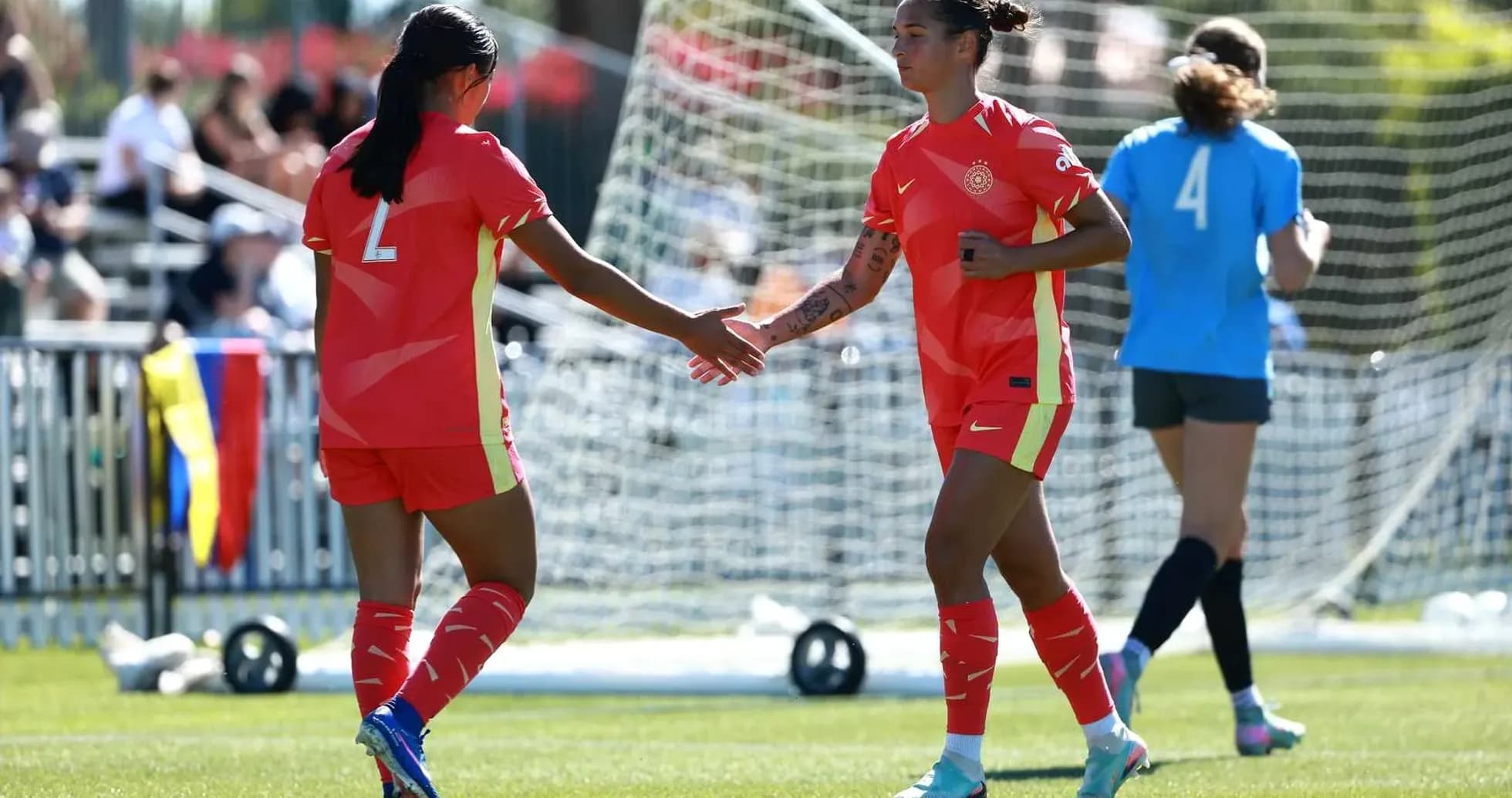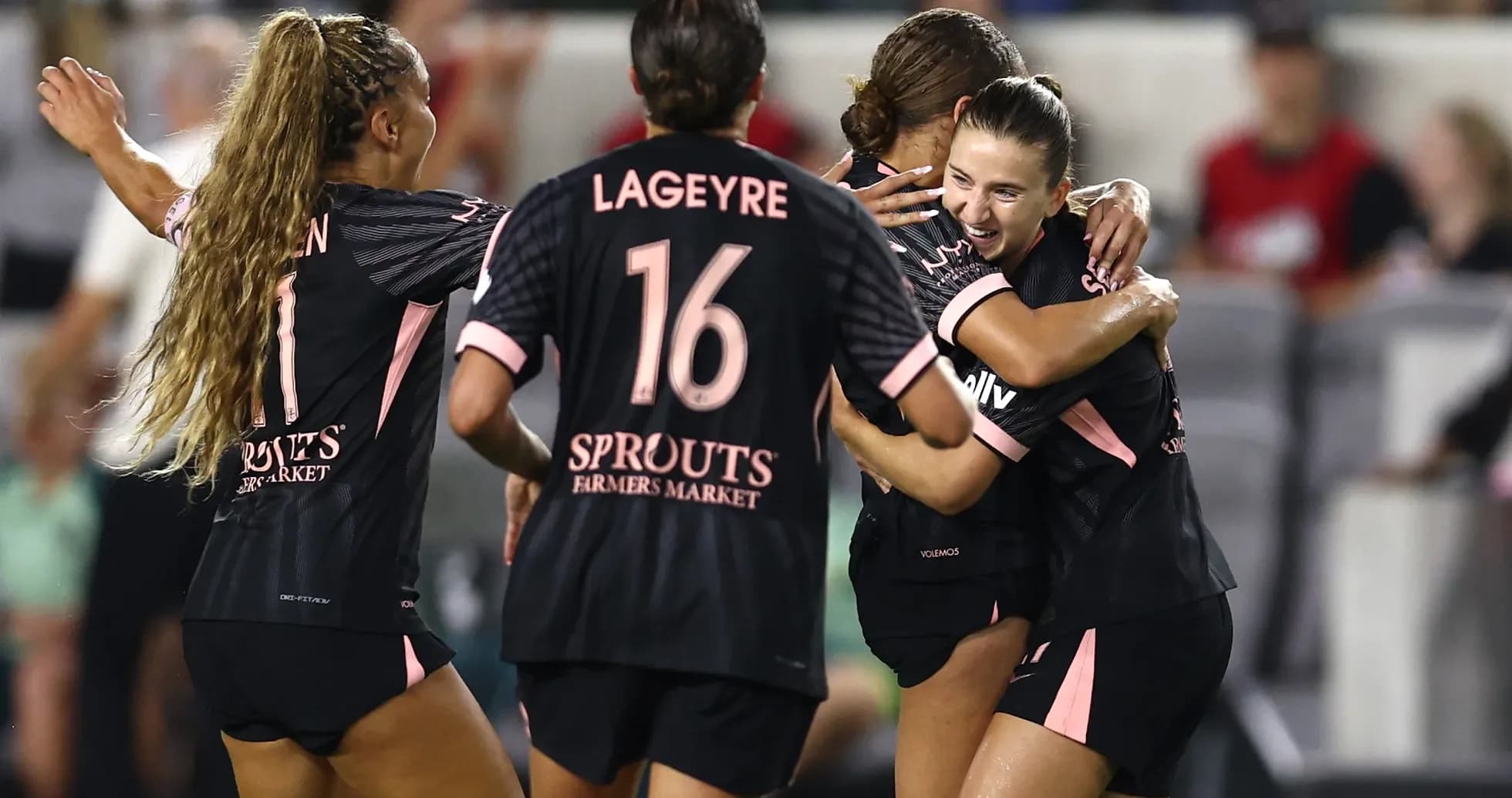
San Diego Wave W's Tactical Superiority in 2-1 Win Over Angel City W
Angel City W’s 1-2 home defeat to San Diego Wave W at BMO Stadium unfolded as a clear clash of structures: Alexander Straus’ 4-2-3-1 looking to compress and counter against Jonas Eidevall’s more ball-dominant 4-3-3. Over 90 minutes, San Diego’s superior control between the lines and more efficient final-third play justified their 2-1 win, despite Angel City generating a similar volume of shots.
Final Score: Angel City W 1 - 2 San Diego Wave W
San Diego finished with 55% possession and a 5–3 edge in shots on target, converting twice. Angel City, with 45% of the ball and 3 shots on goal, leaned on verticality and set-pieces but were ultimately undone by San Diego’s right-side overloads and late full-back aggression, especially around the decisive 81st-minute goal.
First Half
The match was goalless at half-time, shaped more by structure than clear chances. Straus’ 4-2-3-1 had Angelina Anderson behind a back four of Gisele Thompson, Emily Sams, Sarah Gorden and Evelyn Shores, with Ary Borges and Nealy Martin as the double pivot. Ahead, Kennedy Fuller, Jun Endo and Taylor Marie Suarez supported lone forward Sveindís Jónsdóttir. The block was compact, but Angel City struggled to progress cleanly through San Diego’s three-player midfield.
Eidevall’s 4-3-3 used DiDi Haracic in goal, a back line of Amelia Van Zanten, Kennedy Wesley, Kristen McNabb and Perle Morroni, with Kimmi Ascanio, Kenza Dali and Gia Corley as a flexible midfield three. Up front, Gabi Portilho, Ludmila and Dudinha formed a mobile front line. With Dali and Ascanio dictating tempo, San Diego circulated the ball patiently, pulling Angel City’s double pivot side to side and forcing the home side into 20 fouls versus San Diego’s 8.
Second Half
The second half opened with a clear tactical reset from both benches. At 46', Angel City W introduced Prisca Chilufya (IN) for Jun Endo (OUT), a move that injected more direct running from the left and signalled a more transition-oriented approach. Simultaneously, San Diego Wave W reshaped their midfield and front line: Lia Godfrey (IN) came on for Gia Corley (OUT), and Trinity Paula Byars (IN) replaced Ludmila (OUT), adding fresh legs and vertical threat in the front three.
The first breakthrough arrived at 49'. With San Diego already benefitting from their renewed front-line energy, Dudinha converted a “Normal Goal” for San Diego Wave W, assisted by Kimmi Ascanio. Tactically, this reflected San Diego’s ability to pin Angel City’s full-backs deep and find pockets around Borges and Martin. Ascanio’s involvement underlined her role as the advanced connector from the right interior channel.
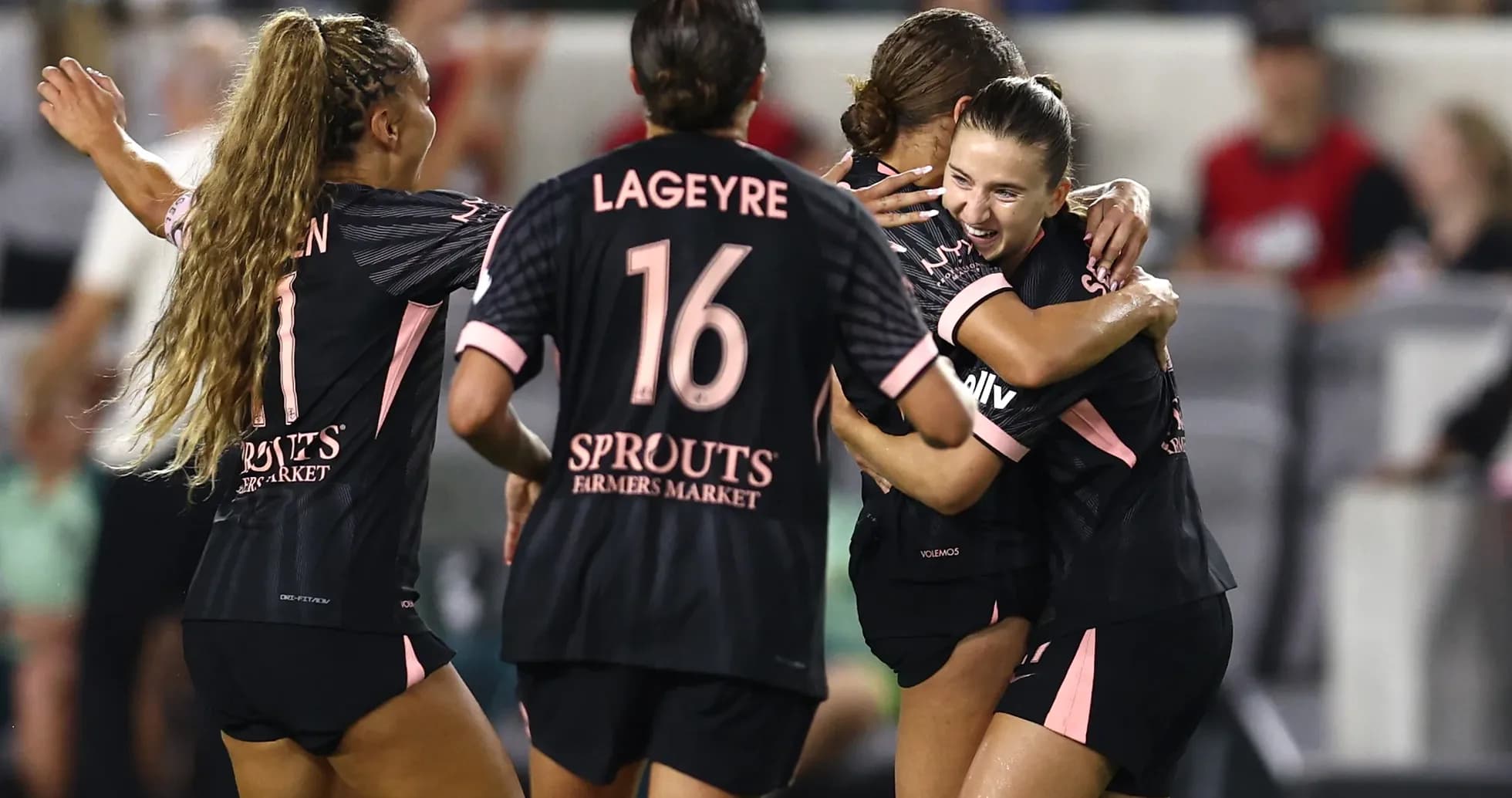
Angel City’s response was swift and came from a set-piece pattern that highlighted their aerial and second-ball organisation. At 54', Emily Sams scored a “Normal Goal” for Angel City W, assisted by Sarah Gorden. The centre-back partnership stepped up aggressively, with Gorden’s delivery or knock-down exploiting San Diego’s difficulty in clearing the first contact. This sequence showcased Angel City’s main offensive route: dead balls and wide service, compensating for their inferior sustained possession.
San Diego adjusted again on 63', with Melanie Barcenas (IN) replacing Gabi Portilho (OUT). This swap kept intensity high on the right flank and maintained the capacity to attack Angel City’s left-back channel, where Shores was increasingly stretched by overlapping and underlapping runs.
Straus reacted on 68' by introducing Riley Tiernan (IN) for Kennedy Fuller (OUT). This was a like-for-like change in the attacking midfield line but with a tilt toward more direct penetration and pressing from the front. On 76', Casey Phair (IN) came on for Taylor Marie Suarez (OUT), adding a more traditional forward profile and nudging the structure toward a 4-2-2-2 in possession, with Jónsdóttir and Phair sharing central spaces and Chilufya/Tiernan tucking inside from wide.
Eidevall’s key late-game adjustment came at 79', when Laurina Fazer (IN) replaced Kimmi Ascanio (OUT). Fazer’s introduction stabilised the midfield, giving San Diego fresh legs to control central zones and protect transitions as Angel City committed more bodies forward.
The decisive tactical moment arrived at 81'. Amelia Van Zanten scored a “Normal Goal” for San Diego Wave W, assisted by Dudinha. This encapsulated San Diego’s structural superiority: the right-back Van Zanten, empowered to advance high in Eidevall’s 4-3-3, exploited the space behind Angel City’s wide players, who were now pushing on in search of a winner. Dudinha’s assist underlined her dual role as both wide forward and playmaker, drifting into half-spaces to combine and release overlapping full-backs.
In the closing stages, Angel City tried to re-balance central control. At 88', Claire Emslie (IN) replaced Nealy Martin (OUT), a bold attacking shift that effectively left Borges more exposed as a lone pivot. The shape tilted toward a very aggressive 4-1-4-1/4-2-4 hybrid, but it also opened transition lanes for San Diego. At 90+5', Eidevall used his final change, with Jordan Fusco (IN) replacing Dudinha (OUT), adding fresh defensive energy to see out the game and protect the 2-1 lead.
Statistics
From a statistical perspective, the numbers align tightly with the tactical story. San Diego Wave W’s 55% possession and 407 total passes, 320 accurate (79%), reflect a side comfortable circulating the ball and manipulating Angel City’s block. Angel City W, with 320 total passes and 231 accurate (72%), were more direct and less precise, consistent with a plan built on vertical transitions and set-pieces rather than extended spells of controlled possession.
Shot quality favoured San Diego: 11 total shots to Angel City’s 10, with a 5–3 advantage in shots on goal. Both sides had 4 blocked shots, but San Diego’s 6 shots inside the box versus Angel City’s 8 suggests that while Angel City did reach dangerous areas, San Diego’s chances were better aligned with their structured build-up and wide overloads. The foul count (20 for Angel City, 8 for San Diego) further illustrates how often the home side had to break up play reactively.
In goal, Angelina Anderson’s 3 saves versus DiDi Haracic’s 2 highlight that San Diego’s chances were slightly more frequent and more efficient, while Haracic’s defence limited Angel City’s clean looks despite their 7 corner kicks. Overall, San Diego’s superior Overall Form on the ball and more coherent wide dynamics outweighed Angel City’s set-piece threat and work rate, making the 1-2 away win a tactically logical outcome.