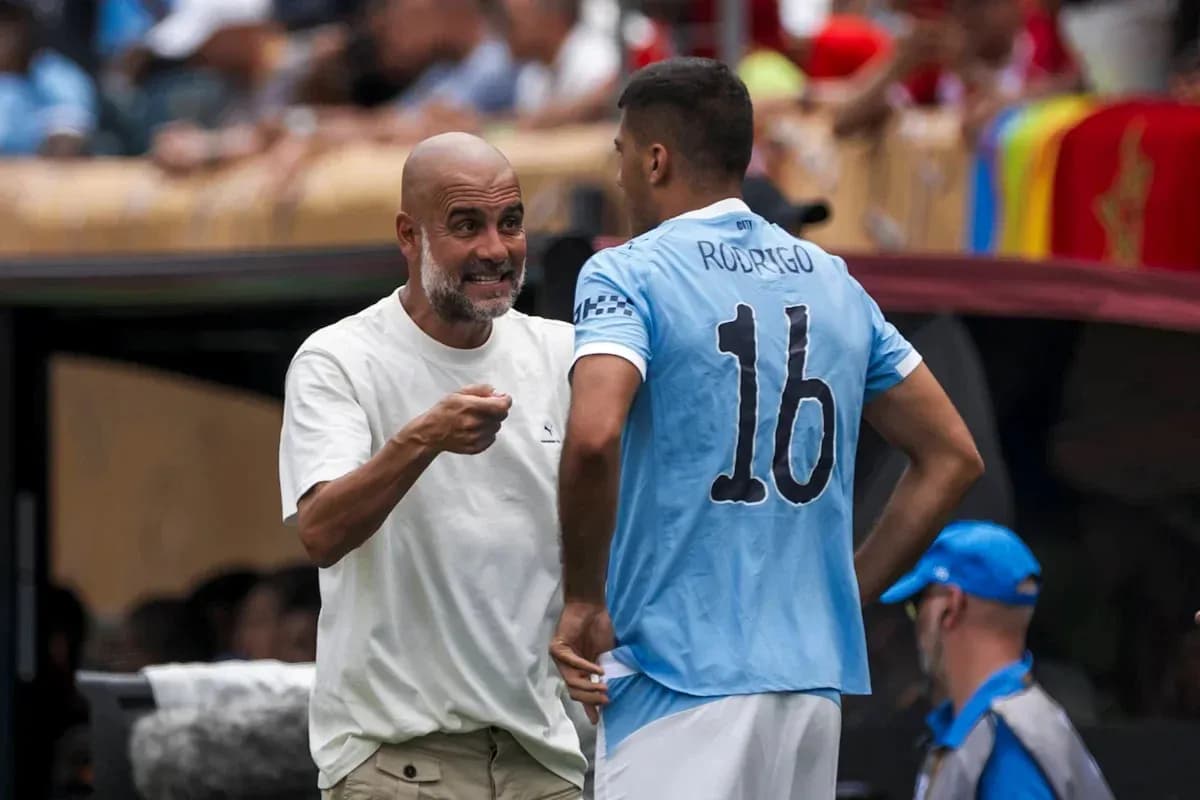
Rodri's Transfer to Barcelona: A Key Midfield Shift
Rodri’s decision to join Barcelona already feels like one of those transfers people will point back to when they talk about where this era of Spanish football turned. It has weight, it has rivalry, and it has the kind of edge that drags the clásico narrative into a new chapter.
According to Mundo Deportivo, the Spain midfielder listened to both Barcelona and Real Madrid, measured what each could offer, and then chose the Camp Nou. His reasoning opens a window into how the very best now judge their careers: not just on salary or shirt sales, but on who can give them the clearest sporting future.
This was not a romantic whim. Not a late‑night change of heart. Rodri spoke of a turbulent break, with two giants trying to pull him away from Manchester City, and of the need to see the “full picture” before moving. In the end, he went where he felt the football made most sense, where the project stirred a little more excitement, where he believed he could both win and grow.
That is significant in a market often reduced to noise and numbers. Barcelona’s hierarchy, led by Deco and Hansi Flick, convinced him their plan was sharper, more concrete. The margins decided it: detailed talks, a clear role, a coach with a defined idea of how to use him. This is where big transfers are really won.
Respect for Madrid, conviction for Barça
Rodri did not slam a door in Madrid’s face. Quite the opposite. He spoke with notable respect about the club he turned down, underlining that saying no to Real Madrid is never easy and praising the way they handled the process. That is the tone of a player who understands the scale of what he has just done. Refusing Madrid still echoes around the game, and he did not try to downplay it.
His words about José Mourinho, who tried to persuade him to choose the Bernabéu, added another layer.
“Bueno, no creo que sea lo suyo desvelar una conversación privada, pero evidentemente expresó sus ganas de que fuera y de lo que podía aportar al equipo. El trato fue muy bueno. Cuando tomé la decisión también le llamé para agradecer el interés y el trato. Me parece un grandísimo entrenador, ya lo ha demostrado allá donde ha ido en sus grandes etapas y el Real Madrid va a ser un duro rival para esta Liga.”
Diplomatic, warm, and precise. It was the answer of a footballer who knows the industry can chew up courtesy in seconds yet still chose to emphasise gratitude. He recognised the effort Madrid made, chose elsewhere, and then closed the loop properly.
For Barcelona, there is a different, more satisfying strand. Rodri did not sell this move as an escape from City or as some reaction to tension elsewhere. He framed it as a pull towards Barça. That gives the transfer a different authority. Barcelona did not just profit from circumstance; they won the argument.
He also dismissed the off‑field theories that swirled around Madrid’s interest. No appetite for the theatre, no feeding the soap opera. He stressed his focus on football, on Spain, on his own path. That is the voice of a player who has lived for years at the top and learned the value of staying detached from the circus.
His final reflection, that in England football tends to remain about football, was telling too. It hinted at someone shaped by the relentlessness of the Premier League, but perhaps now searching for a different kind of intensity, a different type of pressure, a different spotlight.
A clásico twist that could shape La Liga
If Rodri plays at his usual level, this is not just a headline signing. It is a tilt in the balance of power. Barcelona have added control, intelligence and edge in the very heart of their team, and they have done it by beating Real Madrid to one of the most coveted midfielders in the game.
That resonates far beyond a single deal. It speaks to pulling power, to planning, to the fact that the Barcelona name still carries enough force to lure a City‑sharpened champion at the peak of his powers.
Madrid will feel frustration, but not humiliation. They moved decisively, presented their case, behaved with the stature expected of them, and were treated accordingly. They simply lost out. For Barcelona, that is precisely what makes this so sweet: Rodri knew exactly what the alternative looked like and still chose the Camp Nou.
The Manchester City vacuum
From a Manchester City perspective, this story stings in a different way. There is pride, of course, in hearing Rodri discussed as the midfielder both Barcelona and Real Madrid pushed hardest to sign. That says everything about where he now sits in the modern game. In Manchester he became the calm in the storm, the organiser with the ball, the piece that made elite teams feel balanced.
But there is also that familiar irritation when Europe’s traditional giants circle around a City player as if he is naturally part of their orbit. This version of Rodri was forged in Manchester. He refined his game in the Premier League, shouldered enormous responsibility, and evolved into one of the sport’s most influential midfielders under the harshest lights.
If his departure is confirmed, City supporters will likely wish him well while quietly asking a brutal question: how do you replace that kind of authority? Who now slows games down when they are racing away? Who dictates tempo? Who restores order when matches turn ragged and chaotic?
That is the real imprint Rodri leaves behind at City. Barcelona and Real Madrid can fight over symbolism and status. In Manchester, the issue is far simpler and far more urgent: who controls the midfield now?