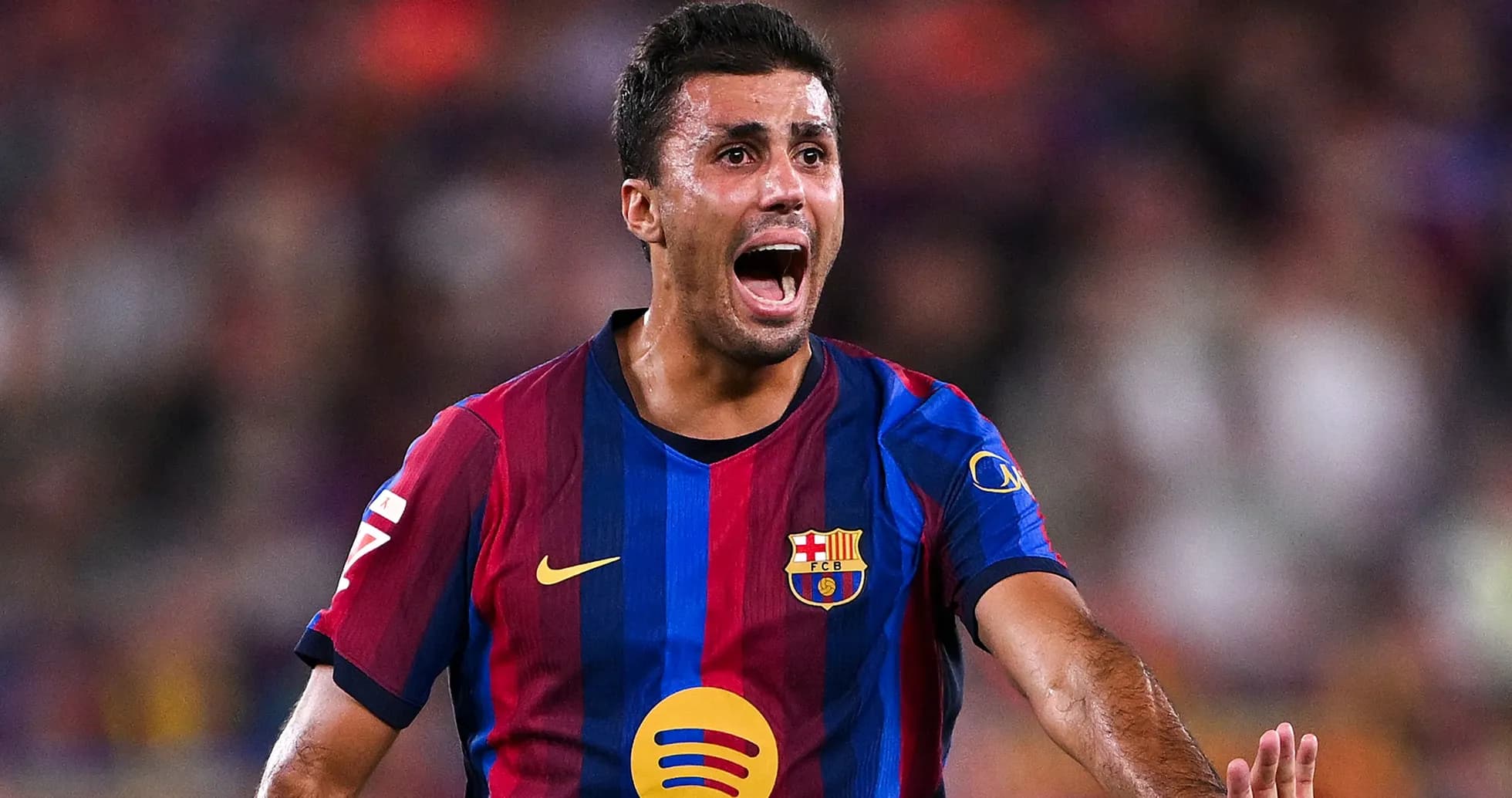
Rodri's Bold Move: From Manchester City to Barcelona
Rodri didn’t just change clubs this summer. He walked away from the heart of a dynasty.
The 2024 Ballon d'Or winner, the metronome of Pep Guardiola’s Manchester City, chose to leave England at 30 and anchor a new project at Barcelona. Real Madrid wanted him badly. He chose Camp Nou instead.
For Rodri, this wasn’t a dramatic U-turn or a late twist. It was a slow burn.
“It’s been a process, rather than a decision,” he told Mundo Deportivo, laying out how his City exit took shape. First came the realisation that his cycle in Manchester was closing, that he needed a new challenge. Then came Barcelona’s call. “From there, the moment the opportunity at Barcelona arose, I realised it was the best thing for me for many reasons.”
Madrid’s interest was no secret. They pushed hard. Losing him to their greatest rivals stings at the Bernabeu, not just because of the player he is, but because of the statement it makes. Rodri knows exactly how big that choice was.
“I had to weigh up a lot of things and make such an important decision between two of the best clubs in the world,” he said. Turning down Real Madrid is rarely just another line on a CV. “It wasn’t an easy decision at all; saying no to Madrid wasn’t easy, especially as they treated me exceptionally well.”
So why Barcelona? Why now?
Rodri insists the answer sits on the pitch, not in the bank account. He was clear that financial offers and outside noise stayed on the sidelines. His eyes were on the project being put together by head coach Hansi Flick and sporting director Deco, and on the squad already in place.
“I’ve always based my decisions on sporting considerations – where I believe I’ll be able to win, be happy and, above all, develop as a player,” he explained. “And that’s why I’ve chosen Barca – also because of the generation of players they have and what Hansi is building there. Ultimately, Deco and Hansi, at the top of the organisation, convinced me.”
That word – “generation” – matters. Barcelona see him as the pillar for a young core, the grown-up in midfield who can both protect and elevate them. Rodri, in turn, sees a place where his game can evolve again, not just be repeated.
The emotional tug of Madrid still lingered. The prestige, the guarantees, the treatment he received. But in the end, enthusiasm won out. “In the end, I made my decision based on sporting considerations – on what sparked a bit more enthusiasm in me and on understanding where I could win and develop the most as a player,” he said.
It wasn’t only tactics that drew him in. It was how Barcelona went about their pursuit.
He talks about a club that didn’t suffocate him with pressure, didn’t corner him into a yes. “At no point did they put any pressure on me whatsoever; everyone expressed their desire to have me on board, to work together, and to see what I could bring to the team,” Rodri said. He describes a “very homely, like a family club” environment, where the conversations revolved around football, not deadlines.
“It was more about the football itself – what they understood I could bring both on and off the pitch, and I really liked that.”
All of this played out against a noisy backdrop. Real Madrid had boycotted the Ballon d'Or ceremony where Rodri beat Vinicius to the award, a move that fuelled plenty of theories when he later chose Barcelona over them.
Rodri brushed that aside.
“Anyone who knows me knows that I try to distance myself from that sort of thing, like the media hype,” he said. He pointed instead to the mentality he picked up in England. “I focus on football. In that sense, I’m very English, aren’t I? The Premier League is football and little else.”
Now, he brings that “football and little else” mindset to a club that lives on everything around the game as much as the game itself. If he really has chosen purely on sporting grounds, Barcelona have landed the rarest thing in modern football: a superstar who walked into the storm with his eyes fixed only on the ball.