Rhode Island's Dominance Over Westchester SC in USL League One Cup
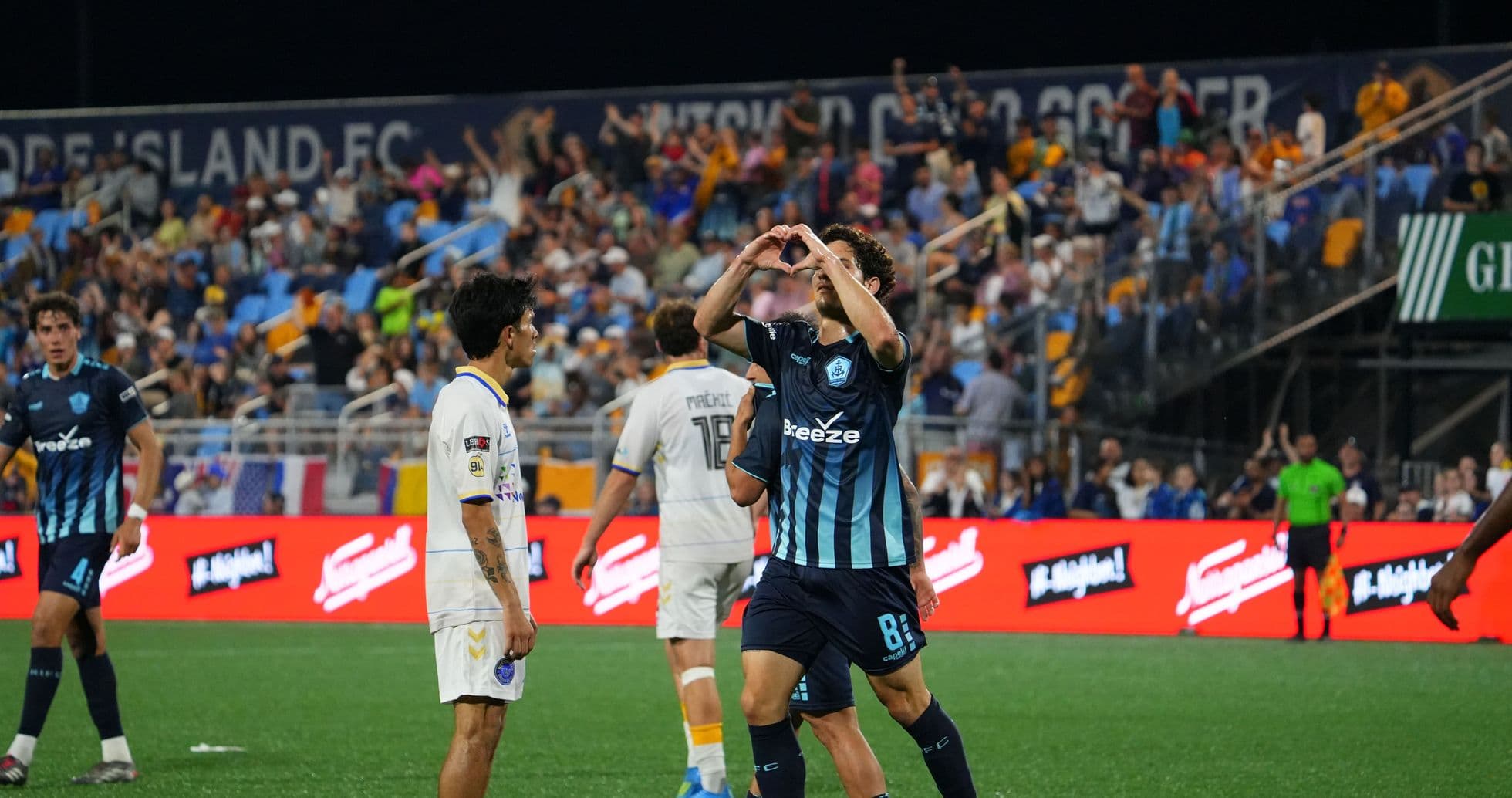
Under the lights at Centreville Bank Stadium, Rhode Island’s 3–0 dismantling of Westchester SC felt less like a group-stage formality and more like a statement of intent in the USL League One Cup. Following this result, the hosts consolidated the identity hinted at in their early-season numbers: a side that marries front-foot ambition with a quietly ruthless defensive streak. Westchester, by contrast, looked exactly like their statistical profile suggests—dangerous in flashes, but structurally fragile, especially away from home.
Heading into this game, the standings already framed the tactical narrative. Rhode Island sat 3rd in Group 5 with 5 points and a goal difference of 3, built on 8 goals for and 5 against overall. Westchester were 6th with 2 points and a goal difference of -3, their 9 goals for offset by a worrying 12 conceded. The league-wide data underlined the contrast: Rhode Island’s overall goals against average of 0.7 per match, with a pristine 0.0 at home, versus Westchester’s 2.7 overall and a bruising 3.0 on their travels. The fixture played out almost exactly along those lines.
I. The Big Picture: Structure without the whiteboard
Formations are not explicitly listed, but the personnel tells its own story. Khano Smith built Rhode Island’s spine around Koke Vegas in goal, a back line anchored by K. Yao, F. Nodarse, A. Sanchez and H. Bacharach Capdevila, and a midfield triangle with A. Shapiro‑Thompson, N. Fuson and C. Holstad. Ahead of them, A. Rodriguez and J. Williams carried the creative and finishing burden.
This XI fits Rhode Island’s season DNA: at home they had scored 3 goals in their only prior match, conceding none, with a home goals for average of 3.0 and goals against average of 0.0. They are a side that likes to seize control early and then manage the game with discipline, evidenced by 2 clean sheets in 3 fixtures overall and zero matches in which they failed to score.
Westchester coach George Gjokaj responded with a more improvisational, transition-oriented group. L. Marinelli started in goal behind a defensive line of M. Jennings, T. Timchenko, C. Dickerson and J. Jimenez. The midfield band of S. Powder, A. Armas and B. Vasquez, supported by M. Diaz and K. Evans around central presence E. Mackic, suggested an emphasis on wide progression and late-arriving runners.
Yet the broader numbers painted the risk: Westchester had failed to keep a single clean sheet in total, conceded 8 goals in 3 matches, and on their travels they had lost their only away game 3–0, with 0.0 goals for and 3.0 against on average. This was an away unit built to punch, but without the defensive scaffolding to withstand sustained pressure.
II. Tactical Voids and Discipline
There were no listed absences, so both managers had the luxury of their full squads. That made the choices more revealing.
Rhode Island’s defensive profile is built less on last-ditch heroics and more on control of tempo and territory. Their card distribution tells an interesting story: both of their yellow cards this season have come after half-time—one in the 46–60 minute window and one between 91–105 minutes. It hints at a team that starts clean, then leans into the dark arts only when game-state demands it: protecting leads, breaking counters, and managing transitions late on.
Westchester’s disciplinary pattern is the mirror image of their defensive issues. All 4 of their yellow cards have been clustered at the edges of each half: 2 between 31–45 minutes and 2 between 76–90 minutes. This is the profile of a side that loses composure under pressure, especially as halves close—exactly when Rhode Island like to turn the screw.
III. Key Matchups: Hunter vs Shield, Engine Room vs Enforcer
The “Hunter vs Shield” battle in this tie was not about a single marksman but about collective intent. Rhode Island’s attack, averaging 1.7 goals for overall and 3.0 at home, ran straight into Westchester’s leaky rearguard, which was conceding 2.7 goals per match in total and 3.0 away. The 3–0 scoreline was less an upset and more the statistical midpoint between a confident home attack and a porous visiting defense.
Within that, the front pairing of A. Rodriguez and J. Williams were the natural focal points. Rodriguez, wearing 10, operated as the connective tissue between midfield and attack, finding pockets where Westchester’s midfield screen could not quite track him. Williams, in the 9 shirt, stretched the line, constantly testing the channels between Timchenko and Dickerson. Their movement forced Westchester’s back four to defend facing their own goal, exactly the scenario that has produced Westchester’s worst moments this season.
Behind them, A. Shapiro‑Thompson and N. Fuson formed the “Engine Room” axis. Without explicit positional labels, their inclusion alongside Holstad suggests a three-man midfield tasked with dictating rhythm and counter-pressing. Against a Westchester side that has failed to score in its only away outing and depends on transition bursts from S. Powder and B. Vasquez, Rhode Island’s central trio had one clear mandate: smother the first pass out and keep Westchester pinned.
On the other side, Westchester’s “enforcers” never quite materialised. A. Armas and E. Mackic were asked to do too much—screen, build, and connect with Diaz and Evans—while also covering the spaces left when full-backs Jennings and Jimenez stepped out. The structural gap between midfield and defense became the channel Rhode Island repeatedly exploited.
IV. Statistical Prognosis and xG Logic
Even without explicit xG numbers, the probability map is clear. Heading into this game:
- Rhode Island: 5 goals for and 2 against overall, with 2 clean sheets in 3 and 0 failed-to-score matches.
- Westchester: 5 goals for and 8 against overall, with 0 clean sheets and 1 match in which they failed to score, plus a 3–0 away defeat already on the books.
Translate that into expected territory and shot volume, and Rhode Island were overwhelmingly likely to generate the higher xG: more sustained possession in the final third, more box entries, and more high-quality chances. Their defensive record—0.7 goals against overall, 0.0 at home—suggested that even if Westchester did create, those chances would be limited and low-frequency.
The 3–0 final score is, in that sense, a rational outcome rather than an outlier. Rhode Island’s attacking average at home (3.0) aligned perfectly with Westchester’s away concession rate (3.0). The home side’s defensive parsimony met an away attack that had yet to score on its travels. If we sketched a pre-match xG model purely from these season trends, it would have leaned heavily toward a multi-goal Rhode Island win with a strong probability of a clean sheet.
Following this result, Rhode Island look every inch a dark horse in Group 5: structured, efficient, and emotionally composed in key phases. Westchester, meanwhile, remain an intriguing but incomplete project—capable of scoring in bursts at home, but without the defensive balance or away resilience to turn their attacking promise into consistent points.