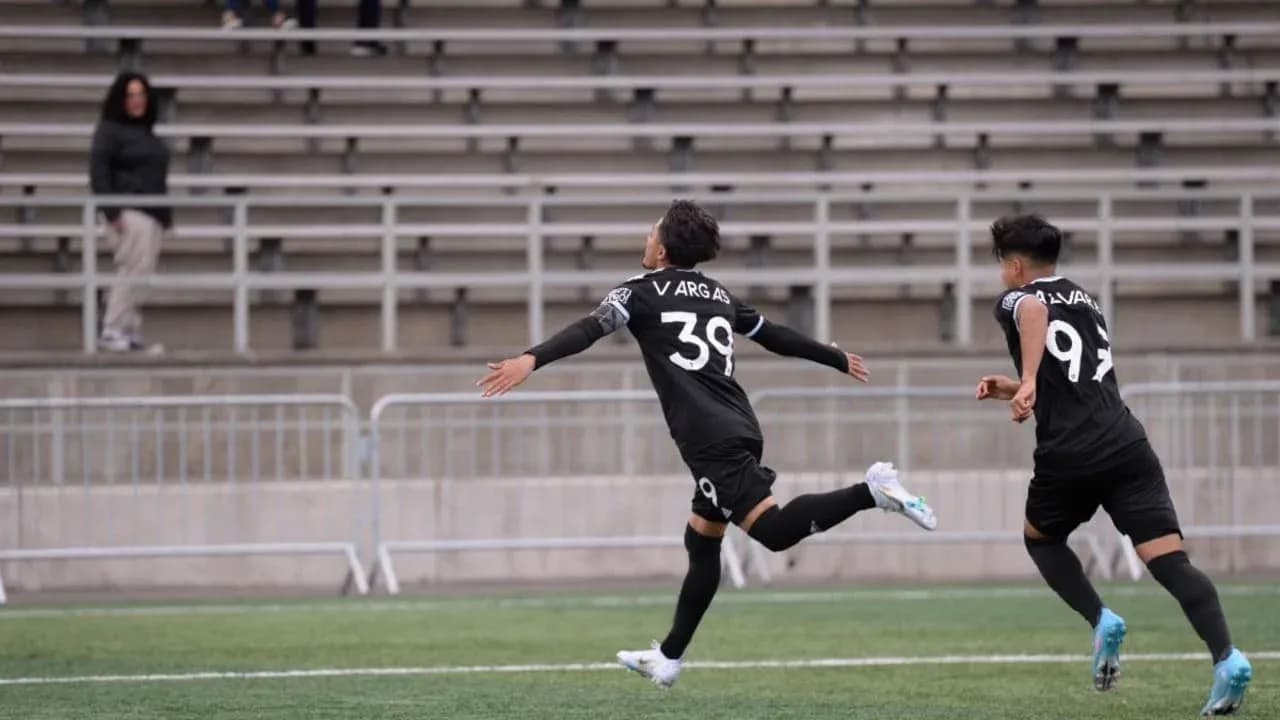
Real Monarchs vs Portland Timbers II: A Night of Tactical Disparities
Under the lights at Zions Bank Stadium, a night that began as a measuring stick for Real Monarchs against a promotion-chasing Portland Timbers II ended as a blunt reality check. In an MLS Next Pro Group Stage clash that pitted the Pacific Division’s 5th-placed hosts against the 3rd-placed visitors, Portland imposed a ruthless 3–0 full-time verdict, building on a 1–0 half-time lead and underlining why they sit on 13 points overall, with Real Monarchs stalled on 10.
I. The Big Picture – Two Contrasting Identities Collide
Heading into this game, the numbers already hinted at a clash of styles and vulnerabilities. Real Monarchs had been volatile but entertaining: 7 matches played overall, 4 wins, 3 losses, no draws. They had scored 14 goals in total this campaign, with a striking split between home and away. At home, they averaged 1.8 goals for per match (9 goals in 5 games), but they also leaked 2.0 goals against per home game (10 conceded), leaving their own ground as much a stage for chaos as control.
On their travels, the Monarchs had been sharper and more clinical: 2.5 goals for away on average (5 in 2) and only 1.0 conceded, but that steel had not translated to Zions Bank Stadium. Their overall goal difference in the league table sat at 0 (12 scored, 12 conceded in that snapshot), a team constantly on the edge between promise and fragility.
Portland Timbers II arrived with a different profile: 7 games played overall, 4 wins and 3 losses, no draws, but with a tighter scoring pattern. They had 9 goals for in total, averaging 1.3 both at home and away, and 10 conceded overall. Away from home, they were paradoxical: 2 away wins in 3, scoring 4 and conceding 5. They were efficient, not explosive, but capable of delivering statement wins like their biggest away success, a 3–0 scoreline that this fixture ultimately echoed.
The 0–3 in Utah did more than settle one night’s work; it reaffirmed Portland’s promotion push and exposed Real Monarchs’ ongoing struggle to translate their attacking averages into meaningful home dominance.
II. Tactical Voids and Discipline – Where the Game Tilted
There were no officially listed absences, so both coaches, Mark Lowry and Jack Cassidy, had their full squads to shape the narrative. Yet the story of this match felt less about who was missing and more about which structural flaws each side carried in from their seasonal DNA.
For Real Monarchs, the disciplinary data heading into this game painted a worrying picture. Their yellow cards were heavily clustered between 46–60 minutes and 76–90 minutes, each window accounting for 26.67% of their cautions. This late-game indiscipline, coupled with a red card profile that showed a single dismissal in the 31–45 minute range, suggested a team that can lose emotional control either just before or just after the break. Even without specific in-game card data for this fixture, the pattern helps explain why their home matches so often unravel once the initial structure frays.
Portland’s card profile was more strategically concerning but also more manageable. They accumulated 31.25% of their yellow cards between 61–75 minutes and 25.00% between 76–90, a sign of a side that is willing to foul and disrupt late on to protect leads or break rhythm. In a match where they led from the first half and then stretched the scoreline, that willingness to manage the game through controlled aggression would have been a quiet but decisive edge.
III. Key Matchups – Hunter vs Shield, Engine Room vs Enforcer
Without explicit positional data, the shapes had to be read from the names and roles implied by the squads. For Real Monarchs, the attacking responsibility fell heavily on the likes of Lineker Rodrigues and A. Riquelme, supported by R. Mesalles and G. Dillon. This attacking unit entered the night representing a side that had failed to score in 2 home matches already and 3 overall, despite their strong goals-for averages. The Hunter, in this case, was less an individual and more the idea of a free-flowing Monarchs front line that, at home, had still found ways to be shut out.
Facing them, the Shield was a Portland defense that, while conceding 1.7 goals on average away, had also produced 2 clean sheets overall and knew how to lock things down when the structure held. H. Sulte, protected by a back line including S. Jura, A. Bamford, N. Lund and C. Ondo, formed the spine of a unit that could oscillate between vulnerability and resilience. On this night, they delivered the latter, holding Real Monarchs to 0 despite the hosts’ usual home scoring rate.
In the engine room, Real Monarchs leaned on players like L. Moisa and G. Villa to knit possession and protect a back line that had conceded 10 at home heading into this game. They were up against Portland’s central core, where V. Velazquez, E. Izoita and L. Fernandez-Kim, with the creative presence of G. Guerra, formed a platform for controlled transitions rather than wild end-to-end chaos.
The presence of Colin Griffith on Portland’s team sheet, a forward who appears across the league’s top lists for goals, assists and cards (even if his statistical line is still modest), symbolised a modern wide-forward threat: willing to run, combine and press. In a match that ended 3–0, the attacking unit built around Griffith, N. Santos and Guerra had clearly found the spaces that Real Monarchs’ structure kept offering all season.
IV. Statistical Prognosis – Why 0–3 Made Sense
From an analytical standpoint, the 3–0 away win sits comfortably within the season-long trends rather than against them. Real Monarchs’ home profile – 1.8 goals for, 2.0 against on average – always carried the risk that if their attack misfired, their defense would not keep them in the game. With only 1 clean sheet overall, and that coming away from home, the probability of conceding at least once at Zions Bank Stadium was high; conceding multiple times was hardly a surprise.
Portland Timbers II, meanwhile, had already demonstrated they could deliver a 3–0 away victory as their biggest win on the road. Their overall scoring rate of 1.3 goals per match does not scream dominance, but it does suggest efficiency: they do not need many chances to make them count, especially against a defense that concedes 1.7 goals per game overall and 2.0 at home.
If we project this through an Expected Goals lens, the matchup looked like this: a high-variance home side that creates enough to justify their 2.0 goals-for overall average but whose defensive concessions inflate opponents’ xG, against an away team that is opportunistic, structured, and increasingly comfortable playing on the break. In that context, a scenario where Portland’s xG edge grows as Real Monarchs chase the game – and leave even more space in behind – is entirely logical.
Following this result, the tactical verdict is stark. Real Monarchs remain a team whose attacking promise is undermined by systemic defensive looseness and late-game disciplinary spikes. Portland Timbers II, by contrast, continue to look like a playoff-calibre outfit: not flawless, but tactically coherent, physically disciplined in key moments, and capable of turning a balanced statistical matchup into a ruthless away statement.