Real Madrid vs Oviedo: Tactical Analysis of the 2-0 Victory
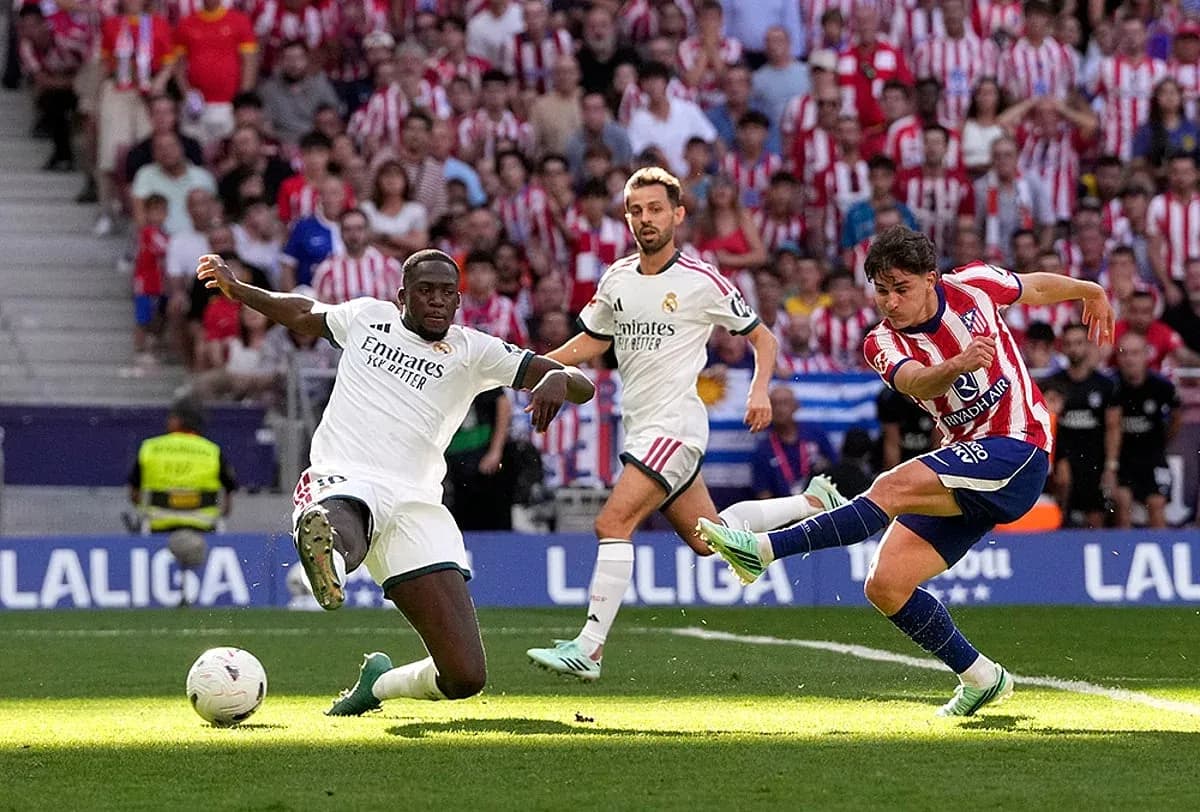
Under the Madrid floodlights, this was a meeting of opposites that played out almost exactly along the season’s script. At the Estadio Santiago Bernabéu, Real Madrid – second in La Liga with 80 points and a goal difference of 39 – closed out a professional 2–0 win over bottom‑placed Oviedo, who arrived with 29 points and a goal difference of -30. It was Regular Season - 36, but it felt like two different divisions sharing the same pitch.
Heading into this game, the structural gap between the sides was stark. Real Madrid had been ruthless at home: 15 wins from 18, with 41 goals for and only 14 against, an average of 2.3 goals scored and 0.8 conceded at the Bernabéu. Oviedo’s travels told the opposite story – just 2 wins in 18 away fixtures, with 17 goals scored and 39 conceded, averaging 0.9 for and 2.2 against on their travels. The final 2–0 scoreline almost felt like mercy.
I. The Big Picture – Madrid’s 4-4-2 versus Oviedo’s 4-3-3
Alvaro Arbeloa leaned into the season’s dominant shape, sending Real Madrid out in a 4‑4‑2 that looked more like a fluid 4‑2‑2‑2 in possession. T. Courtois anchored the back line behind T. Alexander‑Arnold, R. Asencio, D. Alaba and A. Carreras. Ahead of them, a central axis of E. Camavinga and A. Tchouameni provided the platform, with F. Mastantuono and B. Diaz drifting between lines. Up front, G. Garcia and Vinicius Junior formed a mobile front pair.
Guillermo Almada Alves Jorge responded with a 4‑3‑3 that aimed to be compact rather than expansive. A. Escandell started in goal, shielded by a back four of N. Vidal, E. Bailly, D. Costas and R. Alhassane. The midfield trio – N. Fonseca, S. Colombatto and A. Reina – were tasked with narrowing central spaces, while I. Chaira and T. Fernandez flanked F. Vinas in attack.
Real Madrid’s season‑long DNA underpinned the plan: high‑volume chance creation (72 goals overall, averaging 2.0 per match) backed by a defence that concedes only 0.9 goals per game overall. Oviedo, by contrast, had scored just 26 overall (0.7 per match) while conceding 56 (1.6 per match), a profile that almost forces them into survival football away from home.
II. Tactical Voids – Absences and Discipline
The absences sheet told a story of depth versus fragility. Real Madrid were without D. Ceballos (coach’s decision), Eder Militao and A. Guler (both muscle injuries), D. Huijsen (lacking match fitness), A. Lunin (illness), F. Mendy (muscle injury), Rodrygo (knee injury) and F. Valverde (head injury). That list would cripple most squads; here, it simply nudged Arbeloa toward a slightly tweaked hierarchy.
Without Militao and Huijsen, Alaba’s leadership at the heart of defence became non‑negotiable, while R. Asencio stepped into a more prominent role. The absence of Valverde and Guler – two of La Liga’s most productive midfielders in terms of assists (8 and 9 respectively) – forced creativity to be redistributed. B. Diaz and Mastantuono were asked to occupy half‑spaces more aggressively, while Alexander‑Arnold’s presence at right‑back hinted at a playmaking role from deep.
Oviedo’s list was shorter but more damaging in context. L. Dendoncker and O. Ejaria were out injured, B. Domingues sidelined with a knee issue, and crucially J. Lopez and K. Sibo were both suspended after red cards. For a side already struggling structurally, losing two players to suspension underlined a disciplinary edge that mirrors their season‑long card profile: 40.00% of their red cards come in the 76‑90' window, a period where fatigue and desperation often collide.
Madrid’s own card distribution suggests controlled aggression rather than chaos. Their yellow‑card peak is between 61‑75' at 22.06%, while red cards are spread thinly, with 28.57% arriving in added time (91‑105'). It reflects a team that pushes the line but rarely loses collective shape.
III. Key Matchups – Hunter vs Shield, Engine Room Battles
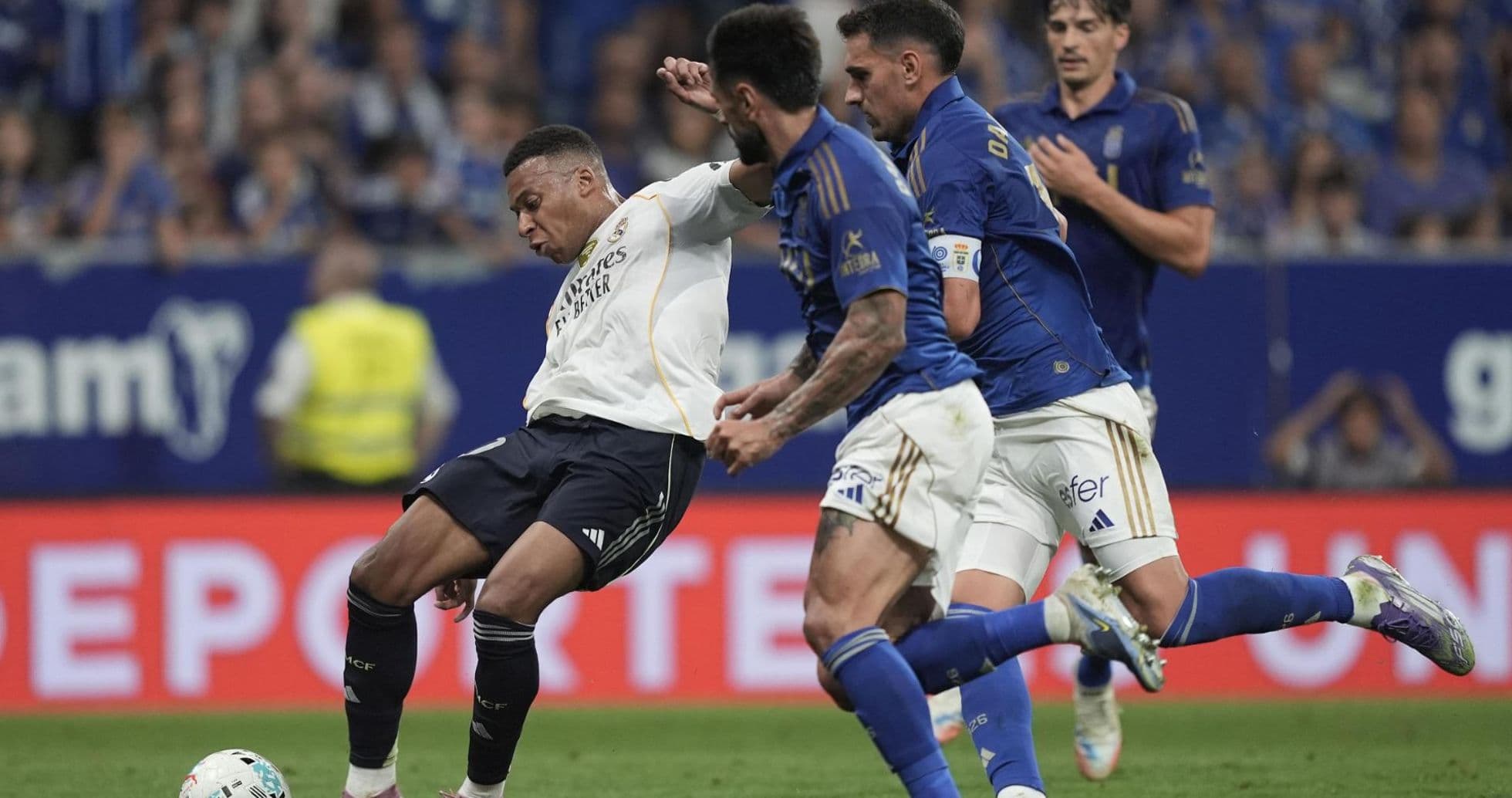
The headline “Hunter vs Shield” narrative centred on K. Mbappe, even from the bench. With 24 league goals and 5 assists in 29 appearances, plus 102 shots (61 on target), he is La Liga’s most decisive finisher. His penalty record is revealing: 8 scored but 1 missed, a reminder that even Madrid’s apex predator is not flawless from the spot. Starting without him, Arbeloa effectively used G. Garcia and Vinicius Junior as the first wave, with Mbappe available as a devastating second act.
Vinicius arrived with 15 goals and 5 assists, underpinned by 190 dribble attempts and 86 successful – a relentless one‑v‑one machine. Against Oviedo’s right side of N. Vidal and E. Bailly, the matchup was brutally asymmetric. Oviedo’s away record of 39 goals conceded, and a heaviest away defeat of 4‑0, suggested that once Vinicius isolated his man, the visitors’ “shield” would bend.
In midfield, the “Engine Room” duel pitted Madrid’s double pivot of Camavinga and Tchouameni against Fonseca and Colombatto. With Real conceding only 33 goals overall and recording 13 clean sheets, that screen has been central to their identity. Oviedo, who have failed to score in 19 of 36 league games overall, needed their trio to be immaculate in transition. Instead, the 2‑0 scoreline and a half‑time advantage of 1‑0 indicated that Madrid’s press and counter‑press smothered Oviedo’s attempts to break lines.
Further up, F. Vinas carried Oviedo’s attacking burden. Nine league goals, 1 assist, and a physical profile defined by 484 duels contested and 254 won. He is also La Liga’s most card‑prone forward in red terms, with 2 reds and 1 yellow‑red. His aggression is double‑edged: essential to stretch defences, but a constant disciplinary risk against a side adept at provoking fouls through movement.
IV. Statistical Prognosis – xG, Control and Inevitable Gravity
While explicit xG numbers are not provided, the underlying season metrics make the pattern clear. A team averaging 2.3 goals at home against one conceding 2.2 on their travels will, over 90 minutes, generate a significantly higher expected goals tally. Real Madrid’s 13 clean sheets and Oviedo’s 19 games without scoring overall further tilt the probability towards a home win with a low concession risk.
The 2‑0 result fits that statistical arc almost perfectly: Madrid’s attack doing enough without overextending, their defence maintaining the season’s standard. Oviedo’s inability to convert limited possession into high‑value chances is consistent with a side whose best away win is 0‑3 but whose typical away experience is damage limitation.
Following this result, the story of both seasons feels reinforced rather than rewritten. Real Madrid’s 4‑4‑2, even patched by injuries, remains a ruthless, well‑drilled machine, capable of rotating stars like Mbappe without losing identity. Oviedo, meanwhile, stay locked in a pattern of brave structure undone by limited quality and recurring disciplinary strain.
At the Bernabéu, gravity held. The numbers predicted it; the tactics confirmed it; the 2‑0 scoreline simply wrote it into the record.