Real Madrid's Late Winner Masks Structural Issues in Mourinho's Return
Real Madrid walked out of Catalonia with three points and very few illusions.
A 90th-minute strike from debutant Carlos Espí stole a 2–1 win over Espanyol on Saturday night, masking a laboured performance that laid bare the same structural issues that have dogged the club for the past two seasons. José Mourinho’s second era in charge starts with a victory, but not with conviction.
Dream Start, Drab Middle, Dramatic End
For a brief spell, it looked like a statement night.
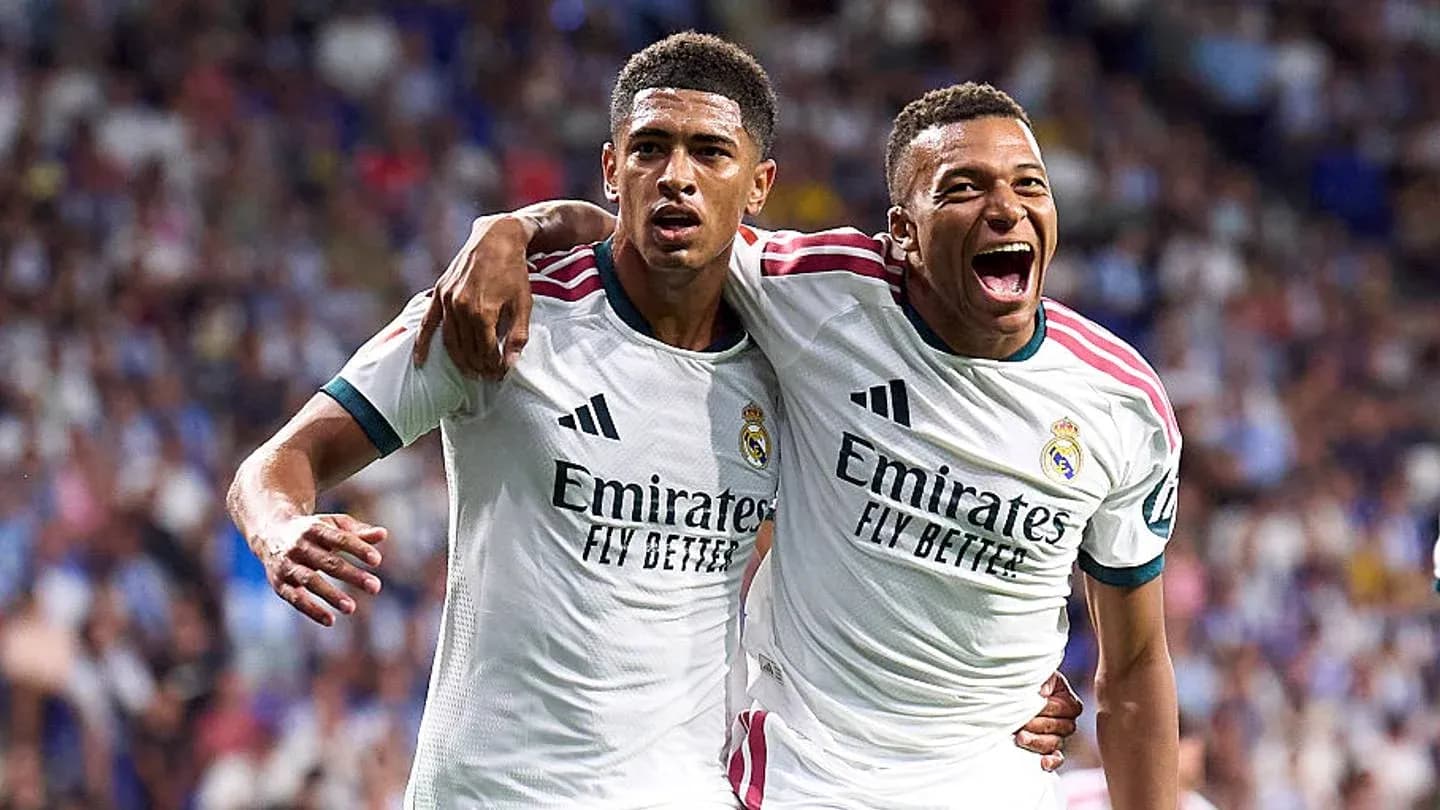
On nine minutes, Arda Güler stood over a set piece and bent in the kind of delivery that makes defenders panic. Jude Bellingham attacked it with all the timing and authority that lit up his summer with England, thundering a header past the goalkeeper to give Madrid an early 1–0 lead. Mourinho’s new Madrid had lift-off. Or so it seemed.
The goal should have settled the visitors. Instead, it lulled them.
Espanyol grew into the game as Madrid’s grip loosened. Passes slowed. Pressing lines sagged. On the half-hour, the punishment arrived. Álex Calatrava ghosted into the box while Federico Valverde stood rooted, shouting instructions instead of tracking the run. Calatrava finished past Thibaut Courtois, who could do little but watch another defensive lapse unfold in front of him.
The equalizer should have jolted Madrid awake. Mourinho’s halftime words were surely not gentle. Yet the second half opened with the same familiar pattern: sterile dominance, predictable patterns, and a lack of incision against a compact, disciplined block.
Real Madrid looked exactly like they did too often last season—ball in hand, ideas in short supply.
Kylian Mbappé drifted out to the right wing in search of touches, at one point squandering the best chance of the half by heading wide of an open goal. Vinícius Júnior, battered all night, fell into old habits on the left, cutting inside on repeat and finding blue-and-white shirts ready for him every time. Espanyol sat deep, waited, and rarely panicked.
As the clock ticked into the final minutes, it felt like two points slipping away.
Then came the twist.
Yan Diomande, on as a substitute, sparked the move. Mbappé finally found half a yard, carving out space in the box. The ball broke for Carlos Espí, the new signing thrown on in the 80th minute. One touch, one clean finish, and Madrid had a 90th-minute winner from a debutant who may not have expected to decide the night.
Mourinho pumped his fist. The away end exploded. The performance? That’s another story.
Same Questions, New Season
Strip away the late drama and the problems are painfully familiar.
Once Espanyol dropped into their low block, Madrid’s attacking structure fell into a predictable loop. Cross after cross sailed into the box with no real plan behind it. The midfield offered little in the way of line-breaking passes. Bernardo Silva kept things tidy and had moments dictating the tempo, but never stamped himself on the game. Valverde, in his preferred role, again struggled to dominate the central spaces.
Vinícius finished with zero chances created and zero shots on target. Mbappé, for all his movement, looked increasingly frustrated. The two stars rarely seemed in sync, often operating in parallel rather than in partnership, waiting for individual magic to rescue a collective malaise.
Desperation hung over Madrid’s play in the final 20 minutes. The expectation was clear: Mbappé or Vinícius would conjure something from nothing, as they have so many times before. Instead, it was Espí—fresh, fearless, and unburdened—who delivered.
The 2–1 scoreline flatters the performance. The alarm bells in Catalonia were impossible to ignore.
Player Ratings: Güler and Bellingham Shine Amid the Noise
(Ratings via FotMob)
- Thibaut Courtois — 6.7
Rarely tested. Left exposed on Espanyol’s goal, with Calatrava allowed to run free. Little he could do about it. - Denzel Dumfries — 7.2
Chosen ahead of Trent Alexander-Arnold for defensive security, yet beaten down his flank in the build-up to Espanyol’s equalizer. Pushed high and needed Ibrahima Konaté to bail him out on recovery runs. Found good positions in the final third but lacked the decisive final ball. - Ibrahima Konaté — 7.7
A strong, imposing debut. Dominated duels, used his frame to bully opponents, and cleared danger in the air. Still looked uncertain with his positioning inside the box at times, but the raw defensive presence was clear. - Dean Huijsen — 7.1
Showed why Madrid value his distribution, pinging five passes into the final third. Defended solidly, threw himself into challenges, and literally shed blood for the cause. - Álvaro Carreras — 7.4
For a player under scrutiny after last season, a mistake-free outing counts as progress. Linked well with the midfield and kept things simple on the ball. - Bernardo Silva — 7.1
Neat, occasionally influential, but too patchy to truly control the game. Had spells where he dictated rhythm, then drifted out of it. Won only two of nine duels, which underlined Madrid’s lack of bite in midfield. - Federico Valverde — 8.1
The rating flatters the moment that will define his night. Completely ball-watching on Calatrava’s goal, he allowed the midfielder to glide into the box unmarked. Did threaten at the other end, smacking a shot off the outside of the post, but this was another game where his influence came in bursts rather than a sustained grip. - Arda Güler — 8.5
Madrid’s best playmaker on the pitch. His set-piece delivery for Bellingham’s opener was inch-perfect, and every time he found space, he lifted his head and looked to create. Constantly searching for progressive options, he knitted attacks together and did not deserve to be substituted just after the hour mark. - Jude Bellingham — 8.3
Picked up where he left off this summer. Scored the first goal of the Mourinho era with a commanding header and repeatedly drove forward with and without the ball. His runs from deep and flashes of skill gave Madrid a cutting edge they too often lacked elsewhere. - Vinícius Júnior — 7.2
Kicked, clipped, and hacked at all night, but still went to ground too easily at times. Never truly imposed himself on the game. No chances created, no shots on target, and too predictable in his patterns against a well-drilled back line. - Kylian Mbappé — 7.4
Restless. Drifted to the right wing to find space and did carve out a few decent openings, but missed a glaring header after the break that summed up his frustration. Redeemed himself partially with the movement and play that opened the door for Espí’s winner. - Yan Diomande (64’ for Güler) — 6.4
Sent in some useful balls and was involved in the sequence that led to the decisive goal. Guilty of overplaying in the box, taking extra touches when a quicker decision was needed. - Marc Cucurella (64’ for Carreras) — 6.7
Still shaking off World Cup rust. Competent, energetic, but not yet in sync with Vinícius down the left. That relationship will need time. - Trent Alexander-Arnold (80’ for Dumfries) — 6.3
A brief, tidy cameo without a major attacking imprint. His absence from the starting XI was notable given Madrid’s lack of creativity from wide areas. - Eduardo Camavinga (80’ for Silva) — 6.4
Metronomic in his short spell. Did not misplace a pass, helped Madrid keep the ball in the closing stages. - Carlos Espí (80’ for Bellingham) — 7.5
The match-winner. Came on, stayed sharp, and took his big moment with composure on his debut. A dream start.
Unused: Andriy Lunin, Sergio Mestre, Antonio Rüdiger, Mario Rivas, Jorge Cestero, Alexis Ciria, Brahim Díaz.
Tactical Choices Under the Microscope
Mourinho’s first big selection call of the season told its own story.
He opted for Dumfries over Alexander-Arnold, clearly prioritizing defensive solidity on the right. The irony was brutal: Dumfries struggled in the key defensive moment for Espanyol’s goal and offered limited threat going forward, to the point where Mbappé essentially took over that flank.
Madrid ended up with neither the attacking thrust of Alexander-Arnold nor the defensive assurance Mourinho wanted from Dumfries.
The midfield picture was no more reassuring. Valverde and Bernardo Silva, on paper a blend of energy and guile, again left Madrid short of control and incision. The same problems that have haunted the side—slow circulation, lack of vertical passing, difficulty breaking down compact blocks—were all on display.
The exceptions were Güler and Bellingham. Whenever Madrid looked coherent, those two were involved. Güler’s vision and Bellingham’s drive formed the spine of almost every promising move, hinting at a partnership that could become central to Mourinho’s plans.
The issue is what happens around them.
Madrid escape with three points, a late hero, and a winning start to La Liga. But if this is the template, how long before Barcelona smell weakness?