Rayo Vallecano and Girona: A Tactical Stalemate in La Liga
The night at Campo de Futbol de Vallecas ended in symmetry on the scoreboard, but not in the stories each side will take away. Following this result, a 1–1 draw in La Liga’s Regular Season - 35, Rayo Vallecano remain the more stable project, sitting 10th with 43 points and a goal difference of -6 (36 scored, 42 conceded in total). Girona, 18th on 39 points with a goal difference of -15 (37 for, 52 against overall), continue to live on the edge of the relegation zone, their campaign a tug-of-war between attacking ambition and defensive fragility.
I. The Big Picture – Two Identities Colliding
Rayo’s seasonal DNA is clear. Heading into this game they were one of the division’s most stubborn home sides: at home they had played 18, lost only 2, and conceded just 15 goals, an average of 0.8 per match in Vallecas. The attacking output at home – 22 goals, 1.2 per game – is modest but reliable, built more on collective structure than individual fireworks.
Girona arrived with a different profile: expansive, brave, but exposed. In total this campaign they had conceded 52 goals across 35 games, an average of 1.5 per match both home and away. On their travels they had managed 18 goals in 18 matches (1.0 per game) but shipped 27 (also 1.5 per game), a pattern that framed this fixture as a test of whether their 4-2-3-1 could unpick one of La Liga’s more compact home blocks.
On the night, the formations told the tale. Inigo Perez went with a 4-3-3, a slight deviation from Rayo’s more frequent 4-2-3-1, adding an extra body in midfield to press and protect transitions. Michel’s Girona stayed loyal to the 4-2-3-1 that has defined their season, trusting the double pivot and a fluid band of three behind the striker to create superiority between the lines.
II. Tactical Voids – Absences and Discipline
Both squads arrived scarred by absences that shaped the tactical canvas.
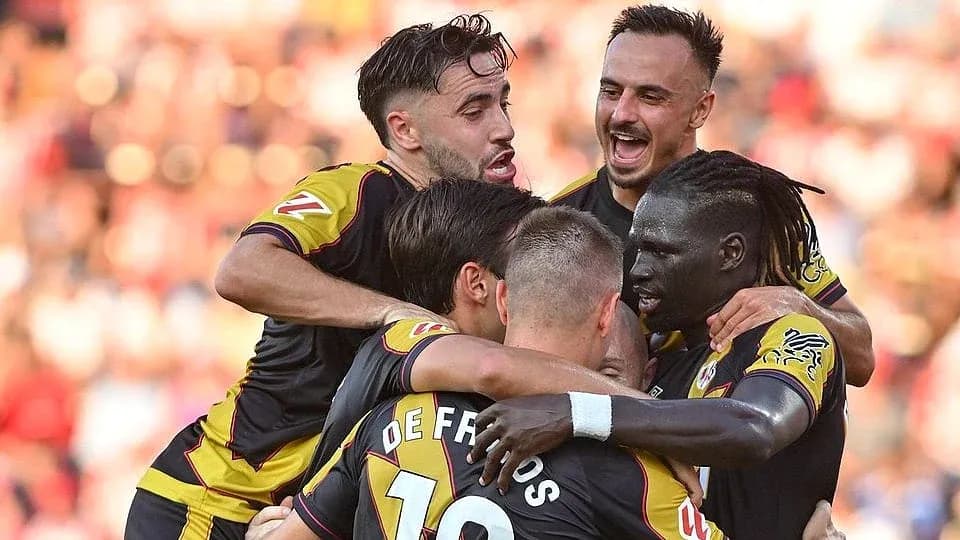
Rayo were without I. Akhomach (muscle injury), Luiz Felipe (injury), D. Mendez (knee injury) and, crucially, I. Palazon, suspended by a red card. Palazon’s absence removed one of La Liga’s most combative wide creators: 3 league goals, 3 assists, 871 passes with 39 key passes, and a disciplinary record that tells its own story – 10 yellow cards and 1 red. His missing presence forced Rayo to lean even harder on J. de Frutos as their primary outlet and on the midfield trio to compensate for his ball progression and dead-ball threat.
Girona’s voids were even more structural. B. Gil was suspended due to yellow cards, while Juan Carlos, Portu and V. Vanat were all sidelined by knee or other injuries. D. van de Beek and even M. ter Stegen appeared on the casualty list, underlining how patched together this Girona group has become. The result: Michel’s bench lacked proven game-changers, and his starting XI carried a heavy physical and creative burden.
Disciplinary trends also framed the risk zones. Heading into this game, Rayo’s yellow cards were spread relatively evenly, but there was a noticeable rise from 46–75 minutes (18 yellow cards, 18.37%) and 61–75 specifically (19 yellow cards, 19.39%). Girona, by contrast, have a dramatic late-game disciplinary spike: 39.19% of their yellow cards arrive between 76–90 minutes, with a further 17.57% in 91–105. This is a side that loses control as fatigue and pressure mount, and that pattern was always likely to influence how the final quarter of an hour played out.
III. Key Matchups – Hunter vs Shield, Engine Room vs Enforcer
The clearest attacking reference in this Rayo side is Jorge de Frutos. Heading into this game he had 10 league goals and 1 assist from 33 appearances, with 47 shots (26 on target) and 27 key passes. In a Rayo team that averages 1.0 goals per match in total and 1.2 at home, his output is decisive. The “Hunter vs Shield” battle therefore pitted de Frutos against Girona’s embattled defensive unit that had already conceded 27 away goals.
Within that back line, Vitor Reis stands out as the statistical shield. Across the season he had 38 blocked shots, 30 interceptions and 46 tackles, underpinning a passing game of 1,766 passes at 91% accuracy. In Vallecas, his duel with de Frutos’ inside runs and S. Camello’s movement between the lines was central to Girona’s ability to survive Rayo’s waves of pressure.
In midfield, the “Engine Room” belonged to the contrasting profiles of P. Ciss and A. Witsel. Ciss, one of La Liga’s most combative midfielders, arrived with 49 tackles, 32 interceptions and a remarkable 14 blocked shots, but also 8 yellow cards and 2 reds. He is both anchor and accelerant, capable of winning the ball and instantly turning Rayo vertical. Witsel, on the other side, offered Girona calm distribution from the pivot, knitting together F. Beltran and the creative line of V. Tsygankov, T. Lemar and J. Roca.
That midfield clash dictated tempo. When Ciss and O. Valentin stepped high, Rayo could compress the pitch, allowing U. Lopez to orchestrate from deeper zones. When Witsel escaped that press, Girona could find Tsygankov and Lemar between the lines, testing the positioning of P. Ciss (deployed here as a defender) and F. Lejeune.
IV. Statistical Prognosis – xG, Margins, and What the Draw Tells Us
Even without explicit xG numbers, the season data sketches a clear expected-goals landscape. Rayo at home, scoring 22 and conceding 15 across 18 games, usually live in the narrow-margin world of 1–0s, 1–1s and 2–1s. Their 11 clean sheets in total, with 7 at home, confirm a side built on defensive structure first.
Girona, in contrast, are an xG paradox: 37 goals for and 52 against in total, with only 6 clean sheets. Their average of 1.1 goals scored and 1.5 conceded per game hints at matches that tilt towards chaos, especially late on, where their card distribution (39.19% of yellows from 76–90 minutes) suggests tired legs and frayed concentration.
Overlay those profiles and a draw with both sides scoring fits the statistical script. Rayo’s home solidity was always likely to limit Girona to a single goal, while Girona’s away vulnerability made it probable that de Frutos, Camello or F. Perez would eventually find a way through. The 1–1 final scoreline mirrors the underlying balance: Rayo’s compact block versus Girona’s insistence on building through Witsel and Beltran.
Following this result, the prognosis is nuanced. Rayo’s model – controlled, defensively sound, reliant on a few key attackers – remains sustainable for a mid-table finish. Girona, though, continue to walk the relegation tightrope. Their attack is just about productive enough, but with a total of 52 goals conceded and only 6 clean sheets, their defensive xG against profile is that of a side permanently flirting with danger.
In Vallecas, the draw felt fair. For Rayo, it was another point that confirms their identity. For Girona, it was another night where their principles almost outweighed their weaknesses – but not quite enough to escape the gravity of the bottom three.