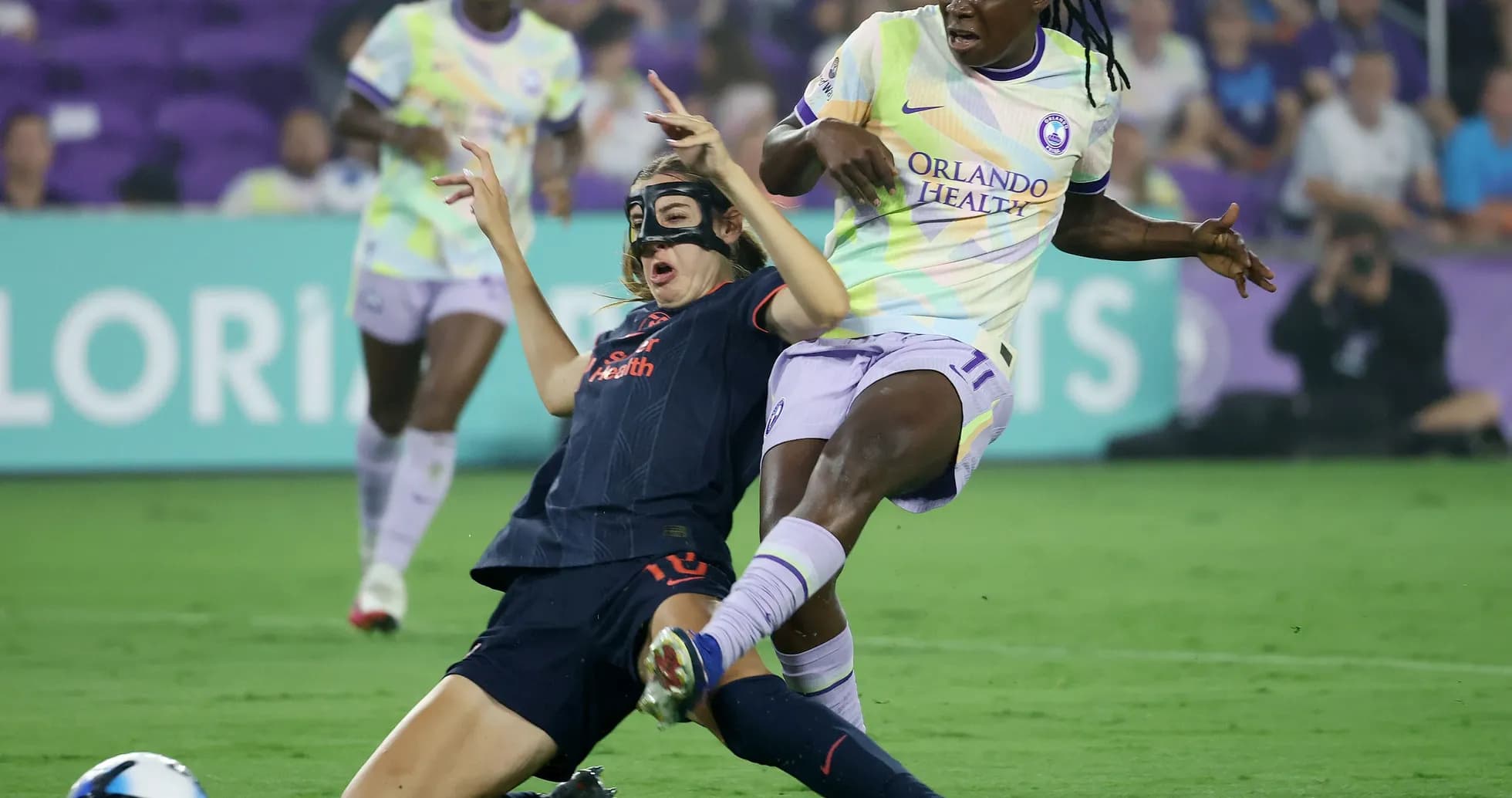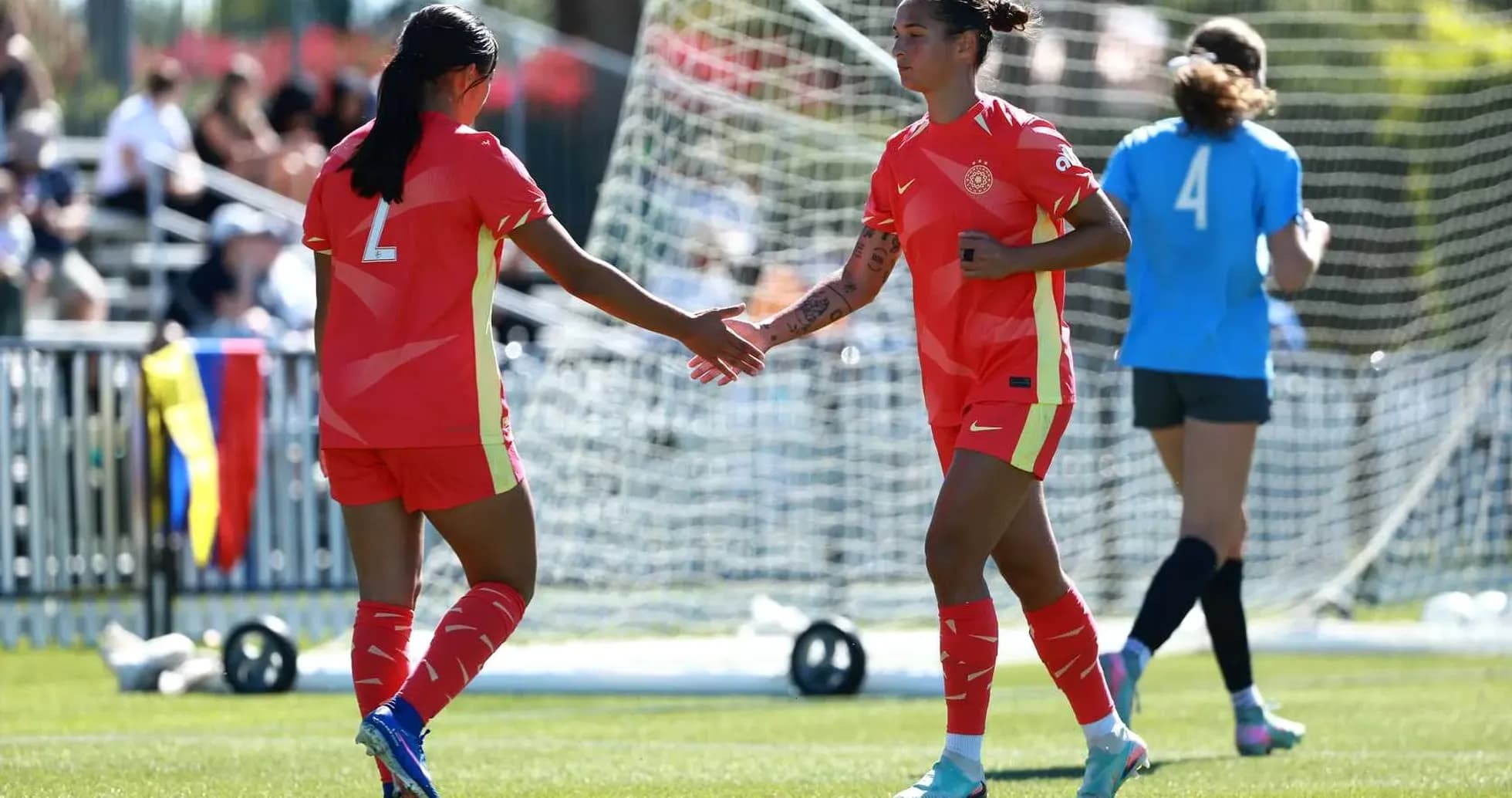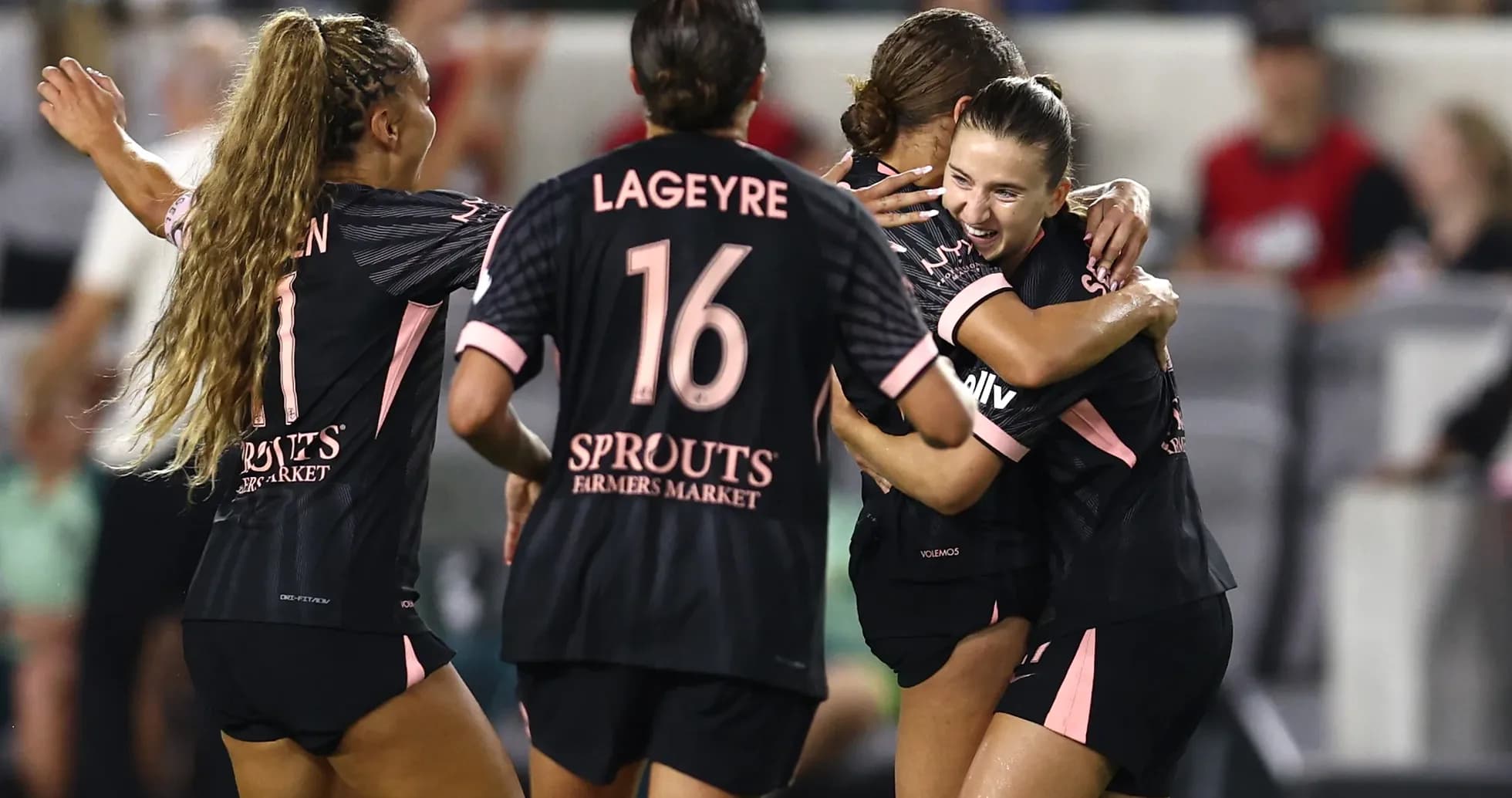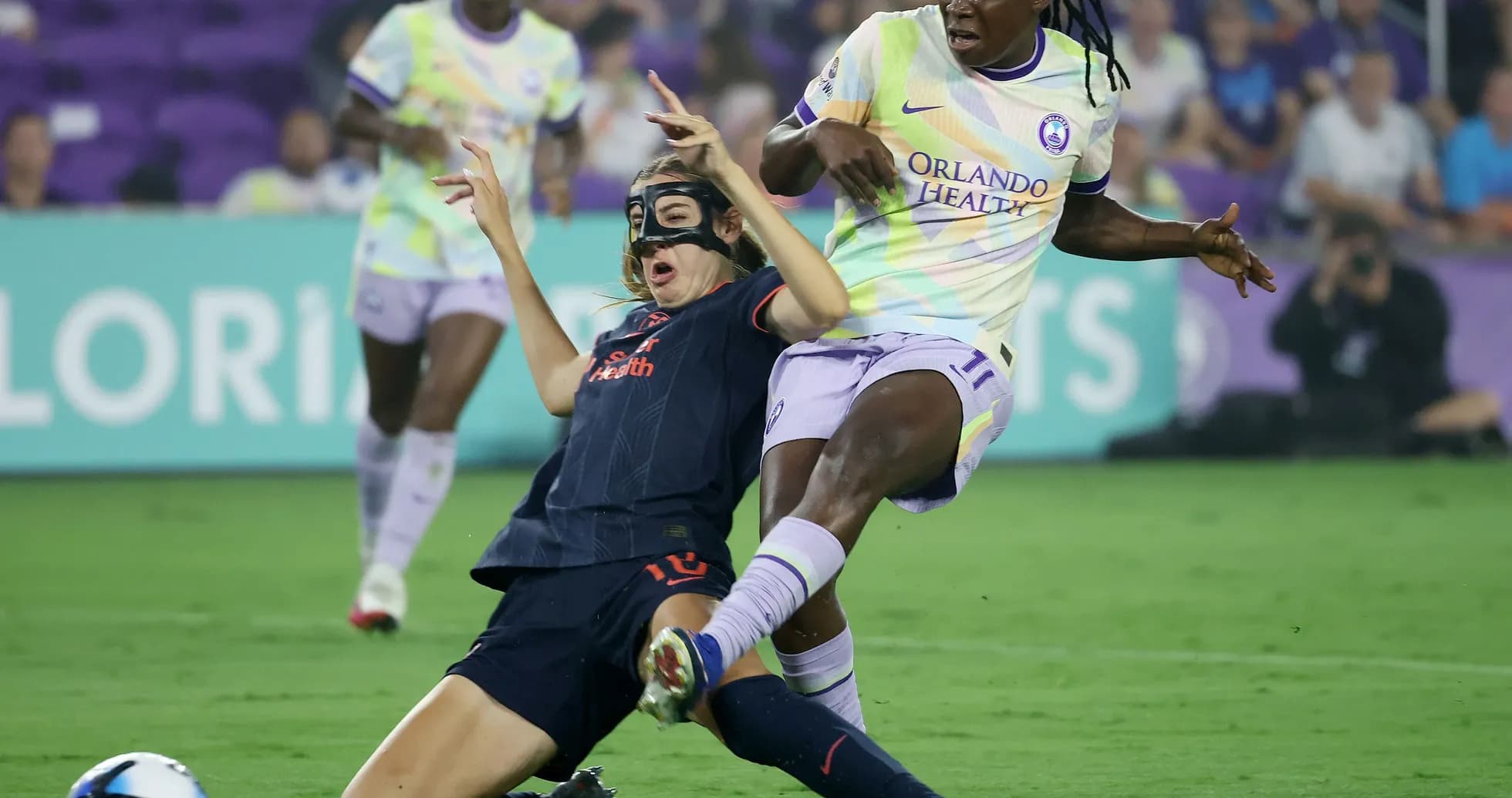
Racing Louisville Upsets Portland Thorns in NWSL Showdown
Under the lights at Lynn Family Stadium, this Group Stage fixture in the NWSL Women unfolded as a statement game. Racing Louisville W, bottom of the table in 14th with 7 points and a goal difference of -2 heading into this game, met league leaders Portland Thorns W, who arrived in Louisville sitting 1st with 19 points and a goal difference of 6. On paper it was a mismatch; on the pitch it became a reshaping of narrative, as Racing overturned a 1-1 half-time score to win 3-1 in regular time.
I. The Big Picture – Identity vs. Authority
Both sides lined up in mirrored 4-2-3-1 shapes, but with very different seasonal identities.
Racing’s season to date has been defined by extremes. Overall they had scored 13 goals and conceded 15 in total across 8 league games, averaging 1.6 goals for and 1.9 against. At home, though, they were a different animal: unbeaten with 2 wins and 1 draw, 8 goals for and 5 against, averaging 2.7 scored and 1.7 conceded at Lynn Family Stadium. Away, they had lost all 5, but on their own turf they were chaotic, attacking, and brave.
Portland, by contrast, had built their top-of-the-table status on balance and control. Overall they had 15 goals for and 9 against in total, averaging 1.7 scored and 1.0 conceded. At home they were flawless – 3 wins from 3, 6 scored and none conceded – while on their travels they were still strong: 3 wins, 1 draw, 2 defeats, 9 goals for and 9 against, averaging 1.5 scored and 1.5 conceded away.
This was, then, the league’s most polished side walking into one of its most volatile home environments – and Racing leaned fully into that volatility.
II. Tactical Voids and Disciplinary Undercurrents
There were no listed absentees, so both coaches could lean into their preferred structures. Beverly Yanez trusted the 4-2-3-1 that has been Racing’s default (used 7 times this season), with Jordyn Bloomer in goal behind a back four of Quincy McMahon, Courtney Petersen, Arin Wright, and Lauren Milliet. In front, the double pivot of Taylor Flint and Katie O’Kane offered height, bite, and progression, while an attacking trio of Ella Hase, Kayla Fischer, and Makenna Morris supported central forward Sarah Weber.
Robert Vilahamn matched the shape with his own 4-2-3-1: Mackenzie Arnold in goal; Reyna Reyes, Sam Hiatt, Carolyn Calzada, and Mary Alice Vignola across the back; Cassandra Bogere and Jessie Fleming anchoring midfield; and a creative band of Pietra Tordin, Olivia Moultrie, and Reilyn Turner behind forward Sophia Wilson.
Discipline was always going to be a hidden hinge. Racing’s season-long card profile shows a scatter of yellows but no reds, with a notable late spike: 27.27% of their yellows arriving between 91-105 minutes, a sign of emotional games that often go to the edge. Portland’s card map is more dramatic: 20.00% of their yellows in each of 0-15, 31-45, 61-75, and 76-90, plus a stray 10.00% in an undefined range, and crucially red cards concentrated early (50.00% in 0-15) and just after the restart (50.00% in 46-60). That volatility is embodied by Reyna Reyes, already with 1 red this season, and by Bogere, who has both a yellow and a yellow-red on her record.
In a match where Racing would need to unsettle the leaders, that disciplinary edge was always going to be probed.
III. Key Matchups – Hunter vs Shield, and the Engine Room
The “Hunter vs Shield” narrative sat squarely on Reilyn Turner and the Racing back line. Turner came in as one of the league’s top scorers with 4 goals from 8 appearances, 12 shots and 6 on target, and a robust duel profile: 80 total duels, 51 won. She is a runner between lines, a presser, and a finisher. Racing, having conceded 15 goals in total across 8 games, knew that managing her movement was non‑negotiable.
But the real attacking gravity for Portland lay in Olivia Moultrie and Pietra Tordin. Moultrie, with 4 goals and 4 assists in 9 appearances, had already produced 22 key passes and 13 total shots (9 on target), while also contributing 19 tackles and 4 blocks. She is both playmaker and volume shooter. Tordin, with 3 goals and 3 assists in 9 appearances, adds vertical threat and chaos: 11 shots, 10 key passes, and a high-contact profile with 84 duels and 10 fouls committed. Together they form a dual threat that usually stretches defensive midfields.
Opposite them, Racing’s “Shield” was built around Taylor Flint and Katie O’Kane, with Petersen and Wright stepping in aggressively from the back line. Flint has been one of Racing’s most complete midfielders: 2 goals, 324 passes completed at 67% accuracy, 19 tackles, and a remarkable 10 blocked shots plus 27 interceptions. She is the enforcer who breaks up moves before they reach the box. O’Kane adds a different profile: 1 goal, 1 assist, 192 passes at 71% accuracy, 15 tackles, and 5 interceptions, but also 14 fouls committed and 2 yellow cards – a midfielder willing to take a booking to stop transitions.
The “Engine Room” duel, then, was clear: Fleming and Bogere trying to feed Moultrie and Tordin against Flint and O’Kane’s physical screen, with Fischer dropping in from the No.10 line to add defensive numbers. Fischer herself is a hybrid: 1 goal, 2 assists, 12 key passes, 13 tackles, and 105 duels (43 won). Her ability to both carry the ball and disrupt Portland’s build was central to Racing’s plan.
Further upfield, Sarah Weber carried Racing’s “Hunter” tag. With 3 goals and 1 assist in 7 appearances, 8 shots (5 on target), and 62 duels contested, Weber is not just a finisher but a focal point for long passes and second balls. Around her, Fischer and Hase looked to exploit the half-spaces against Portland’s full-backs, particularly targeting Reyes, whose red card earlier in the season hinted at a defender who can be drawn into risky challenges.
IV. Statistical Prognosis and What the Result Tells Us
Heading into this game, the numbers tilted toward Portland. Their overall defensive record – just 9 goals conceded in 9 matches, with 5 clean sheets – suggested that even on their travels, where they averaged 1.5 goals conceded, they would be difficult to break down. Racing, meanwhile, had yet to keep a single clean sheet in total, and conceded an average of 2.0 goals on their travels and 1.7 at home.
Yet Racing’s home attacking profile and Portland’s away openness created a statistical crossroads. Louisville’s 2.7 goals scored at home, against a Portland side that concedes 1.5 away, hinted at a game where xG would likely tilt higher than the leaders prefer. Portland’s own 1.5 away goals per game suggested they would still generate chances, especially through Moultrie’s 22 key passes and Tordin’s aggressive dribbling and movement.
A 3-1 full-time scoreline to Racing fits that probabilistic tension: the home side leaning into their attacking volatility, the visitors still finding a goal but unable to impose their usual defensive control. Weber’s presence as a top scorer, supported by Fischer’s and Emma Sears’ creative profiles (Sears with 3 assists and 5 key passes in 7 appearances), gave Racing enough firepower to turn promising attacks into goals.
Defensively, the fact that Portland conceded three speaks to the limits of their away solidity when their midfield shield is stressed. Bogere, for all her 22 tackles and 7 interceptions, also has 12 fouls committed and a yellow-red on her record; when Racing overloaded central zones and attacked second balls, that fragility could be exploited.
Following this result, the tactical story is clear: Racing Louisville’s home identity – aggressive, front‑foot, and emotionally charged – is strong enough to unseat even the league leaders when their key engines fire together. Portland remain a top side, but this 3-1 defeat is a reminder that their away xG and defensive numbers leave just enough space for ambitious hosts to punch above their weight.