Qatar vs Switzerland: Tactical Analysis of a 1-1 Draw
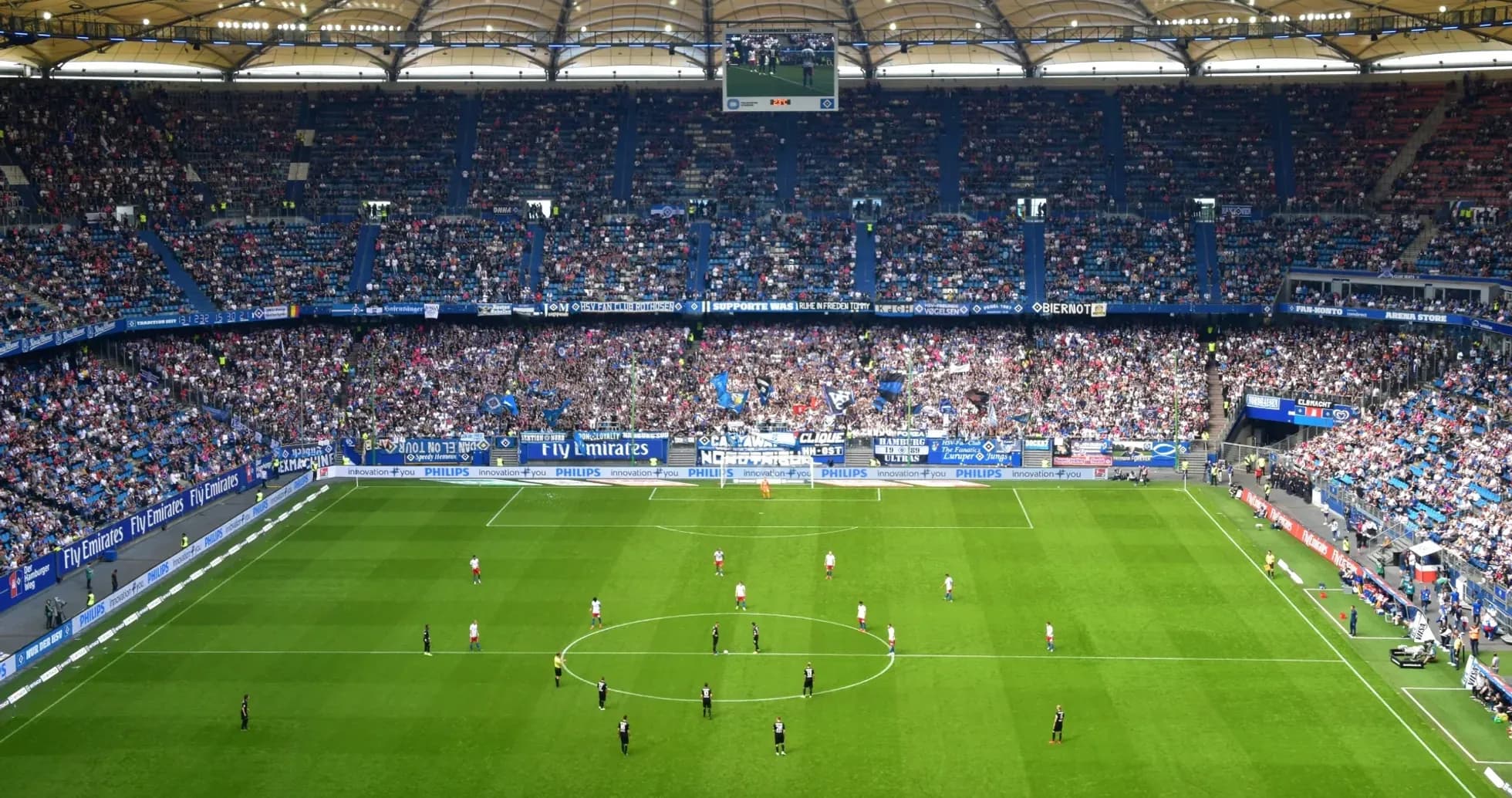
Qatar’s 1-1 draw with Switzerland at Levi's Stadium was a classic case of tactical survival versus territorial dominance. Switzerland, in a 4-3-3 under Murat Yakin, imposed a structured, possession-heavy game, while Julen Lopetegui’s Qatar, also in a 4-3-3, accepted a low-possession, counter-punching role and leaned heavily on defensive organisation and goalkeeping.
Switzerland’s control is clear in the numbers: 68% possession, 575 passes with 522 accurate (91%), and a massive 26 total shots. Their 4-3-3 behaved like a patient positional play system. Granit Xhaka anchored the midfield, with Remo Freuler and Michel Aebischer stepping into advanced half-spaces to connect with the front three. The full-backs, particularly Ricardo Rodríguez on the left, pushed high to pin Qatar’s wingers and keep the hosts in a deep 4-5-1 block out of possession.
Qatar’s 32% possession and 275 passes (196 accurate, 71%) underline how much of the game they spent without the ball. Lopetegui’s side prioritised verticality: a compact back four of Homam Al-Amin, Boualem Khoukhi, Pedro Miguel and Ayoub Al Oui protected the box, while the midfield trio of Issa Laye, Assim Madibo and Jassem Gaber Abdulsallam focused on screening central lanes rather than pressing high. Akram Afif was the key outlet on the left, with Yusuf Abdurisag and Edmilson Junior offering depth and transitional threat when Qatar could escape.
Turning Point
The early turning point came from Switzerland’s central overloads. At 16', a long Swiss spell in Qatar’s half forced Mahmud Abunad into a “Time wasting” yellow card, reflecting how quickly Qatar retreated into a delay-and-survive mindset. One minute later, VAR confirmed a penalty for Switzerland after a check involving Remo Freuler’s involvement in the box. Breel Embolo converted at 17', rewarding Switzerland’s structured pressure. That sequence encapsulated the tactical pattern: Switzerland using circulation and rotations to stress Qatar’s back line, Qatar responding by sinking deeper and breaking rhythm.
Switzerland’s shot profile shows how effective their territorial dominance was: 18 shots inside the box out of 26 total, supported by 10 corners and 9 blocked shots. They consistently created situations to shoot from dangerous zones, often via cut-backs and crosses after wide overloads. Dan Ndoye and Rubén Vargas, starting wide, stretched Qatar horizontally, while Embolo occupied both centre-backs, opening pockets for late runs from midfield. The xG gap – 3.24 for Switzerland versus 0.76 for Qatar – underlines that Yakin’s structure generated significantly higher-quality chances.
Yet the finishing and goalkeeping balance the story. Mahmud Abunad (Qatar) made 5 saves and, crucially, registered 0.43 goals prevented. That figure, combined with Switzerland’s xG, shows that he outperformed expectation, especially against close-range efforts. His command of the six-yard box and positioning on low crosses limited rebounds and second-ball chaos, even as Qatar conceded territory. At the other end, Gregor Kobel (Switzerland) faced only 4 shots on goal, making 3 saves with 0.43 goals prevented of his own. Switzerland’s defensive control meant he was rarely exposed, but Qatar’s late equaliser showed that even a low-volume attack can punish small lapses.
Attacking Plans
Qatar’s attacking plan was built on efficiency rather than volume: 7 total shots, 5 inside the box. They were selective, trying to spring Afif or Abdurisag quickly after regains. The triple substitution at 60' was a clear tactical pivot from Lopetegui: Ahmed Alaaeldin (IN) came on for Yusuf Abdurisag (OUT), Karim Boudiaf (IN) came on for Jassem Gaber Abdulsallam (OUT), and Ahmed Fathi (IN) came on for Ayoub Al Oui (OUT). This reshaped the midfield with fresh legs and a slightly more assertive central presence, allowing Qatar to step a few metres higher and contest second balls rather than simply absorbing.
Switzerland’s response at 65' mirrored their desire to maintain tempo rather than protect the lead: Johan Manzambi (IN) came on for Dan Ndoye (OUT) and Fabian Rieder (IN) came on for Michel Aebischer (OUT). Rather than dropping into a conservative block, Yakin kept three forward profiles and a progressive midfield, continuing to chase a second goal. That ambition produced more shots and corners but also left occasional transition spaces that Qatar began to exploit as the game wore on.
Final Phase
The final phase was about game management and fatigue. At 79', Mohamed Naceur Almanai (IN) came on for Assim Madibo (OUT), and Zeki Amdouni (IN) came on for Rubén Vargas (OUT), with both coaches refreshing the central lanes and wide threat. Lopetegui’s late attacking push at 88' – Hassan Al Haydos (IN) came on for Edmilson Junior (OUT) – added creativity and leadership in the final third. Switzerland answered with Miro Muheim (IN) for Ricardo Rodríguez (OUT) and Ardon Jashari (IN) for Remo Freuler (OUT) at 89', tweaks aimed at preserving structure and energy in the back line and midfield.
The decisive moment came in added time. With Switzerland still pushing but slightly stretched, Qatar finally converted one of their limited set-piece or territorial opportunities. At 90+4', Boualem Khoukhi rose to score from a delivery involving Homam Al-Amin’s assist, a reward for Qatar’s resilience and for their late shift towards more proactive occupation of the Swiss box. It was a classic low-possession equaliser: few attacks, but enough presence in the right moment to punish a defence that had been dominant for most of the match.
Discipline
Discipline also reflected the tactical edges. Qatar collected two yellow cards: at 16', Mahmud Abunad (Qatar) — Time wasting; at 23', Jassem Gaber Abdulsallam (Qatar) — Foul. Switzerland had one: at 42', Denis Zakaria (Switzerland) — Foul. The early “Time wasting” booking underlined Qatar’s commitment to slowing the game and disrupting Switzerland’s rhythm, while the fouls by Abdulsallam and Zakaria were natural by-products of aggressive midfield duels in a match where the centre of the pitch was constantly contested.
Statistically, Switzerland did almost everything right except finish the game off. Their 10 corner kicks, high passing accuracy and heavy shot volume, combined with an xG of 3.24, point to a side that systematically created chances. Qatar, with just 3 corners and 0.76 xG, leaned on efficiency, set-piece threat and elite goalkeeping. Both goalkeepers’ 0.43 goals prevented figures are telling: Mahmud Abunad (Qatar) ensured the game never got away from his team, while Gregor Kobel (Switzerland) was largely secure but could not preserve the clean sheet under late pressure.
From a broader tactical lens, the 1-1 scoreline reflects Qatar’s capacity to suffer without the ball and still carry a threat, and Switzerland’s need to translate territorial and statistical superiority into more ruthless game management. For Lopetegui, the draw validates a compact 4-3-3 that can survive against stronger possession sides. For Yakin, it is a warning that dominance in metrics – possession, passes, shots and xG – must be matched by clinical finishing and concentration until the final whistle.