Premier League Transfer Window: Financial Chaos and Key Changes
Two days on from the transfer window slamming shut, the Premier League still looks like a financial hallucination. Numbers blurred into each other, logic went missing, and somewhere in the middle of it all, clubs convinced themselves that nothing really has to add up any more.
Who won? Who lost? Does that even exist as a concept when £100m mistakes can be flipped for £80m a year later and called “good business”? This was the summer when the Chelseafication of the market felt complete: a housing bubble with shin pads, where prices only go one way and common sense has long since packed its bags.
Chelsea spent £60m on Mykhailo Mudryk, watched him struggle, watched him get banned, and now have a deal in place that could see them turn a profit within a year. Try applying reason to that. You can’t. But we’re going to make a run at it anyway.
Before the season kicked off, there were 10 glaring problems across the division. The clock was ticking, the money was flying, and the holes were obvious. Some were patched. Some were ignored. Some were just drowned in cash.
Let’s see what, if anything, actually changed.
Tottenham’s missing No 9
This always felt like the place to start. The answer? Sort of. Maybe. Not really.
Tottenham have thrown Savio, Omar Marmoush and the aforementioned Mudryk into Roberto De Zerbi’s forward mix. Dominic Solanke and Richarlison are still there too, both seemingly locked in that frosty stand-off with their equally spiky head coach.
De Zerbi has already set Savio a double-figure goals target, hinting at a shared-responsibility attack rather than a traditional spearhead. Marmoush looks a clever pickup, another striker who decided trying to outlast Erling Haaland at Manchester City was a career cul-de-sac.
But none of them is a classic, penalty-box No 9. The big attacking names who slipped away – Cody Gakpo, Iliman Ndiaye – only underline the suspicion that De Zerbi doesn’t actually want one. And this is the thing: he pretty much got everything else he asked for.
Two league games in, Spurs haven’t scored. They haven’t really looked like scoring. The new-look attack needs to stop being a concept and start being a functioning unit very quickly, or this long-awaited era of big spending risks turning into another season of angst and eye-rolling.
Manchester City’s midfield panic
The alarm went off after the Community Shield. That alone should have been a warning; nothing warps perception quite like a glorified friendly.
But in Cardiff, a midfield of Elliott Anderson and Mateo Kovacic looked flimsy, and City reacted in the only way City now know: they dropped another nine-figure fee on the problem and took Enzo Fernandez off Chelsea’s hands.
Fernandez had already earned pantomime-villain billing in England after his World Cup antics. Now he’s become the face of this summer’s excess, moving from one financial superpower to another, embodying the sense that the transfer market is a game with no rules and no ceiling.
Plenty of people will want him – and City – to fall flat. If that happens, Anderson, once the feel-good story, becomes collateral damage in a very expensive experiment.
Manchester United’s creaking back line
United did the necessary work in midfield. The defence, though, was left to creak on.
The early evidence is ugly. Two promoted sides have already put four goals past them in the opening games, a grim echo of that four-goal capitulation at Brentford four years ago. The same issues, the same vulnerabilities, just with more miles in the legs.
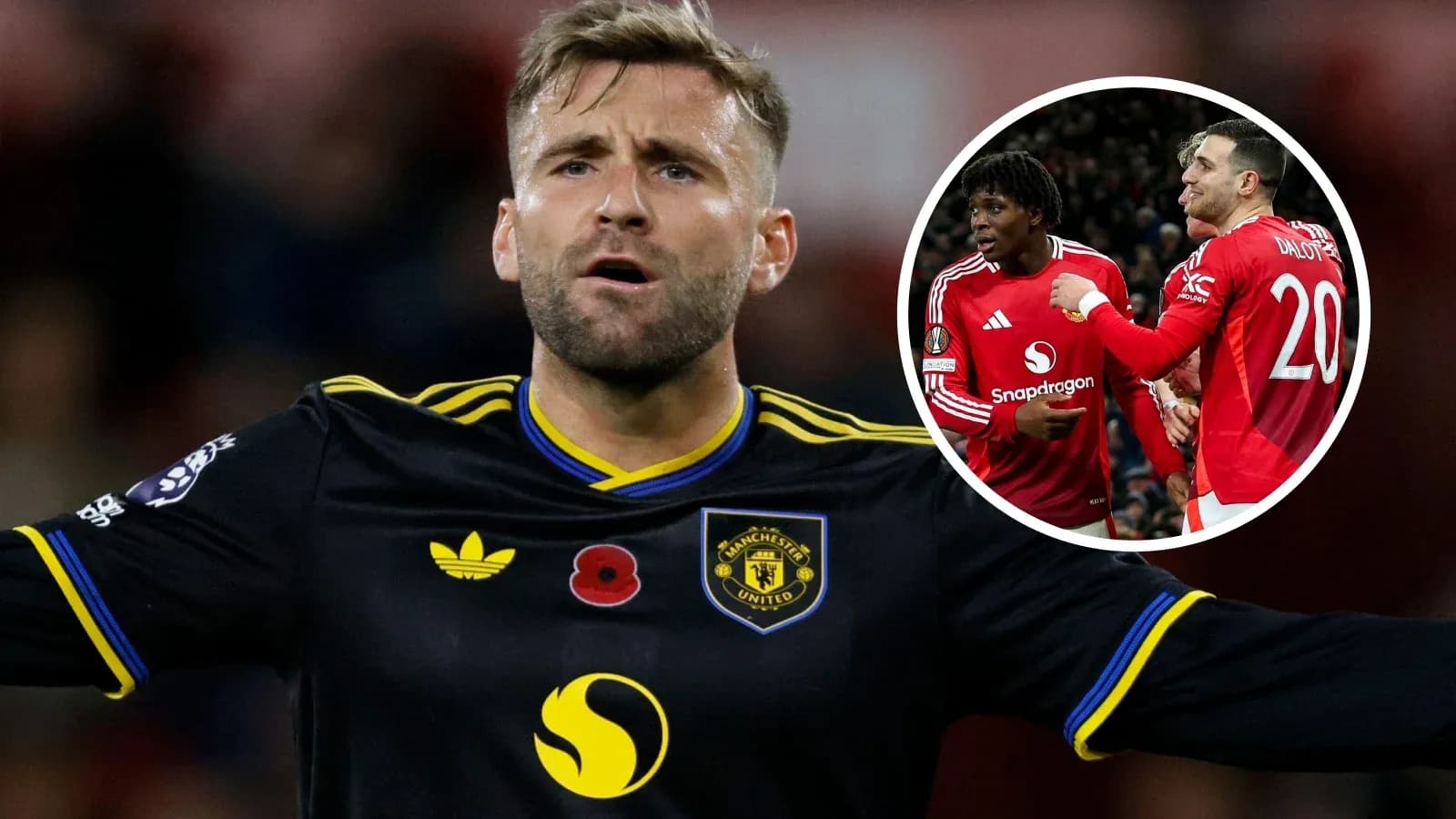
The schedule will only tighten. Two games a week will lean heavily on a back line that looks old, slow and over-exposed. A huge amount now rests on Luke Shaw staying fit and functioning for the next four months. That’s not a plan; it’s a wish.
Liverpool’s fitness – or something deeper?
While the spotlight stayed fixed on City, Chelsea and Spurs, Liverpool quietly ended the window with the biggest net spend in the league. And yet the squad doesn’t obviously look better than last season’s.
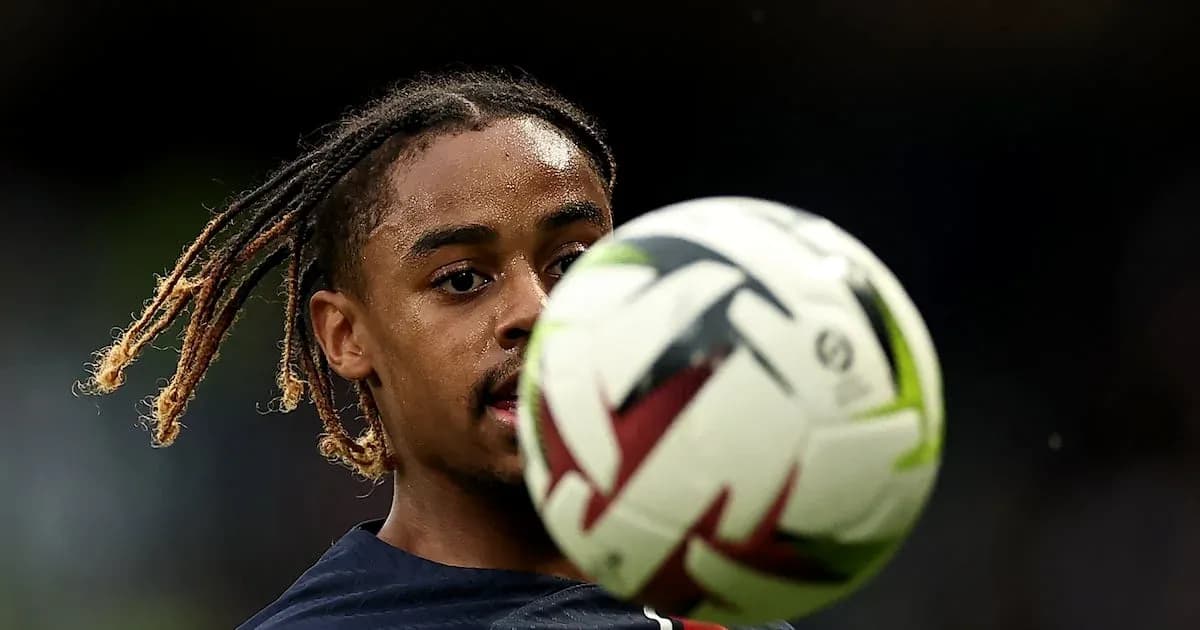
Bradley Barcola is a dazzling, high-ceiling signing for the attack, but he’s also enormously expensive. For that outlay to make sense, one or two of last summer’s big-money forwards – the ones who’ve flattered to deceive so far – need to ignite properly.
On the specific question of fitness, the numbers are ambiguous. Two games, two 2-2 draws, two late equalisers. You can read that as resilience and legs. Or you can remember that this time last year they were snatching late winners that ultimately disguised much deeper problems.
Maybe it’s a coincidence. Maybe it’s just football chaos. Or maybe the patterns are starting to repeat.
Chelsea finally fix the obvious problem
At least one thing this summer made sense.
Chelsea went into the season with a glaring issue in goal. The first game underlined it. Then they acted. Emi Martinez arrived, Robert Sanchez was replaced, and for once the entire football world could nod in agreement: this is an upgrade.
In a window defined by arguments, that felt like rare common ground.
Of course, this is Chelsea 2026, so the anxiety has simply shifted a few yards up the pitch. Fernandez has gone and hasn’t been replaced, leaving midfield looking light. No European football buys them some breathing room, and as long as Moises Caicedo stays upright they can probably cobble together a rotation of Romeo Lavia, Valentin Barco and Reece James until January.
If not, there’s always the Free Agent Lucky Dip. Given Spurs’ apparent addiction to Chelsea cast-offs, the thought of the Blues turning to Yves Bissouma – or, for maximum chaos, Tanguy Ndombele – as a stopgap is the kind of farce this window specialised in.
Aston Villa rip out the spine – and rebuild
Villa’s summer never stopped moving. Key figures from the spine that powered their rise – Emi Martinez, Ezri Konsa, Youri Tielemans, Morgan Rogers, Ollie Watkins – have all gone, leaving the club to reconstruct on the fly while still playing with that familiar chip on each shoulder.
In the middle of it all, they quietly picked up Leon Goretzka on a free after his Bayern Munich exit. It barely registered amid the deadline-day noise, but it might end up being one of the canniest moves of the lot.
There has been more churn than any manager would ideally accept, yet across the pitch Villa have made some smart decisions. They’ve started the season with no goals and no points, but the sense here is of a wobble, not a collapse. Other goalless, pointless starts feel far more ominous.
Newcastle being Newcastle again
This one can be parked for now.
The worry was that Newcastle might lose their edge, that the project might stall. Instead, Matthias Jaissle has walked in and immediately banked four points from games against Liverpool and Tottenham.
The only caveat is obvious: those results might say more about Liverpool and Spurs than they do about Newcastle. A calmer opponent will offer a clearer read. Bournemouth, this weekend, should be a decent test of how much of this is substance and how much is early-season noise.
Fulham’s bench gamble
Alvaro Arbeloa has already been installed as the favourite in the Sack Race. That alone tells a story.
Fulham and Marco Silva always felt like a rare, almost perfect alignment: right manager, right club, right moment. Both sides decided it was time to move on, and in stepped Arbeloa, the Temu version of Xabi Alonso, tasked with maintaining the trajectory.
From the outset, it looked flimsy. Among the new faces in Premier League dugouts this season, his appointment always felt the least convincing. Two weeks in, the bookmakers agree.
Coventry and the cost of survival
Coventry still reek of Sky Bet.
The defeat to Hull has loaded their fixture list with dread. The next month brings Manchester City, Brighton, Nottingham Forest and Newcastle. By the time they get the traditional respite of a trip to “Dr Tottenham” in late October, they could already be staring up from trouble.
Strip away the headline deals at the top and this is the clearest sign of how distorted the market has become. Coventry have spent £150m just to assemble a squad that, at absolute best, looks like Championship Deluxe. De-Championshiping a promoted side is now brutally hard and eye-wateringly expensive.
Crystal Palace’s patched-up back line
The alarm remains loudest at Crystal Palace.
Two games, two defeats, and the image that lingers is a very unfinished Manchester City side trampling all over them on Friday night. The response has been to raid the Chelsea carousel.
Axel Disasi has arrived on loan, because at some stage it appears every Premier League club must host Axel Disasi on loan. There’s a rota somewhere. Honest Ahanor is also in on loan, but technically from Atalanta, given he doesn’t officially become a Chelsea player until next summer.
It’s a deal that leaves a sour taste. A player literally called “Honest” fronting a move that openly sprints through a loophole and waves at the rulebook on the way past. Palace have also brought back Ben Chilwell, who returns from Strasbourg after a previous loan spell at Selhurst Park.
On one level, it’s easy to smirk. On another, the pattern is clear. Clubs only sign an injured Ben Chilwell on deadline day when they’re desperate. Palace look exactly that.
And so the window closes on a league that has never spent more and rarely felt less rational. The question now isn’t who “won” the summer. It’s who can make sense of the chaos fastest before the table starts telling the truth.