Premier League 2023/24: One Champion, Nine New Managers, and Uncertainty Ahead
The Premier League resets: one champion, nine new managers, and a season on the brink of upheaval.
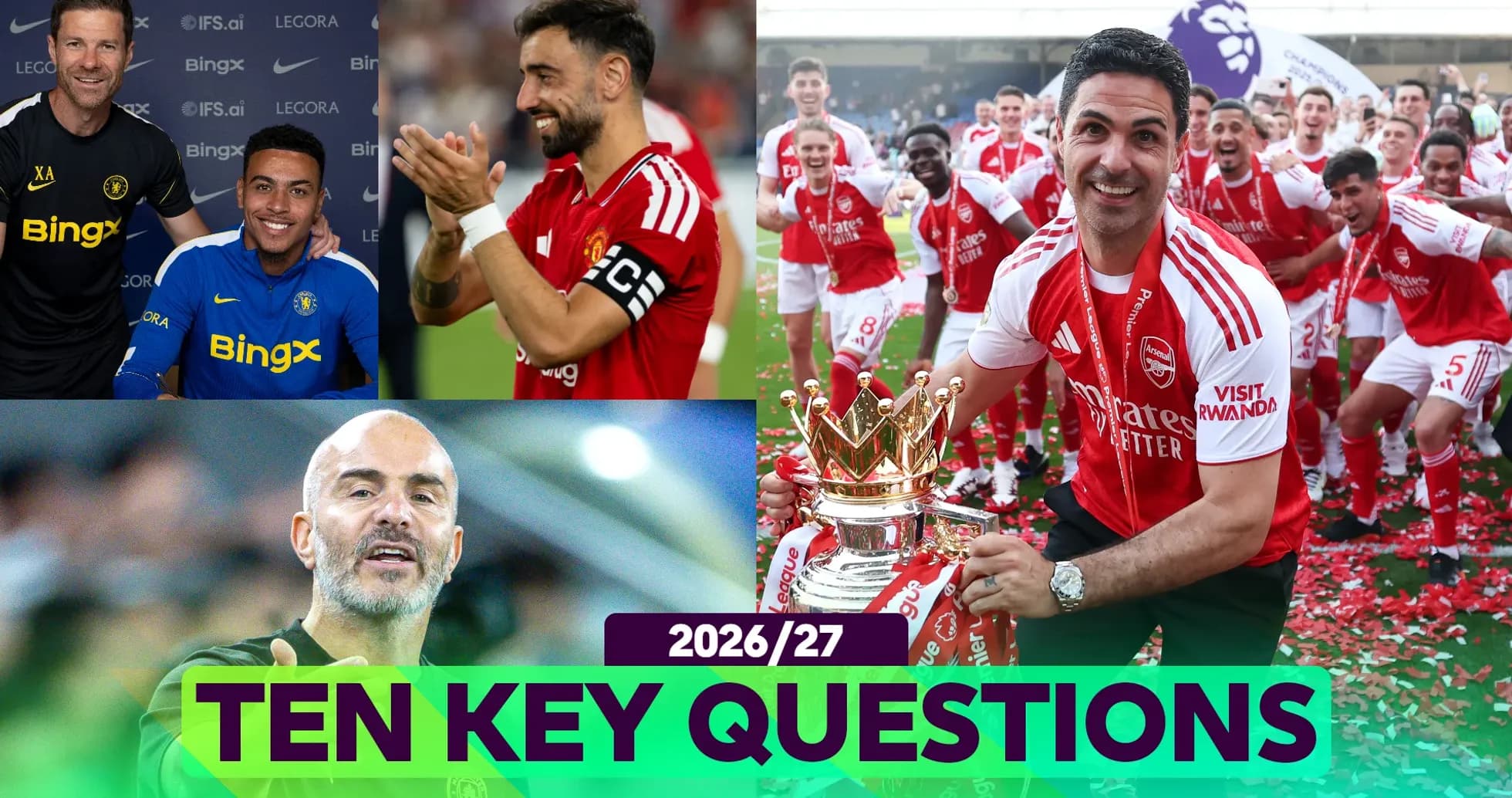
The Guardiola era is over. Klopp has gone. Chelsea, Liverpool, City themselves – all starting again. Five of the traditional "Big Six" are effectively ripping it up and beginning anew, while a record nine clubs kick off with fresh faces in the dugout.
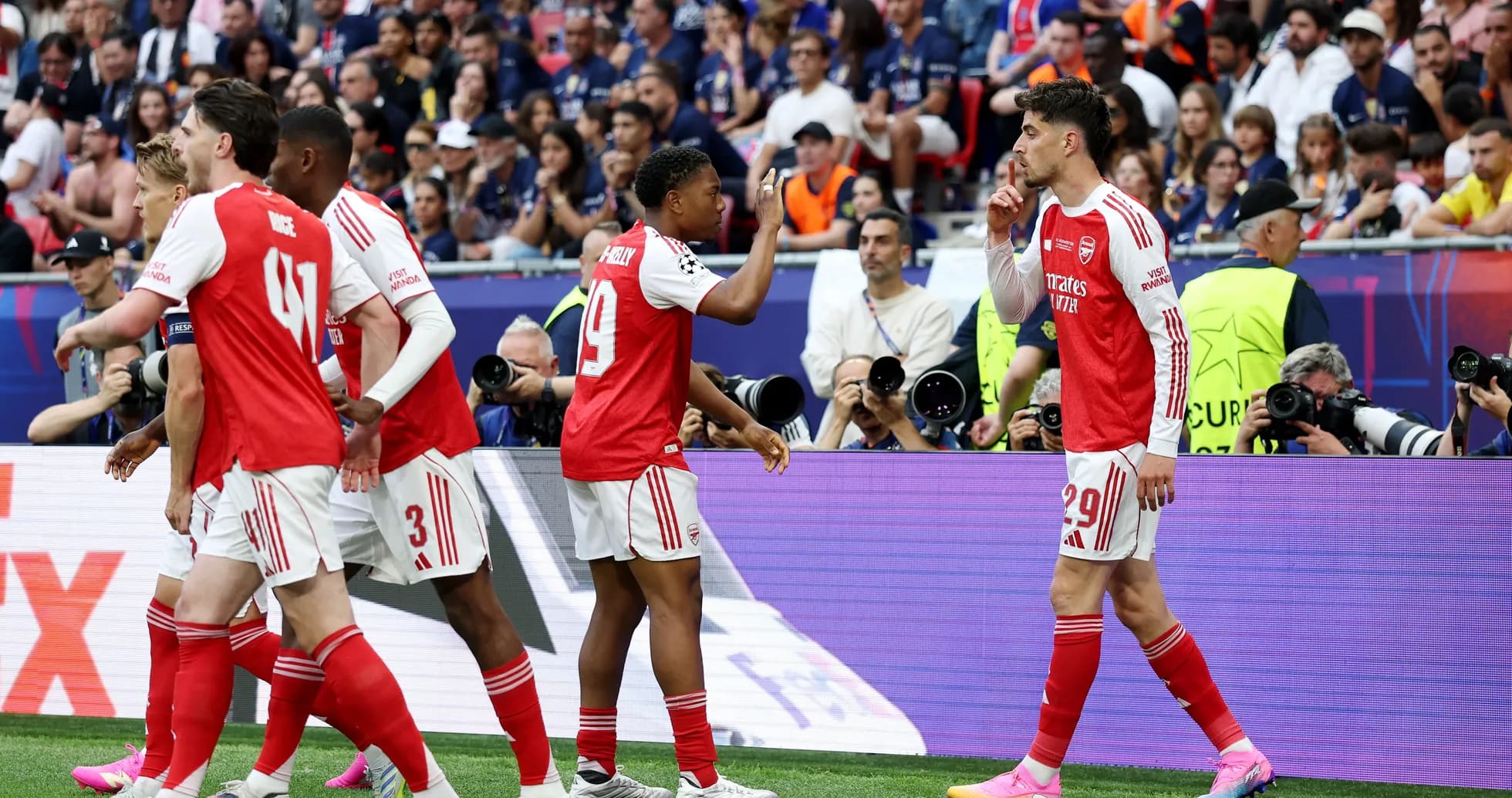
In the middle of the chaos sits something rare in modern English football: stability. Arsenal, and Mikel Arteta, with a title finally banked and a target on their backs.
Arteta, the last champion standing
Only three men have ever retained the Premier League title: Pep Guardiola, Sir Alex Ferguson, Jose Mourinho. That’s the company Mikel Arteta is trying to join.
He does so in a season that feels tailor-made for a power grab. Arsenal are settled – in personnel, in style, in mentality. The five-year climb to that long-awaited title is complete. The "can they do it?" narrative has gone. This is now a group that knows how to win the league.
Around them, almost everyone else is starting from scratch. Michael Carrick at Manchester United and Roberto De Zerbi at Tottenham Hotspur are heading into their first full campaigns. Liverpool, Chelsea and Manchester City all have brand-new head coaches. The landscape has shifted.
For Arsenal, that matters most at the Etihad. Guardiola’s departure strips City of the architect of their dynasty and leaves Arteta as the only title-winning manager left in the division. If experience counts for anything in a year of flux, it should count now.
The champions are the calm at the eye of the storm. The question is whether that calm becomes dominance.
Life after Pep: Maresca and the weight of a dynasty
Manchester City stand at a crossroads that could define their modern history.
Enzo Maresca walks into the job of replacing not just a manager, but a legend who rewrote the record books. This is not a normal succession. It rarely is when a dynasty ends.
Recent history offers two templates. Arne Slot stepped into Jurgen Klopp’s shadow at Liverpool and delivered immediate continuity. Unai Emery and David Moyes, by contrast, struggled to follow Arsene Wenger and Ferguson at Arsenal and Manchester United. City will live somewhere between those extremes.
One thing is clear: the club has chosen to double down on its identity. After years of building everything around Guardiola’s philosophy, they have hired a Guardiola disciple. Maresca is steeped in that school – possession-heavy, structure-obsessed, tactically aligned almost to the letter with his former mentor.
On paper, that should soften the blow. On the pitch, the dressing room looks different. Bernardo Silva and John Stones have gone, taking with them experience, versatility and a huge chunk of the old guard’s personality.
Does the Guardiola blueprint, in the hands of his protégé and without key lieutenants, keep the magic alive? Or does this mark the start of a fallow period for the eight-time champions?
Alonso at Chelsea: a new heavyweight in the making?
Of all the new arrivals, one name crackles with intrigue more than any other: Xabi Alonso.
Fresh from an extraordinary invincible season with Bayer Leverkusen in 2023/24, Alonso arrives as one of the most coveted coaches in the game. With Klopp and Guardiola gone from the Premier League stage, the door is wide open for a new managerial superstar to emerge. Alonso looks primed to walk through it.
Circumstances help. Chelsea have no European football this season, a luxury that once allowed Antonio Conte to drill his ideas relentlessly in 2016/17 – and end that campaign with the title. History is on Alonso’s side: only six managers have ever won the Premier League in their debut season, and three of them did it at Chelsea (Conte, Jose Mourinho, Carlo Ancelotti).
Joining that group is not a fantasy. It’s a live possibility.
Those clear midweeks will be spent on the training ground, sharpening what has already been described as world-class tactical work. The squad, expensively assembled but often unbalanced, has been nudged in a new direction: Danny Welbeck and Jordan Henderson are the first over-30 signings of the BlueCo era, a symbolic break from the youth-only obsession.
Experience, clarity, a coach with a defined idea of football. Chelsea have been searching for a new identity since their last title. Alonso might just give them one – fast.
The return of chaos: De Zerbi, Iraola and the attacking wave
Last season left a sour taste for some. Set-pieces dominated the conversation, and although goals per game only dipped slightly from 2.40 to 2.36, the deeper numbers told a different story. Open-play Expected Goals dropped sharply.
Open-play xG per match has gone from 2.28 in 2023/24 down to 1.82 in 2025/26. That’s a significant shift away from the wild, end-to-end chaos that defined the league’s recent peak.
The dugouts might drag it back.
Roberto De Zerbi now has a full pre-season at Tottenham to unleash the high-pressing, risk-heavy attacking football that turned heads earlier in his Premier League career. Time was against him at the end of last season. Now he starts from zero, with a squad built to play on the front foot.
At Liverpool, Andoni Iraola brings back the "heavy-metal" feel many supporters craved, his Bournemouth side having lit up the league with aggressive, vertical football. The expectation at Anfield is clear: intensity, energy, relentless front-foot play.
Goals should follow elsewhere too. Alonso’s Leverkusen and Real Madrid teams scored freely. Bournemouth’s new head coach Marco Rose arrives from the RB Leipzig/Borussia Dortmund school of aggressive German attacking football. Crystal Palace have turned to Pierre Sage, another coach wedded to fast breaks and hard pressing.
Taken together, this influx of managers looks tailor-made to drag the league back towards open, attacking games. The numbers may soon catch up with the nostalgia.
Carrick’s United: a title challenge, or a mirage?
Michael Carrick’s Manchester United story began quietly. Appointed caretaker on 14 January, he walked into a derby against Manchester City three days later and walked out with a 2-0 win.
That result sparked a remarkable five-month run that changed his job title and, perhaps, United’s short-term future.
Strip away the narratives and the table since his arrival tells the story. Over his 17 league matches, almost half a season, United sat top:
Man Utd: 17 games, 12 wins, 3 draws, 2 defeats – 39 points.
Arsenal: 36 points.
Man City: 35 points.
Bournemouth: unbeaten, but drawing 10 of 17.
Liverpool: patchy, with six defeats.
Repeat that form across an entire campaign and United end up champions for the first time since 2013. It rarely works that neatly. Squads tire, injuries hit, opponents adapt.
But Carrick doesn’t need to reinvent anything. He just needs to sustain what he has already built long enough to turn a five-month surge into a nine-month campaign. That alone is enough to put United back in the conversation.
The year of the comeback star?
Change in the dugout doesn’t just reshape tactics. It reshapes careers.
With so many new managers and so many players coming back from injury, this season feels ripe for redemption arcs.
Phil Foden and Cole Palmer, both coming off disappointing campaigns and missing out on England’s World Cup squad, have points to prove. Marcus Rashford and Mason Mount are fighting for their futures at Manchester United under a coach who will not be tied to old hierarchies.
Harvey Elliott, Omar Marmoush and Andy Robertson all endured frustrating seasons for different reasons and now have a chance to reset under new structures. Yoane Wissa will hope a change of manager sparks a return to his best.
Then there are the forgotten talents returning from the treatment room. Levi Colwill and Alexander Isak, both capable of transforming their teams when fit, stand out as potential game-changers in a league already stacked with attacking quality.
In a season built on fresh starts, there may be more individual revivals than ever.
Villa and Newcastle: from continuity to upheaval
Twelve months ago, Aston Villa and Newcastle United were held up as models of continuity, primed to crash the Champions League places precisely because they had changed so little.
This summer, that advantage has evaporated.
At Newcastle, the scale of the upheaval is startling. Eddie Howe’s resignation alone would have been seismic. In his place comes Matthias Jaissle, a coach with his own ideas and a very different squad to work with.
Bruno Guimaraes, Anthony Gordon and Sandro Tonali – arguably their three biggest stars – have gone. In their place arrive Lukas Hornicek, Bazoumana Toure, Aladji Bamba, Sean Steur and Ewen Jaouen, all for significant fees and all with impressive reputations. It feels less like a tweak and more like a reset.
Villa’s transformation is less dramatic, but the sense of an era turning is similar. Unai Emery remains, which gives them a clear tactical through-line, yet key names have departed: Youri Tielemans, Morgan Rogers and Lucas Digne are gone.
The replacements – Alejandro Garnacho, Johan Manzambi and Joao Gomes – bring a different profile and a new energy. Villa are not ripping it up, but they are undeniably evolving.
Both clubs were on the brink of establishing themselves as Champions League regulars. Now they must navigate change just as the rest of the league grows stronger.
Europe’s double-edged sword
Nine Premier League clubs qualified for European competition last season. For some, it was a dream realised. For others, it came at a cost.
Aston Villa showed what’s possible, winning the UEFA Europa League and still finishing fourth. Crystal Palace took a different route, trading a 15th-place league finish for the glory of lifting the UEFA Conference League. Few at Selhurst Park would complain.
Not everyone coped. Nottingham Forest, Spurs and Newcastle all slipped into the bottom half, seemingly weighed down by the extra load.
This year, Brighton & Hove Albion enter the Conference League for the first time, and only their second European campaign ever. They will look at Palace’s success and see a template to follow, while Palace themselves should be better equipped to handle a Europa League run this time.
Bournemouth and Sunderland, both in the Europa League, may feel the strain more. Squad depth will be tested, rotations scrutinised, domestic form vulnerable.
The knock-on effect could reshape the table. Leeds United have strengthened and might fancy their chances of a top-nine finish precisely because so many rivals face Thursday nights on the continent. Brentford, who just missed out on Europe last season, again have free midweeks to drill Keith Andrews’ meticulous plans.
For the Premier League’s emerging middle class, Europe could be both a badge of honour and a trapdoor.
A rising middle class and a league with no soft spots
Leeds and Brentford are not alone in aiming upwards.
Fulham have turned to former Real Madrid man Alvaro Arbeloa, who has already raided his old club for two signings. After finishing just a point outside the European places last season, Fulham supporters can reasonably dream of going one better.
Nottingham Forest, now under Oliver Glasner – the coach who delivered both the Conference League and FA Cup for Crystal Palace – will aim to recapture the form that took them to seventh two years ago, even without Elliot Anderson, sold to Manchester City.
Everton, settled into their new stadium and with David Moyes offering continuity few others can match, look stronger too. The arrivals of Hayden Hackney, Christian Norgaard and Brennan Johnson clearly lift the level of the starting XI.
Put it all together and the picture is stark: almost no club in this division looks obviously weak. The middle of the table has teeth.
The new boys: can Coventry, Ipswich and Hull follow Sunderland’s lead?
Last season shattered a trend. Sunderland’s ambitious spending spree, combined with Leeds’ smart recruitment, ended a two-year run of promoted clubs dropping straight back down. Sunderland even pushed all the way into Europe.
Coventry City, Ipswich Town and Hull City have clearly taken note.
All three have been busy. All three have leaned heavily towards established internationals from mainland Europe rather than loading up on Premier League veterans, though Ipswich have added Issa Diop and Sasa Lukic, while Hull have moved for Matt Targett and Jack Butland.
Predicting how they will fare is a fool’s game. Many assumed Sunderland and Leeds were doomed in 2025/26. They weren’t.
Coventry come up as Championship winners, having cruised to the title under the experienced Frank Lampard. Ipswich return with recent top-flight scars still fresh and a manager, Gary O’Neil, who has already kept both Bournemouth and Wolverhampton Wanderers in the division.
Hull face the steepest climb. Opta’s "Expected Points" table had them 23rd out of 24 in the Championship last season, with poor xG numbers for and against. On paper, they are favourites for the drop.
Yet this is their first Premier League campaign since 2017. Optimism is natural, and they are not alone in feeling it.
Because that’s the real story of this new season. From Arsenal at the summit to Hull at the foot of the ladder, every club can make a coherent case for hope in a league that looks deeper, sharper and more competitive than ever.
So who actually seizes it?