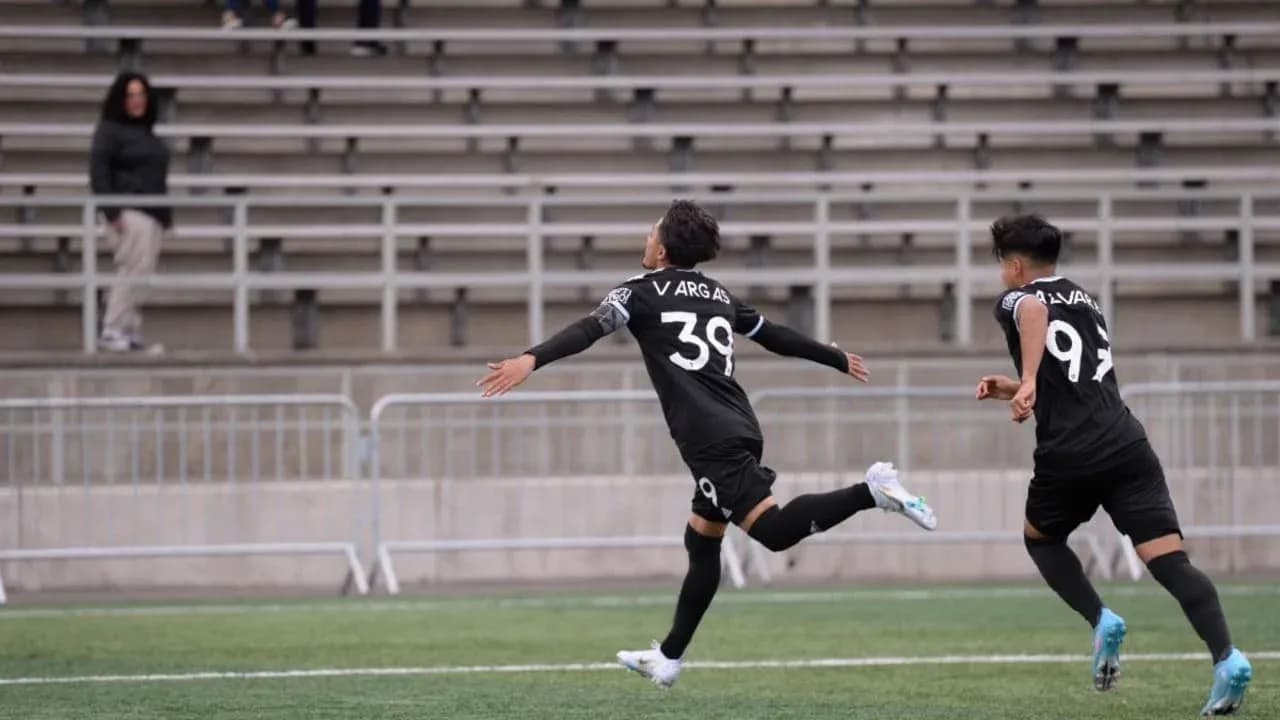
Portland Timbers II vs Ventura County: A High-Stakes Clash in MLS Next Pro
In the 2026 MLS Next Pro group stage, Portland Timbers II host Ventura County at Providence Park in what is effectively a high-leverage divisional test. In the league phase, Ventura County sit on 17 points (16 goals for, 13 against) at the top of the Pacific Division, while Portland Timbers II trail with 13 points (8 for, 8 against) in third. With both clubs also placed in Eastern Conference play-off positions on their respective tables, this match has clear implications for seeding and momentum ahead of the 1/8-finals.
Head-to-Head Tactical Summary
The recent head-to-head pattern is defined by Ventura County’s edge in tight contests and Portland’s resilience at Providence Park.
- On 24 March 2026 at Providence Park in the group stage, the sides drew 0-0 in regular time (0-0 at HT), with Ventura County winning 8-7 on penalties.
- On 10 August 2025 at Dignity Health Sports Park (Regular Season - 29), Ventura County led 2-0 at HT and Portland Timbers II fought back to 2-2 by full time, before Ventura County prevailed 6-5 on penalties.
- On 12 June 2025 at Providence Park (Regular Season - 17), Ventura County won 3-2 after leading 3-2 at HT.
- On 24 April 2025 at Dignity Health Sports Park (Regular Season - 8), Portland Timbers II won 3-2 after a 1-1 HT score.
- On 18 September 2024 at Providence Park (Regular Season - 37), Portland Timbers II came from 0-1 down at HT to win 2-1.
Across these five meetings, regular time has produced two wins for Portland Timbers II (2-1, 3-2), two for Ventura County (3-2 plus one penalty win after 2-2), and one goalless draw settled by penalties. The pattern is of narrow, high-variance games where Ventura County have twice converted stalemates into shootout victories, while Portland’s best work has come at Providence Park in comeback scenarios.
Global Season Picture
- League Phase Performance:
- Portland Timbers II are on 13 points from 7 matches, with 4 wins, 0 draws, 3 losses and a goal difference of 0 (8 goals for, 8 against in the league phase). At home they have 2 wins and 2 losses (4 scored, 3 conceded).
- Ventura County lead with 17 points from 10 matches, 6 wins, 0 draws, 4 losses and a goal difference of +3 (16 goals for, 13 against in the league phase). Away from home they have been strong: 4 wins and 1 loss (6 scored, 4 conceded).
- Season Metrics: Scope detection shows team statistics games played match the standings (7 vs 7 for Portland, 10 vs 10 for Ventura), so these are in the league phase.
- Portland Timbers II show a balanced but fragile profile: 9 goals scored and 10 conceded in 7 matches (1.3 scored and 1.4 conceded per game in the league phase). Their clean-sheet count (3) suggests spells of compact defending, but their heaviest defeat (5-0 away) underlines volatility. Disciplinary load is notable, with yellow cards heavily clustered from minutes 61-90 (9 yellows, 31.25% + 25.00% of total), indicating rising defensive stress late in games.
- Ventura County have a more expansive attacking profile: 18 goals scored and 14 conceded in 10 matches (1.8 scored and 1.4 conceded per game in the league phase). They have 4 clean sheets, and have not failed to score in any league match so far, pointing to a consistently productive attack. Their yellow cards are concentrated between minutes 46-90 (12 yellows, all in that window), matching a high-intensity, second-half pressing approach.
- Form Trajectory:
- Portland Timbers II come in with a “WLWLL” form line in the league phase. That sequence – win, loss, win, loss, loss – signals a downward trend, with back-to-back defeats suggesting opponents are beginning to exploit their defensive balance (8 conceded in 7 overall, but 10 conceded in the broader statistics set).
- Ventura County carry a “WLLLW” form string. Three defeats in the last four games are offset by wins at either end of the sequence, reflecting a high-ceiling but streaky side. Despite 6 wins overall, the recent “LLL” block inside that run raises questions about defensive stability (14 conceded in 10) and game-to-game consistency.
Tactical Efficiency
Without explicit numerical Attack/Defense Index values from the comparison block, efficiency must be inferred from the league-phase statistics.
- Portland Timbers II attack vs defense: With 1.3 goals scored and 1.4 conceded per match in the league phase, Portland’s attack is functional but not dominant, while their defense is marginally leakier than their attack is productive. The fact they have already delivered a 3-0 away win but also suffered a 5-0 defeat underlines a volatile efficiency profile: when the press and transitions click, they can generate clear chances; when stretched, they concede in clusters. Their relatively high number of clean sheets (3 in 7) suggests that their defensive ceiling is higher than the raw concession rate implies, but concentration and game-state management remain issues.
- Ventura County attack vs defense: Ventura County’s 1.8 goals scored per match in the league phase positions them as a clearly more efficient attacking unit than Portland, particularly given they have yet to fail to score. Their away scoring rate (1.6 per game) remains robust, supported by a best away win of 2-0 and a general capacity to create chances across venues. Defensively, conceding 1.4 per match – the same overall rate as Portland – indicates that while their attack drives results, their back line allows opponents regular access to goal. However, 3 away clean sheets in 5 matches show they can execute controlled, low-risk game plans on the road when required.
- Relative efficiency in this matchup context: The head-to-head record reinforces these efficiency trends: Ventura County repeatedly generate enough attacking volume to either win in 90 minutes (3-2) or at least reach penalties (0-0, 2-2), while Portland rely more on situational surges at Providence Park (2-1 comeback, 3-2 away win earlier in 2025). In practical terms, Ventura County’s attack has a higher baseline, but Portland’s defensive peak at home – supported by three league clean sheets and a prior 2-1 home win over Ventura County – keeps this from being a one-sided efficiency contest.
The Verdict: Seasonal Impact
This fixture carries significant medium-term weight for both teams within the 2026 MLS Next Pro structure.
- For Portland Timbers II: A home win would move them closer to Ventura County’s 17-point benchmark and stabilise a shaky “WLWLL” trajectory in the league phase. It would reinforce Providence Park as a genuine home advantage after a mixed 2-2-0 home record (4 scored, 3 conceded) and strengthen their position in the Eastern Conference play-off picture, where they are currently tagged for the 1/8-finals. Conversely, a defeat would deepen their negative run to three straight league losses, risk sliding them towards the mid-table pack in the Pacific Division, and raise structural questions about a defense conceding at 1.4 per game despite multiple clean sheets.
- For Ventura County: An away victory would consolidate their status as Pacific Division leaders and one of the league’s most efficient attacking sides, pushing their points tally further clear of Portland and reinforcing a strong 4-1-0 away record. It would also help erase the recent “WLLLW” wobble, re-establishing a positive trend line heading into the decisive stretch before the 1/8-finals. Dropped points, especially a loss, would tighten the divisional race, bring Portland and others back into realistic contention for the top spots, and extend questions around their defensive reliability and streaky form.
- Title, Top 4 and play-off framing: While this is not a direct title decider, the match shapes the upper tier of the conference. Ventura County are positioning themselves as a potential top seed; preserving or extending their lead here improves their path to the quarter-finals and beyond. For Portland Timbers II, this is more about solidifying a Top 4–calibre profile and avoiding being dragged into a congested mid-table zone that could complicate 1/8-final qualification and seeding. In short, the result will not decide the season, but it will significantly tilt the play-off landscape and the perceived hierarchy within the Pacific Division.