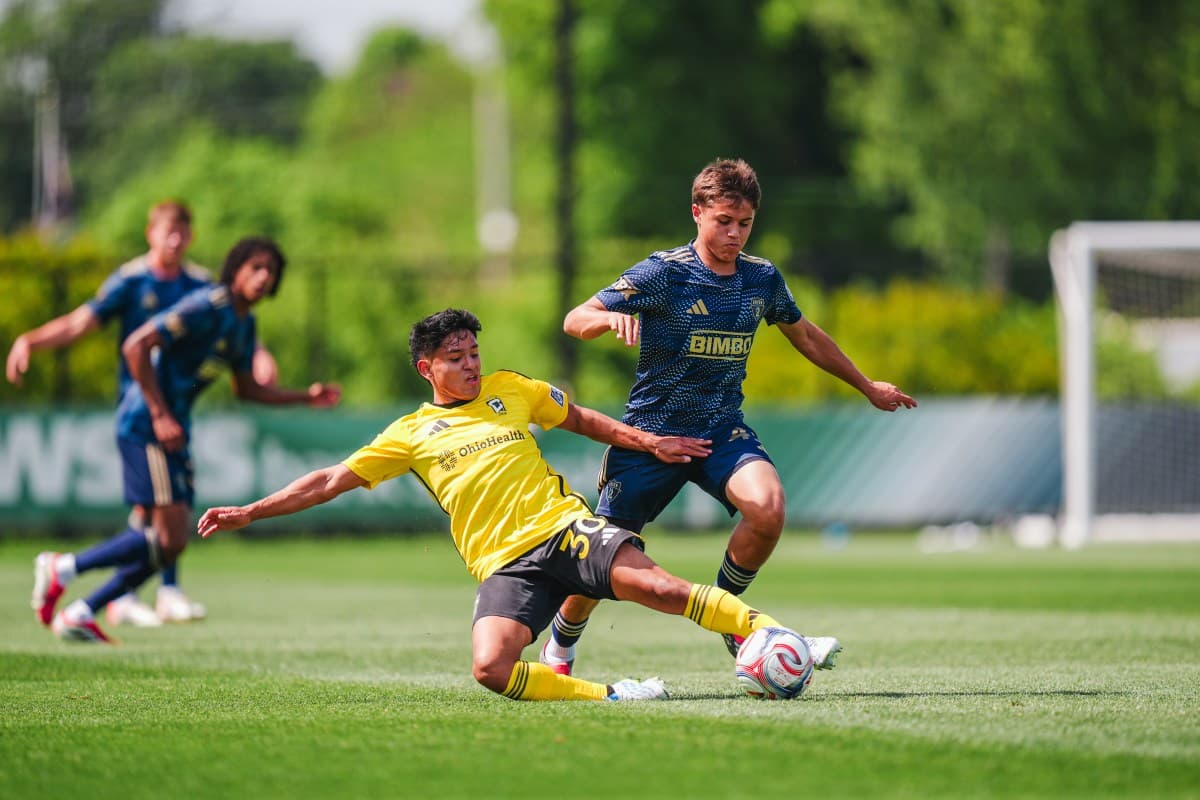
Philadelphia Union II vs Columbus Crew II: A Tense MLS Next Pro Shootout
Subaru Park under floodlights, a group-stage tie in MLS Next Pro, and a script that refused to resolve itself in normal time. Philadelphia Union II and Columbus Crew II went the distance, 120 minutes and then penalties, locked at 1-1 after both halves and extra time before Columbus finally edged the shootout 8-7. Following this result, it felt less like a routine group fixture and more like a stress test of two developmental squads built with very different footballing identities.
Philadelphia Union II Overview
For Philadelphia Union II, this campaign has been a study in volatility. Overall they have played 10 league matches, winning 5 and losing 5 with no draws, scoring 13 and conceding 11 for a goal difference of +2. In the Northeast Division they sit 4th with 15 points; in the broader Eastern Conference picture they are 9th on the same tally, a side oscillating between impressive highs and sudden drops. At home, Subaru Park has not always been a fortress: 7 matches, 3 wins and 4 defeats, with 9 goals for and 8 against. The margins are tight, their home averages of 1.3 goals scored and 1.1 conceded per game underlining a team that lives on the edge.
Columbus Crew II Overview
Columbus Crew II arrive from a different angle. In the Northeast Division they stand 3rd with 19 points, and in the Eastern Conference they occupy 5th, within the promotion playoff picture. Overall they have played 11 times, winning 7 and losing 4, scoring 20 and conceding 18 for a goal difference of +2. Their split between home and away is stark: at home they have been perfect, 5 wins from 5 with 11 goals for and only 4 against, but on their travels the picture is far more fragile – 6 away games, 2 wins and 4 defeats, 9 scored and 14 conceded, an away defensive average of 2.3 goals against per match.
Lineups
Against that backdrop, the lineups told their own stories. Ryan Richter’s Philadelphia XI, built around a youthful core, suggested flexibility rather than a rigid system. A. Rick, wearing 76, anchored the side, with G. Sequera, F. Sundstrom, R. Uzcategui and J. Griffin forming a defensive and build-up platform. Ahead of them, K. LeBlanc and O. Benitez hinted at central industry, while M. De Paula, N. Hasan and S. Korzeniowski offered the connective tissue between lines. Up front, M. Jakupovic, in shirt 51, looked the natural focal point for vertical passes and penalty-box presence.
On the bench, Richter had a full spectrum of profiles: P. Holbrook as the reserve goalkeeper, then outfield options like K. Moore and A. Craig for defensive reshaping, O. Pratt and J. Ruf for energy in wide or half-space roles, and L. Harrington, T. Gladstone, M. Berthe and A. Diop as late-game disruptors. In a match that went to 120 minutes, this depth was not a luxury but a necessity; every substitution vector – [IN] replaced [OUT] – became a tactical lever rather than mere rotation.
Federico Higuain’s Columbus Crew II offered a more clearly defined spine. L. Pruter in goal, with B. Adu-Gyamfi, Q. Elliot, R. Aoki and I. Heffess forming what looked like a back four capable of building from deep but also tested by their away record. In midfield, T. Brown, K. Gbamble and N. Rincon suggested a mix of ball-winning and progression, while the attacking trio of J. Chirinos, Z. Zengue and C. Adams carried the burden of turning Columbus’s overall attacking average of 1.8 goals per game into something tangible on the night.
Higuain’s bench was similarly balanced: S. Lapkes as the backup goalkeeper, then G. De Libera, I. Ewing and M. Nyeman as technical midfield or wide options, P. Forfor and G. Di Noto to stretch the game, and Z. Lloyd, J. Danjaji and T. Karumanchi providing fresh legs across the back and middle lines. In a contest that went deep into extra time, these substitutes were less about changing the system and more about sustaining the intensity of Columbus’s pressing and transitions.
Tactical Insights
The tactical voids in this fixture were not so much about missing individuals – there is no explicit injury list in the data – as about structural risk profiles. Philadelphia’s season-long discipline numbers show a side that lives aggressively in the duels. Their yellow cards are spread, but with notable spikes: 19.35% of their cautions come between 16-30 minutes, and 16.13% each in the 31-45, 61-75 and 91-105 windows. The red-card distribution is even more telling: 50.00% of their reds arrive between 31-45 minutes and the other 50.00% between 61-75. That means the Union II often flirt with self-sabotage either side of the hour mark, precisely when matches tilt.
Columbus, for their part, show a different disciplinary pattern. Their yellow cards peak between 61-75 minutes, with 28.57% of bookings in that spell, and another cluster (23.81%) in the 31-45 window. Their only recorded red card comes very early, with 100.00% of reds in the 0-15 range, hinting at occasional over-exuberance in the opening exchanges. Across 120 minutes in this match, those trends shaped the emotional rhythm: Philadelphia having to manage their aggression in the middle third of the game, Columbus needing to survive their own early surges without going a man down.
Key Matchups
Within that framework, the key matchups emerged. The “Hunter vs Shield” narrative centered on Columbus’s attack against Philadelphia’s relatively tight home defence. On their travels, Columbus average 1.5 goals scored but concede heavily; Philadelphia at home concede 1.1 per game. The duel was less about an individual top scorer – the data does not isolate one – and more about whether the combination of Chirinos, Zengue and Adams could stretch a Union back line marshalled by Rick, Sequera and Sundstrom without leaving the door open for transitions the other way.
Conversely, Philadelphia’s attack, which averages 1.3 goals at home, probed a Columbus away unit that has already shipped 14 goals in 6 away outings. Jakupovic’s role as penalty-box presence, supported by Korzeniowski’s link play and Hasan’s movement, was to stress that known weakness. Every time Union II could pin Columbus deep and force defensive rotations, they were effectively attacking a structure that, on the road, has struggled to keep its distances compact.
Midfield Battle
In the “Engine Room”, the confrontation between Union II’s central trio – LeBlanc, Benitez, De Paula – and Columbus’s Brown, Gbamble and Rincon determined the tempo. Philadelphia’s season-long profile, with 2 clean sheets at home but also 2 matches overall where they failed to score, suggests a side that can be either suffocating or blunt depending on midfield control. Columbus, who have failed to score only once overall, rely heavily on that central channel to connect their higher-scoring home identity with their more laboured away one.
Statistically, the prognosis heading into this contest would have tilted slightly towards Columbus’s attacking upside against Philadelphia’s home inconsistency. Columbus’s overall goal output of 20 in 11 and their ability to win 7 of those matches contrasts with Union II’s 5 wins in 10 and complete absence of draws. Yet the away defensive fragility of Columbus – 14 conceded on their travels – always left the door open for a long, attritional evening.
Conclusion
The 1-1 scoreline across 120 minutes reflected that tension: Columbus unable to fully impose their usual attacking rhythm, Philadelphia unable to consistently punish Columbus’s away vulnerabilities. With neither side having taken or missed a penalty in league play this season – both clubs show 0 total penalties, 0 scored and 0 missed – the shootout at Subaru Park was uncharted territory in competitive terms. In that unfamiliar landscape, Columbus’s slightly higher overall win habit and their resilience in tight, high-stakes moments finally told, as they edged the shootout 8-7.
Following this result, the numbers and the narrative converge on one point: these are two squads with clear identities and equally clear flaws. Philadelphia Union II will look at their home record and disciplinary spikes and see room for control and composure. Columbus Crew II, victorious but stretched, are reminded that if they want their promotion push to survive away from home, the defensive side of their travelling act must evolve as sharply as their attacking one already has.