Pep Guardiola Leaves Manchester City After 10 Years
Pep Guardiola will walk out at the Etihad on Sunday for the last time as Manchester City manager, closing the curtain on a 10-year spell that has redrawn the map of English football.
City confirmed that the Premier League meeting with Aston Villa will be his final match in charge, ending days of fevered speculation and, more significantly, one of the most commanding managerial eras the country has seen.
The End of an Era
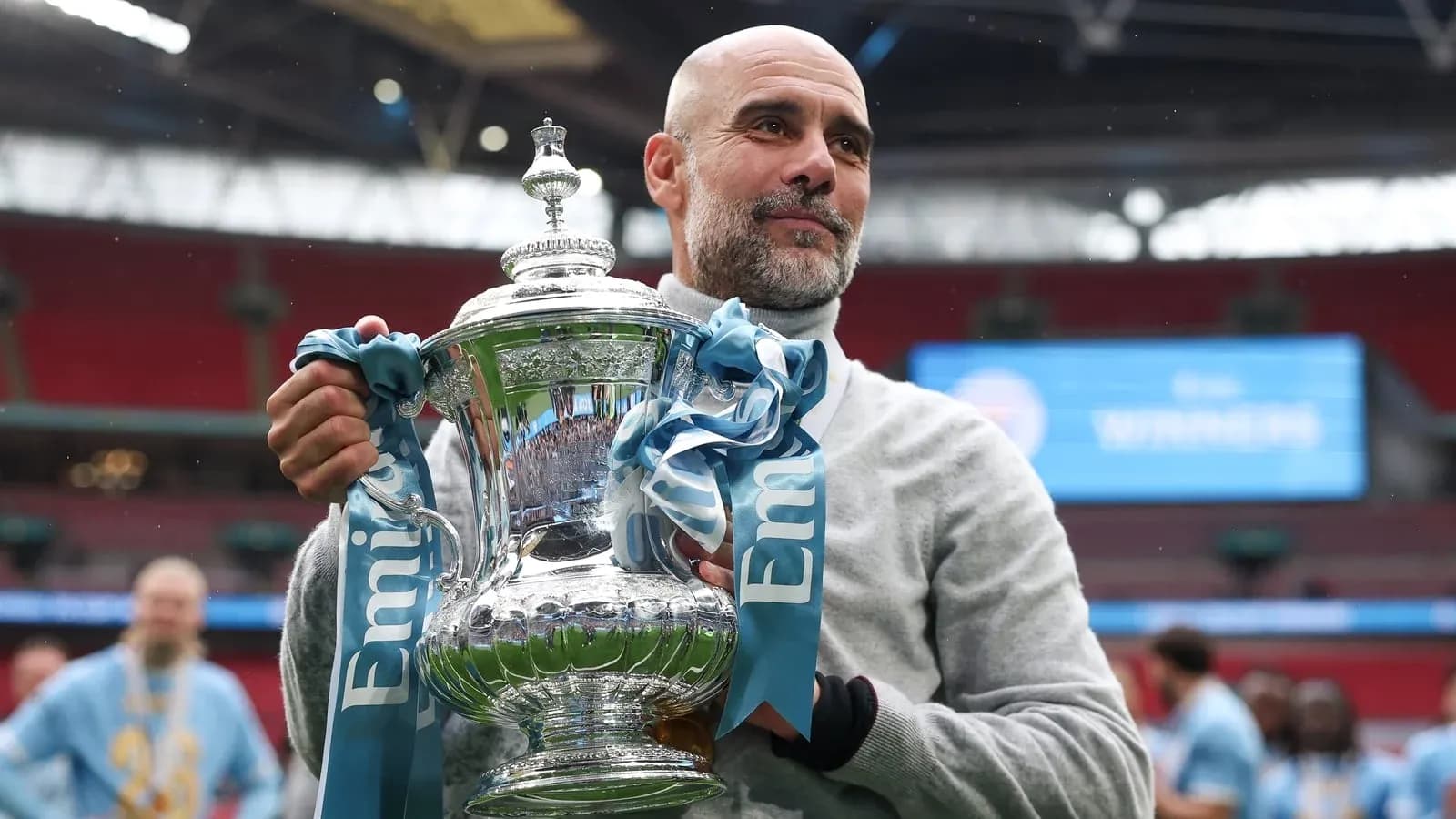
Guardiola arrived in 2016 as the game’s great ideologue, the coach who had already bent Barcelona and Bayern Munich to his will. He leaves with 20 trophies in his Manchester City luggage: six Premier League titles, the Champions League, three FA Cups, five Carabao Cups, the Club World Cup and a stack of records that turned domestic competition into a test of who could live with his standards.
The numbers tell one story. The memories tell another.
A 100-point league campaign in 2018 that shifted expectations of what a title-winning season should look like. A domestic treble in 2019 that underlined City’s stranglehold on the English game. The treble of Premier League, FA Cup and Champions League in 2023 that finally placed City alongside the great European dynasties.
This season, he departs with a domestic cup double already secured. The push for a seventh league title only died on Tuesday night, a 1-1 draw at Bournemouth in their penultimate game finally snapping the pursuit.
“I Know It’s My Time”
In a long, emotional farewell message, Guardiola reached back to his first day in Manchester, and a typically surreal introduction to his new world.
“When I arrived, my first interview was with Noel Gallagher. I walked out thinking, ‘OK… Noel is here? This will be fun. And what a time we have had together.
“Don’t ask me the reasons I’m leaving. There is no reason, but deep inside, I know it’s my time.
“Nothing is eternal, if it was, I would be here. Eternal will be the feeling, the people, the memories, the love I have for my Manchester City.”
Then, in a sign-off as raw as it was revealing, he added: “Noel…I was right. It has been so f****** fun. Love you all.”
His contract had been due to run until the summer of 2027, but an agreement has been reached for him to step down a year early. City, for all their planning, now face the one question they have been able to ignore for a decade: what comes after Pep?
The Succession Question
The club moved mountains to bring Guardiola in 10 years ago, landing the most coveted coach of his generation. He arrived with two Champions League titles and three LaLiga crowns from Barcelona, plus three Bundesliga titles from Bayern Munich, already on his CV.
Now they must replace the man who has come to define them.
Former assistant Enzo Maresca, out of work since leaving Chelsea in January, is the early favourite to succeed him. He knows the City structure, understands the footballing language Guardiola has embedded and would inherit a squad built in that image. But following Guardiola is something else entirely. It is not just a job; it is a test of nerve.
Legacy Beyond the Trophies
Guardiola’s reign brought relentless silverware, yet his impact runs deeper than a roll of honour. He altered how City think, how they train, how they speak about the game. Training-ground details became national talking points. Tactical tweaks in February shaped title races in May.
Under him, City did not simply win. They suffocated opponents, turned title races into marathons run at sprint pace, and forced rivals to rip up their own plans just to keep sight of them.
Chief executive Ferran Soriano captured a sense of that scale, saying: “Pep’s legacy is extraordinary and its true impact will be better assessed by Manchester City historians of the future.”
Guardiola will not vanish from the club’s orbit. He will move into a role as a global ambassador for the City Football Group, a symbolic step that keeps him tied to the wider project he helped elevate.
But on Sunday, all of that sits in the background. One last team talk. One last walk down the touchline. One last 90 minutes with Manchester City as his stage.
After a decade of control, invention and trophies, English football is left with a simple, unsettling question: how do you follow an era like this?