England's World Cup Squad: Tuchel's Bold Choices and Key Players
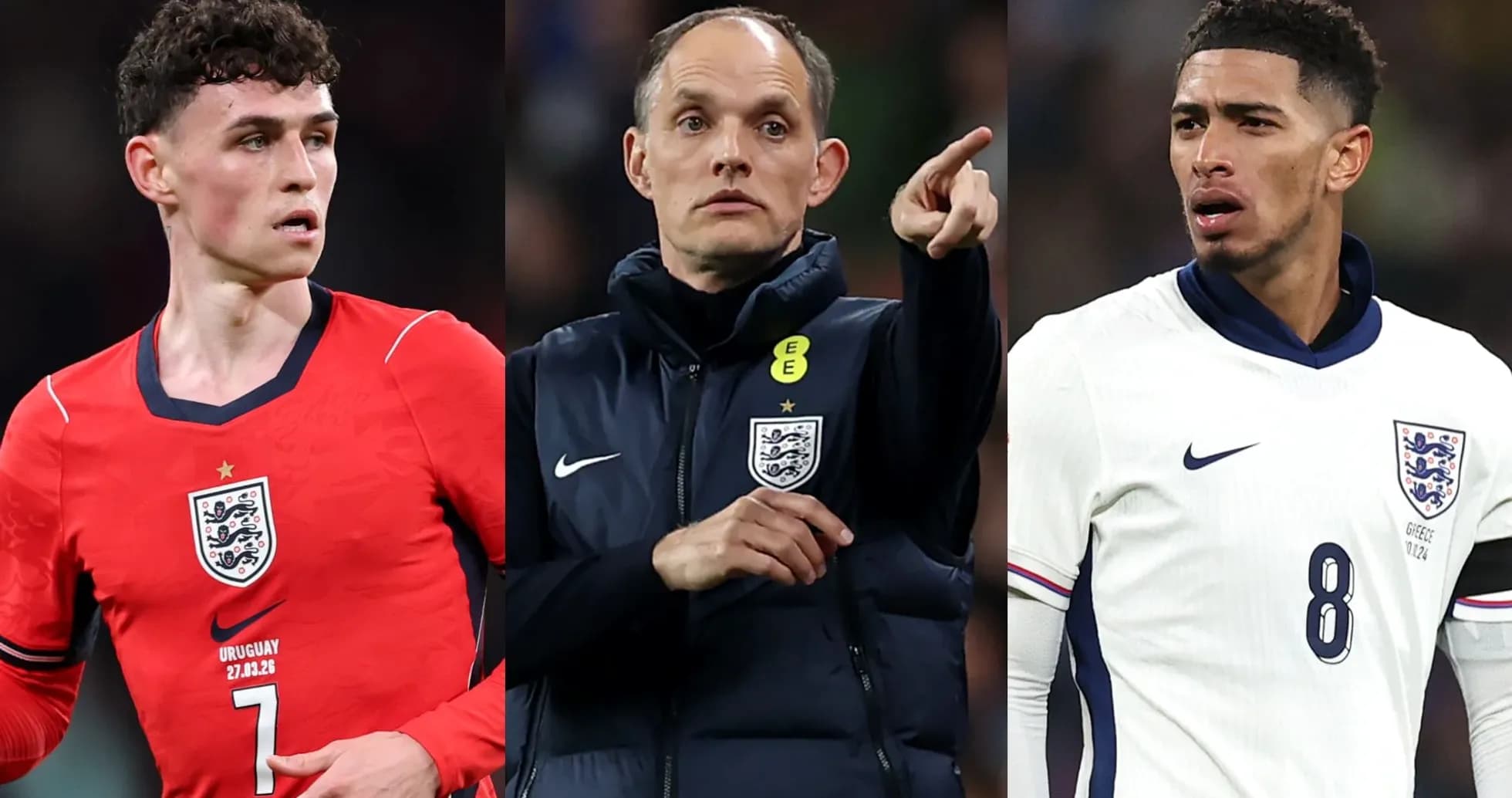
Thomas Tuchel has made his call. Fifty-five hopefuls have been cut to a hardened World Cup squad, and England will head to North America with a group long on medals, reputations and pressure.
This is not a side built around a handful of untouchables. Almost every line on the team sheet feels up for grabs. Tuchel has leant on experience and star power, but he has also been ruthless. Some of the biggest names in English football will be watching this tournament from the sofa.
Bellingham at the heart of it
The fiercest debate centred on creativity. England are overflowing with playmakers, yet there is no doubt about who owns the No.10 role. Jude Bellingham, Real Madrid’s latest Galactico, will be the fulcrum. The plan is simple: build the attack around his drive, his goals, his authority.
Behind him, Tuchel has stacked alternatives. Eberechi Eze, now a Premier League champion with Arsenal, travels as a high-class option between the lines, while Aston Villa’s Morgan Rogers offers another twist on the theme – direct, inventive, and unafraid of tight spaces. It is a luxury England have rarely enjoyed: multiple genuine match-winners in the same pocket of the pitch.
Kane leads, challengers circle
Up front, some things never change. Harry Kane, record-breaking captain and undisputed reference point, will lead the line and chase another golden summer. The responsibility is familiar; the expectation even more so.
But the supporting cast has shifted. Ivan Toney, rebuilding his career in the Saudi Pro League, forces his way back into the fold at just the right moment. Tuchel has often looked elsewhere, yet Toney’s recall underlines the manager’s willingness to reward form and specific skill sets – penalty expertise, aerial presence, and a streak of defiance.
Ollie Watkins also boards the plane with momentum behind him. His semi-final heroics against the Netherlands at Euro 2024 are still fresh in the memory, and he will believe he can turn late cameos into something more substantial. For once, Kane’s understudies do not arrive as token backups. They come as genuine threats to minutes.
Midfield balance and a redemption arc
In midfield, Tuchel has mixed old heads with a rising force. Jordan Henderson’s inclusion speaks to trust and dressing-room gravity as much as anything else. He remains a reference point in big tournaments, a player managers lean on when the noise grows loud.
Alongside him, Kobbie Mainoo’s story stands out. Written off by many earlier in the season, his revival at Manchester United under Michael Carrick has been sharp and decisive. That late surge has carried him all the way into the World Cup squad, a testament to how quickly a young midfielder can change a manager’s mind when he takes control of games at club level.
Out wide, Noni Madueke is one of the surprises. Not guaranteed a starting place at Arsenal, he still earns Tuchel’s trust as a wildcard option on the flanks. His selection underlines England’s desire for one-v-one specialists who can break structure and unsettle deep defences.
On the opposite wing, Barcelona loanee Marcus Rashford and Newcastle’s Anthony Gordon bring a different profile: power, pace, and the ability to drift inside and operate centrally if required. That positional flexibility could prove vital in a tournament where injuries and suspensions rarely respect pre-tournament plans.
Defence shaped by risk and reality
There are no fireworks in goal; the goalkeeping group is exactly as expected. The intrigue lies in front of them.
John Stones, edging towards free agency after an injury-hit season with Manchester City, still makes the cut. Tuchel is clearly prepared to gamble on his fitness in exchange for his composure and ball-playing quality at the back. When Stones is right, England’s build-up looks entirely different.
At right-back, Chelsea captain Reece James has become the default choice. His blend of defensive aggression and attacking thrust has pushed him clear of the competition in that lane.
The left side is more open. Nico O’Reilly and Djed Spence will scrap for starting status, with Tuchel likely to rotate and react to opponents rather than lock in a single solution. It is an area where England have options, but not yet a nailed-on star.
Big names left behind
If the inclusions tell one story, the omissions tell another. Phil Foden’s troubled season at Manchester City has caught up with him. A player once tipped as a generational figure for club and country now finds himself on the outside, his dip in form proving too costly at the worst possible time.
Cole Palmer, Chelsea’s talisman and England Men’s Player of the Year in 2024, also misses out. A 14-game run without a goal for club and country has stripped away the shine just when Tuchel needed clarity. For both Foden and Palmer, this World Cup will sting.
Morgan Gibbs-White, coming off a career-best 17-goal campaign at Nottingham Forest, cannot have done much more. Yet he too has been overlooked, a victim of the sheer depth England possess in attacking midfield.
Deeper in the engine room, Crystal Palace’s Adam Wharton and Everton’s James Garner slide off the bottom of a crowded depth chart. Their club form was respectable; the competition was unforgiving.
On the wings, Jarrod Bowen’s tireless work for a struggling West Ham side has not been enough to earn another major tournament ticket. Newcastle’s Harvey Barnes, meanwhile, may quietly reflect on the international choice he once had, and what might have been with Scotland.
Up front, the axe falls hard. Veteran forwards Danny Welbeck and Dominic Calvert-Lewin – prolific with 27 Premier League goals between them for Brighton and Leeds this season – still fail to make the cut. Tuchel has gone in a different direction, prioritising specific profiles over raw numbers.
At the back, Harry Maguire’s absence is perhaps the most symbolic. A mainstay of recent England tournaments, he has already voiced his disappointment at being overlooked. Real Madrid’s Trent Alexander-Arnold and Newcastle’s Lewis Hall also miss out on full-back roles, while an ill-timed injury leaves Arsenal’s versatile Ben White in the same frustrating category: good enough, but unavailable at the crucial moment.
Countdown to America
There is little time to dwell. England will tune up with two friendlies on American soil, designed both to acclimatise and to give Tuchel one last look at combinations.
New Zealand await on June 6, Costa Rica on June 10. Expect heavy rotation, minutes spread widely, and a manager probing for rhythm, partnerships and late bolters before the real scrutiny begins.
Then comes the main event. England open their World Cup campaign against Croatia at AT&T Stadium in Arlington, Texas on June 17 – a meeting laced with history and scars. Six days later they head to Gillette Stadium, home of the New England Patriots, to face Ghana on June 23. Group L concludes at MetLife Stadium against Panama on June 27, in the very arena earmarked for the final.
Tuchel has his squad. The arguments are over. The only question now is whether this bold, star-studded group can finally turn England’s promise into something permanent on the biggest stage of all.