Patrick Vieira Appointed as Senegal's New Head Coach Amid Turmoil
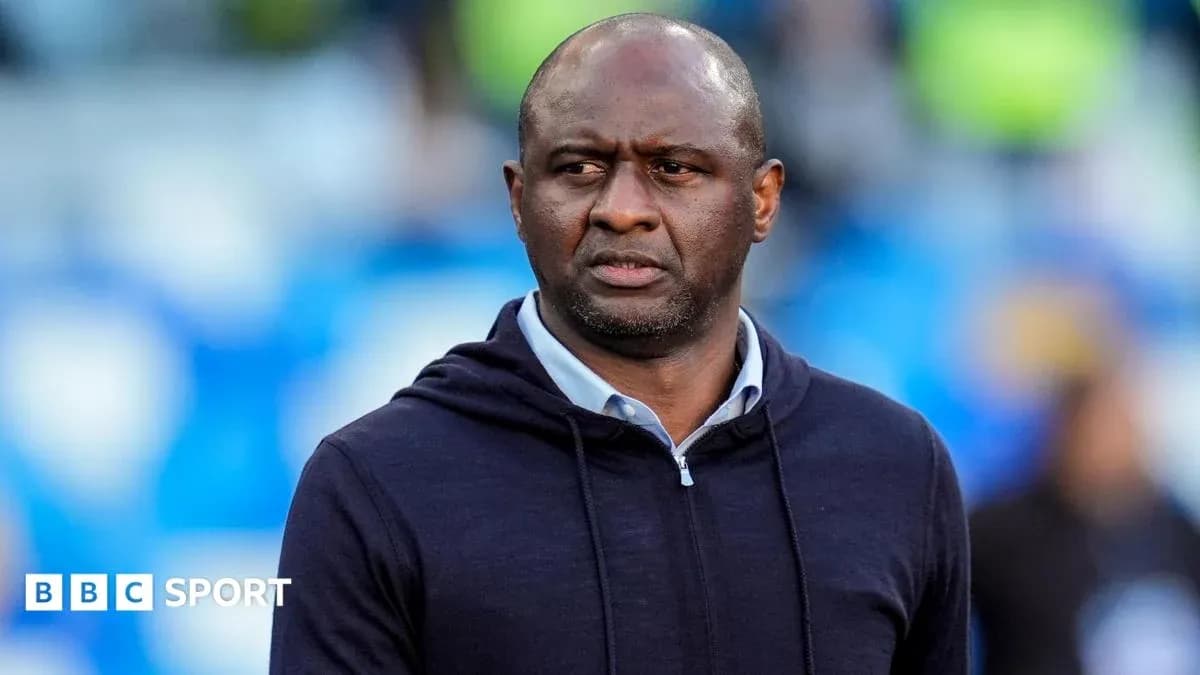
Patrick Vieira has been named as Senegal’s new head coach. For now, that title exists more on paper than in reality.
At 50, the former France captain has been announced as the man to lead the Teranga Lions, yet he has not signed a contract and no date has been set for his official unveiling. The job is his, and somehow not quite his, at the same time.
A federation in turmoil
Inside the Senegalese football federation (FSF), the ground is shifting. The body admits that talks over the “administrative and contractual arrangements” with Vieira are still ongoing. Off the pitch, the federation is riven by disputes and political strain, its authority questioned both in Dakar and beyond.
Vieira was unanimously approved at an FSF meeting on Monday as the successor to Pape Thiaw. Patrick Kluivert was among the other candidates discussed, alongside Patrice Carteron and former Senegal internationals Habib Beye and Oumar Daf. The choice of Vieira felt bold, ambitious, even symbolic. It was also made in the middle of a storm.
The previous coach has not truly left the stage. Thiaw was dismissed after Senegal’s dramatic last-32 exit to Belgium at the Fifa World Cup, a decision taken without the formal backing of a government that funds the national team. That alone would have been problematic. What followed has become a full-blown dispute.
Thiaw is demanding several months of unpaid wages and outstanding bonuses. The reported figure is close to $815,000 (£600,000). Until that is resolved, the clean break the FSF wanted simply does not exist.
Cas ruling looms over Vieira
Another battle runs in parallel. The election of the current FSF leadership has been contested for a year, and the Court of Arbitration for Sport (Cas) in Lausanne is expected to rule by Friday. That decision could go to the heart of the federation’s legitimacy – and, by extension, the legitimacy of Vieira’s appointment.
If Cas questions the hierarchy, the choice of coach may also come under scrutiny. For a federation already isolated, lacking government backing and public support, the risk is obvious. Yet the FSF moved anyway, boxed in by the calendar and the need to show direction.
Time is not on Senegal’s side. On 23 September, the Teranga Lions open their 2027 Africa Cup of Nations (Afcon) qualifying campaign away to Mozambique in Group J. Ethiopia follow days later. Those matches will not wait for legal arguments, political maneuvers or drawn-out negotiations.
So the FSF acted. It had to. Whether that urgency will stand up to legal and financial pressure is another matter.
A legend with questions to answer
Vieira arrives with a playing career that needs no embellishment. Arsenal, Inter Milan, France – he is one of the defining midfielders of the modern era. His managerial record tells a more complicated story.
He has coached in MLS, Ligue 1 and the Premier League, but without the kind of sustained success that his playing reputation might suggest. This is not a guaranteed fix, not a plug-and-play solution for a team that has grown used to winning.
What he does bring is a deep, longstanding connection to Senegal, the country of his birth. He never truly cut that tie. Late in his playing days, he made a major investment in the Diambars Institute, a project that has since become one of Africa’s leading academies.
Diambars has helped shape the backbone of modern Senegalese football. Idrissa Gana Gueye, Bamba Dieng, Abdoulaye Seck – all passed through its system and all have played roles in the national team’s rise since 2018. In many ways, Vieira helped lay the foundations for the success he now hopes to guide from the touchline.
From continental glory to an uncertain rebuild
Senegal are not just another African heavyweight. They are the reigning force. Champions of Africa for the first time in February 2022 at the delayed 2021 Afcon, they followed that up with a second title in January, winning the final 1-0 after extra time.
Even that triumph carries an asterisk in the legal sense. The ultimate destination of the trophy will be settled by Cas after Thiaw led his team off the pitch in stoppage time in protest at a controversial penalty awarded to hosts Morocco. The image of a champion side walking away underlines the tension that now frames Vieira’s arrival.
His task is clear and daunting: rebuild a team that has just lived through the most successful era in its history. The old guard – Sadio Mane, Edouard Mendy, Kalidou Koulibaly, Gana Gueye – have set a brutal standard. Their legacy weighs heavily on the next generation.
There is talent coming through. Plenty of it. But these young players will not be judged in isolation; they will be measured against back-to-back Afcon titles, World Cup runs and a golden cycle that transformed expectations at home and abroad.
The Vieira gamble
The shortlist for the job reflected the stakes. Kluivert, Carteron, Beye, Daf – each name offered a different profile, a different path. The FSF chose the man who once patrolled midfield for France but whose heart and investment have long been rooted in Senegalese soil.
Vieira himself hardly hid his interest. During a recent holiday in Senegal, covered with unusual intensity, he dropped enough hints to make his intentions clear. The courtship was public; the outcome, for now, remains incomplete.
A legend of the game stands ready to lead the Teranga Lions. A federation waits on a court ruling. A former coach demands his money. The qualifiers loom.
The question is no longer whether Patrick Vieira wants the job. It is whether the fractured house of Senegalese football can put itself in order quickly enough to let him actually start it.