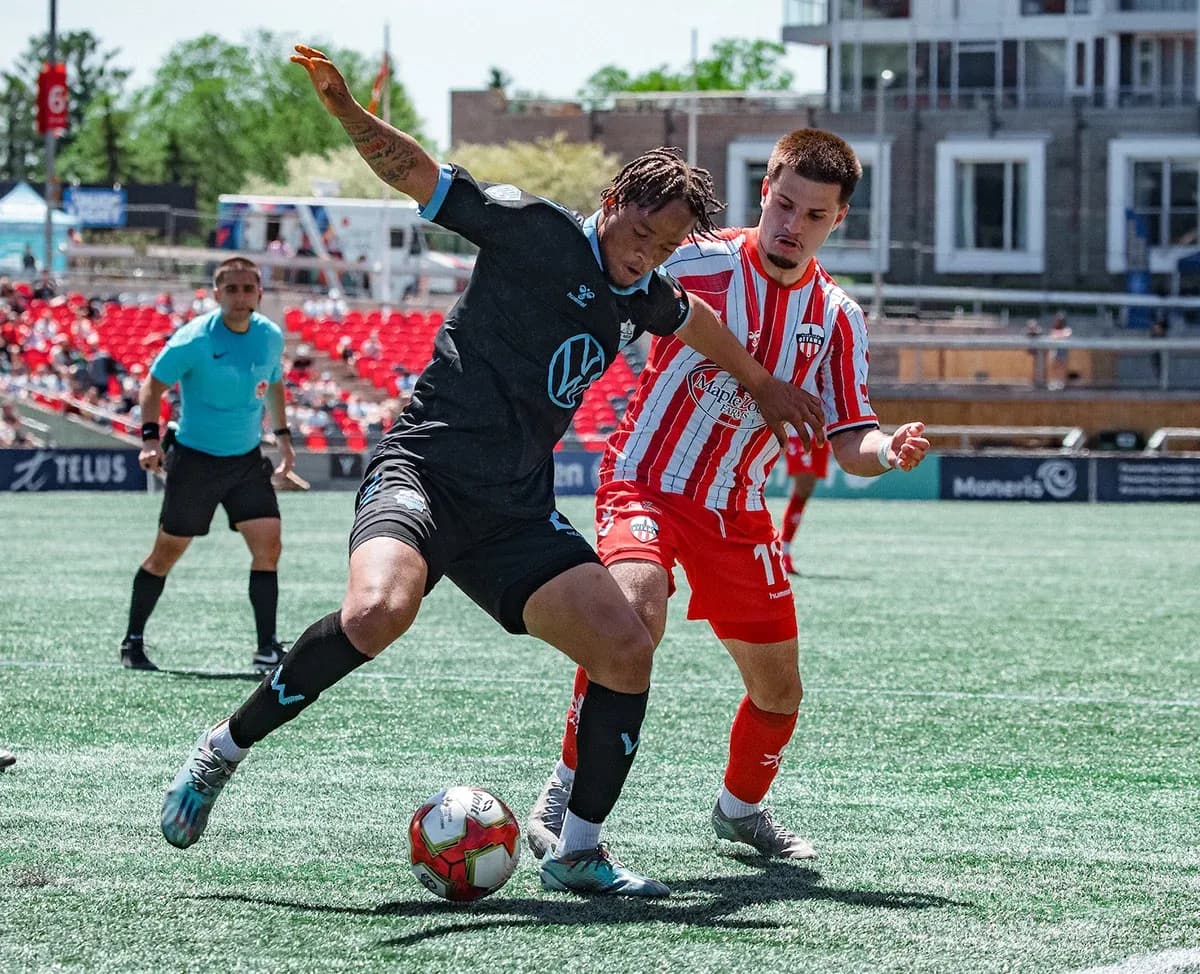
Ottawa's Late Surge Tops Forge in CPL Showdown
Under the late afternoon light at TD Place Stadium, this Canadian Premier League group-stage meeting between Atlético Ottawa and Forge unfolded like a small playoff rehearsal. The league table framed the stakes: Forge arrived as the side in control, 2nd with 16 points and a total goal difference of +6 (9 goals for, 3 against), while Ottawa, 4th on 10 points with a total goal difference of -4 (7 for, 11 against), were the chasers trying to prove they belong in the same conversation.
Following this result, the 2-1 home win felt like a statement from Diego Mejia’s group. Ottawa came in with a total scoring profile of 1.0 goals per game overall, but at home they had been much sharper, averaging 1.3 goals and conceding just 0.7. Forge, by contrast, had built their reputation on defensive control: 0.4 goals conceded per game overall, 0.0 at home and only 0.8 away. Something had to give, and over 90 minutes Ottawa’s late-game attacking DNA finally cracked the visitors’ armour.
I. The Big Picture: styles colliding
Ottawa’s season to this point had been defined by volatility. Overall they had 3 wins, 1 draw and 3 losses from 7 matches, but the split was stark: unbeaten at home (2 wins, 1 draw) and vulnerable on their travels. Their goalsFor minute distribution told a clear story: just 1 goal between 31-45 minutes (12.50%), 2 between 61-75 (25.00%), and a striking late surge with 5 of their 8 recorded goals in the 76-90 range (62.50%). Mejia’s side are built to grow into games, to turn pressure into decisive moments in the final quarter.
Forge, under Bobby Smyrniotis, had been the league’s metronome. With 5 wins, 1 draw and just 1 loss in total, they arrived with a total scoring rate of 1.3 goals per game and a defensive record that bordered on miserly: 3 conceded in 7 matches, averaging 0.8 away. Clean sheets had become routine, 5 in total, including 2 on their travels. Their biggest away win, 3-1, hinted at a side comfortable absorbing pressure and punishing mistakes.
This match, then, was a test of whether Ottawa’s late-game aggression could pierce Forge’s structure.
II. Tactical voids and discipline: edges at the margins
There were no listed absentees in the data, so both coaches had their core available. That meant Ottawa could lean on the energy of Emiliano Garcia and the guile of Manuel Aparicio, while Forge had their spine intact: Daniel Nimick at the back, Benjamin Paton in the middle, and Brian Wright up front.
Discipline loomed as a quiet subplot. Ottawa’s yellow card distribution showed a tendency to get stretched after the break: 30.77% of their cautions between 46-60 minutes, and another 23.08% in each of the 76-90 and 91-105 ranges. Forge, meanwhile, also clustered their bookings in the middle of games, with 33.33% of yellows between 46-60 and 22.22% from 61-75, plus a red card incident historically in the 46-60 window. This suggested that the game’s rhythm, especially just after half-time, would be fraught, with both midfields walking a disciplinary tightrope.
Within that context, individuals like Aparicio and A. Aromatario were always going to be pivotal. Aparicio, already on 3 yellow cards this season, brings bite and risk in equal measure. Aromatario, also with 3 yellows and a heavy duel load (46 total duels, 27 won), is Forge’s enforcer – and a potential flashpoint if Ottawa’s late surges forced repeated tactical fouls.
III. Key matchups: Hunter vs Shield, and the engine room
The Hunter vs Shield narrative centred on Brian Wright against an Ottawa defence that, overall, had conceded 1.6 goals per game and 11 in total. Wright came in with 2 goals from 7 shots, plus a perfect penalty record: 1 scored from 1 taken. For a side like Forge that scores a modest but steady 1.5 away goals per game, his efficiency is crucial.
Ottawa’s answer was collective rather than star-driven. Daniel Aguilar and the back line had not been flawless – the team’s total goalsAgainst profile shows real vulnerability in the 16-30 (30.00% of goals conceded) and 61-75 (40.00%) windows – but they had been significantly more secure at home, allowing only 2 goals in 3 matches. The task was to survive Forge’s spells of control without giving Wright the penalty-box touches he thrives on.
In midfield, the “engine room” duel was compelling. For Forge, Paton and Aromatario form a double pivot that blends progression and disruption. Paton’s 106 total passes at 80% accuracy, with 4 key passes and 14 tackles, paint the picture of a defender-midfielder hybrid who steps into midfield to set tempo and break lines. Aromatario, with 186 passes at 80% accuracy and 11 tackles plus 12 interceptions, is the shield that allows the attacking line – including Tristan Borges and Wright – to stay high.
Ottawa’s response revolved around Aparicio and the rotation around him. Aparicio’s 180 passes at 82% accuracy and 8 interceptions show a player who reads danger as well as he dictates play. Around him, Garcia offers vertical threat – 1 goal from limited minutes, 11 duels contested and 7 won – while W. Timóteo, with 3 blocked shots and 83% passing, has quietly become a two-way outlet on the flank. Timóteo blocked 3 shots heading into this game, a notable detail for a side trying to withstand Forge’s structured build-up.
IV. Statistical prognosis and xG lens
Even without explicit xG numbers, the profiles hint at how the underlying chances might have balanced. Forge’s defensive record – just 3 goals conceded in total, 0.8 away – suggests that most opponents have struggled to generate high-quality looks. Ottawa, however, are an outlier at home: 4 goals scored and only 2 conceded in 3 matches, with a pronounced late-game scoring peak. That pattern aligns with a side that may not flood the box early but accumulates territory and pressure until the dam breaks.
Ottawa’s total goalsAgainst minute distribution, with 40.00% conceded between 61-75, hinted that this would be the most dangerous spell against Forge’s structured attacks. Surviving that window without conceding likely swung the xG balance back toward the hosts in the final quarter, where their 62.50% late-goal share suggests repeated entries into high-value zones.
For Forge, the reliance on clean sheets and controlled margins means that when they do concede first, the game state can pull them into less comfortable territory. Their lone away loss before this came in a 2-1 scoreline; once the defensive platform cracks, they are forced to chase.
Following this result, the numbers suggest Ottawa bent the match toward their strengths: a compact, improving home defence, a midfield willing to absorb and foul when necessary, and an attacking structure that peaks just when Forge’s discipline historically begins to fray. On another day, a sharper Wright or a set-piece from Nimick might have dragged the xG and the scoreboard back toward parity. But here, the statistical story and the 2-1 score converged: Ottawa’s late-game identity finally overcame the league’s most efficient shield.