Osasuna vs Espanyol: A Tactical Analysis of La Liga Clash
The night at Estadio El Sadar closed with a grim kind of clarity. Following this result, Osasuna’s 2–1 home defeat to Espanyol crystallised the story their season-long numbers had been hinting at: a side strong enough at home to survive, but not sharp or disciplined enough to control the margins when it matters.
I. The Big Picture – contrasting trajectories
This was Round 37 of La Liga, a penultimate‑week fixture between teams living in different emotional climates. Osasuna came in 16th on 42 points, their overall goal difference at -5, the product of 44 goals for and 49 against in total. The table shows the split of their identity: at home they had won 9 of 19, scoring 31 and conceding 24; on their travels they had managed just 2 wins in 18.
Espanyol, 11th with 45 points and a total goal difference of -12 (42 scored, 54 conceded overall), are a paradox: more secure in the table but far more porous. Away, they had 5 wins, 5 draws and 9 defeats, scoring 22 and conceding 31. Heading into this game, the raw numbers painted a classic clash: Osasuna’s home comfort against Espanyol’s opportunistic, if fragile, away threat.
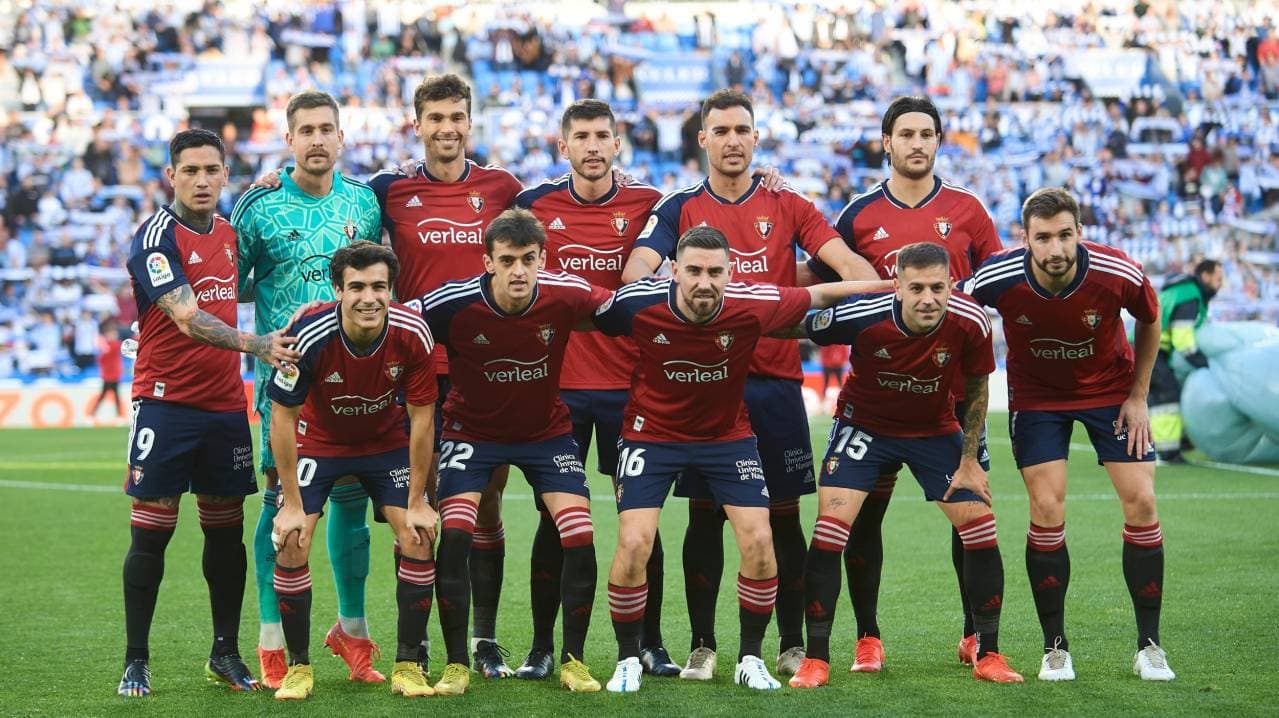
On the pitch, those profiles were reflected in the shapes. Alessio Lisci went with his trusted 4‑2‑3‑1, the formation he has used in 22 league matches: Sergio Herrera behind a back four of V. Rosier, Alejandro Catena, F. Boyomo and A. Bretones; L. Torro and Jon Moncayola as the double pivot; a line of three in R. Garcia, A. Oroz and V. Munoz supporting Ante Budimir as the lone forward.
Manolo Gonzalez answered with Espanyol’s 4‑4‑2, one of the systems that has underpinned 12 league outings: M. Dmitrovic in goal; a flat back line of O. El Hilali, C. Riedel, L. Cabrera and C. Romero; a midfield four of T. Dolan, U. Gonzalez, Pol Lozano and Pere Milla; and a front pair of Edu Expósito and K. Garcia.
II. Tactical voids and disciplinary shadows
Both squads arrived with notable absentees. Osasuna were without R. Moro, listed as “Missing Fixture” through injury. For a side that has already failed to score in 11 league matches overall – all of them away, but indicative of their thin attacking depth – his absence further narrowed Lisci’s options between the lines.
Espanyol’s offensive rotation was even more compromised. C. Ngonge and J. Puado, both out with knee injuries, stripped Gonzalez of two profiles who can stretch the pitch and attack space. That reality perhaps explains why Expósito, nominally a creative midfielder and the league’s 20th‑ranked assister with 6 assists and 80 key passes, started as a forward here: a tactical patch on a squad hole.
If injuries shaped the starting XIs, discipline loomed over the way the game was likely to be played. Osasuna’s season card map is a warning label: their yellow cards peak in the 76–90 minute window at 21.35%, with another 17.98% between 61–75. Red cards are equally concentrated in high‑stress moments: 28.57% of their reds in 31–45, 28.57% in 76–90 and 28.57% in 91–105. This is a team that grows more frantic as the clock ticks, and El Sadar’s emotional surge often feeds that edge.
Espanyol are no innocents either. Their yellow cards spike dramatically late, with 30.00% between 76–90 and another 16.67% from 91–105. Red cards are clustered too: 40.00% in 46–60, 40.00% in 76–90 and 20.00% in 91–105. This fixture was always likely to become more ragged, more combustible, as it moved into the final quarter.
III. Key matchups – Hunter vs Shield, and the Engine Room
The marquee duel was unmistakable: Ante Budimir versus Espanyol’s shaky away defence.
Budimir arrived as one of La Liga’s most productive strikers this season: 17 goals in 36 appearances, from 88 total shots and 41 on target. He is not just a finisher but a focal point, engaging in 365 duels and winning 169, drawing 35 fouls and acting as the reference around which Osasuna’s 4‑2‑3‑1 is built. Yet his penalty record carries its own narrative tension: he has scored 6 but missed 2 from the spot, a reminder that even his most reliable weapon comes with risk.
Across from him stood an Espanyol rearguard that, away from home, had conceded 31 goals in 19 matches, an average of 1.6 per game on their travels. L. Cabrera’s left‑sided presence and C. Riedel’s central positioning were always going to be tested aerially and physically by Budimir, with V. Munoz and A. Oroz tasked with crashing second balls around him.
Behind Budimir, the “Shield” of Osasuna’s own structure is personified by Catena and Moncayola. Catena, one of the league’s leading card collectors with 11 yellows and 1 red, is also a high‑output defender: 32 blocked shots, 33 interceptions and 1673 completed passes at 85% accuracy. He is the organiser of Lisci’s back line, the man who must step into duels with K. Garcia and track the clever half‑space movements of Expósito.
Moncayola, meanwhile, is the metronome in the double pivot. With 1369 passes at 80% accuracy, 52 tackles and 38 key passes, he is the hinge between Osasuna’s cautious build‑up and their attempts to release Budimir early. His own disciplinary record – 9 yellow cards – underlines how often he operates on the edge, especially in transition.
For Espanyol, the “Engine Room” belongs to the duo of Pol Lozano and Edu Expósito. Lozano is a classic enforcer‑playmaker hybrid: 945 passes at 87% accuracy, 38 tackles, 22 interceptions, but also 64 fouls committed and 11 yellow cards plus a yellow‑red. He sets the rhythm and the tone, snapping into challenges and recycling possession. Expósito, starting higher, is the creative brain: 965 passes, 80 key passes, 6 assists and 44 dribble attempts with 33 successes. His ability to receive between the lines and slip K. Garcia or the wide midfielders into space is central to Espanyol’s identity.
In this match, that axis confronted Torro and Moncayola directly. The question was whether Osasuna’s double pivot could suffocate Lozano’s distribution and deny Expósito the pockets he thrives in, or whether Espanyol’s midfield would drag them into lateral chases, opening channels for late runs from Dolan and Pere Milla.
IV. Statistical prognosis and tactical verdict
Strip away the emotions of a 2–1 defeat and the numbers still explain why this contest was always walking a tightrope for Osasuna. At home, they average 1.6 goals for and 1.3 against, a narrow positive margin that depends heavily on Budimir’s finishing and the crowd’s energy. Espanyol away average 1.2 goals scored and 1.6 conceded, but crucially carry 5 clean sheets on their travels, showing they can sit in, suffer, and still steal points.
Osasuna’s overall form line – a jagged sequence of LWLWLDLWLLDLLDWLWDLWWDWDWLDLWDDLWLLLL – tells of a team unable to string together stability. Espanyol’s, by contrast, includes a five‑match winning streak and multiple shorter bursts of form. Heading into this game, xG models would likely have shaded Osasuna at home, but only marginally, given Espanyol’s capacity to create from set pieces and transitions through Expósito and Pere Milla.
Defensively, Osasuna’s total of 49 goals conceded overall against Espanyol’s 54 suggests neither side is truly solid. The difference lies in the timing and context: Osasuna’s late‑game card spikes and Espanyol’s own propensity for late yellows and reds create volatile closing phases. In a match that did, in fact, tilt Espanyol’s way, that volatility was always more likely to punish the side chasing the game – usually the one lower in the table and under greater pressure.
Following this result, the tactical verdict is stark for Osasuna. Their 4‑2‑3‑1 remains structurally sound, but the reliance on Budimir as a singular scoring axis, combined with a combustible disciplinary profile in the final quarter of matches, keeps dragging them into one‑goal margins they cannot consistently control. Espanyol, even with key attackers missing, showed that a balanced 4‑4‑2 with a creative forward like Expósito and a hard‑edged pivot in Lozano can exploit those cracks, especially when the match state forces Osasuna to open up.
For Lisci’s side, survival may be secured by their home record, but nights like this at El Sadar underline how thin that margin really is. For Gonzalez and Espanyol, a gritty away win reinforces the idea that, despite a negative goal difference, their structure and midfield quality give them a higher ceiling – and a more stable platform – heading into the final day.