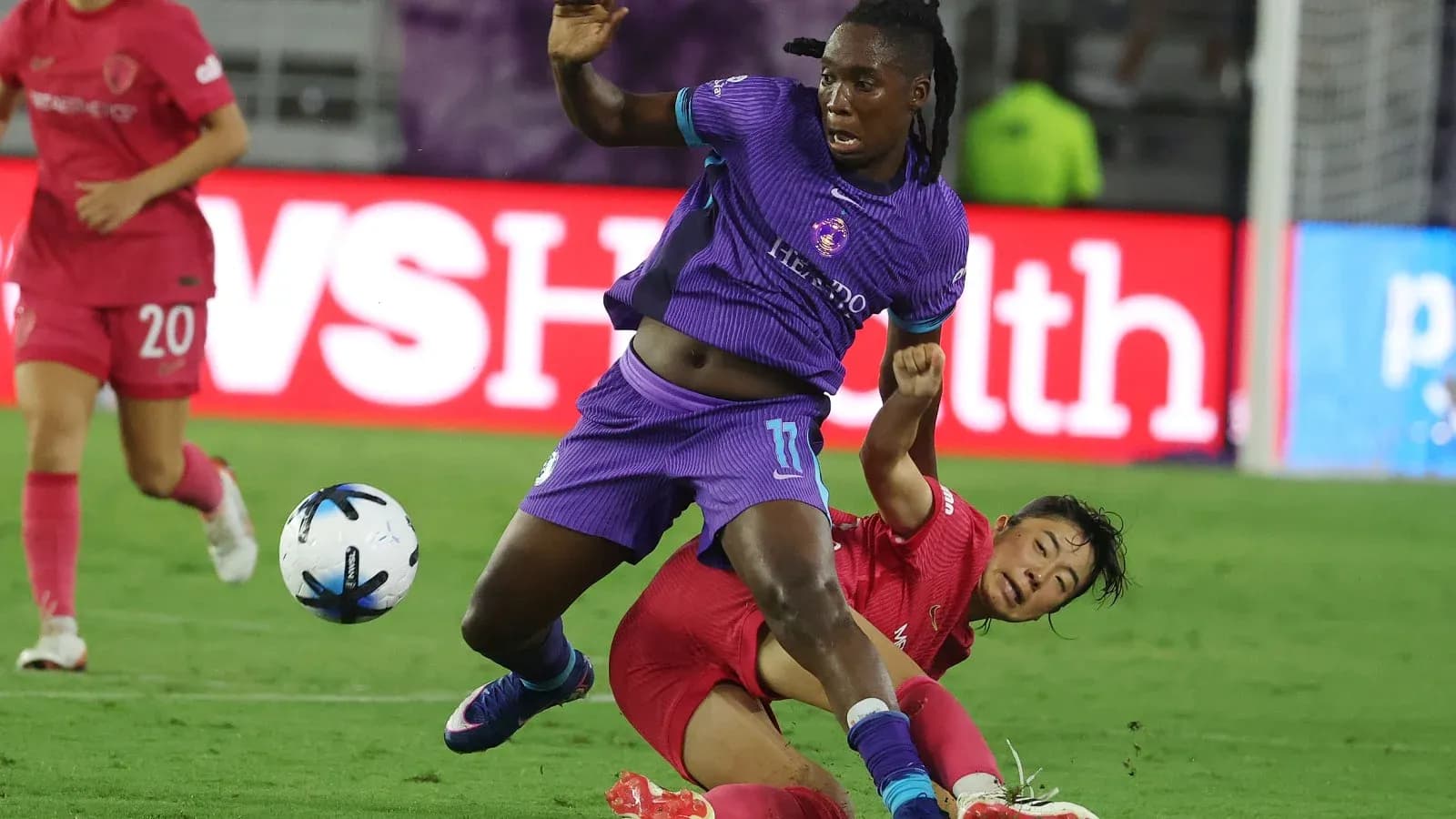
Orlando Pride W Secures 1–0 Victory Over North Carolina Courage W
Inter&Co Stadium under the lights, a tight 1–0 home win, and two sides whose seasons are beginning to crystallise. Following this result, Orlando Pride W’s campaign in the NWSL Women group stage looks increasingly like a push toward the playoffs from a position of strength, while North Carolina Courage W’s narrow defeat underlines the fragility of a team still searching for balance.
I. The Big Picture – Shapes, stakes, and seasonal DNA
This was a meeting of contrast and clarity. Orlando arrived as the more settled outfit: 7th in the table with 11 points from 8 matches, a positive overall goal difference of 1 (12 scored, 11 conceded), and a clear identity. Their season-long reliance on a 4-2-3-1 has been almost absolute, deployed in all 8 league fixtures. At home they had been volatile but dangerous: 5 matches, 2 wins, 1 draw, 2 defeats, with 7 goals for and 8 against. That home profile is reflected in their averages at Inter&Co Stadium – 1.4 goals scored and 1.6 conceded per game – a team that leans into attacking risk.
North Carolina, by contrast, came in as tactical chameleons. They sat 13th with 9 points from 8 games, a negative overall goal difference of -2 (9 for, 11 against), and a league season defined by constant structural tinkering: 4-3-3 used 3 times, 3-4-3 twice, and three other systems (4-4-2, 5-3-2, 3-4-2-1) each appearing once. On their travels they had been disciplined if unspectacular: 4 away matches, 1 win, 2 draws, 1 defeat, 3 goals scored and 3 conceded, for an away average of 0.8 goals both for and against.
The 1–0 final scoreline fit that tension neatly: Orlando’s attacking edge at home against a Courage side that tends to keep away games tight, but struggles to consistently threaten in the final third.
II. Tactical Voids and Discipline – Who was missing, who walked the line
There were no listed absentees in the data, so both coaches had essentially full squads to choose from. That clarity showed in the lineups.
Seb Hines leaned into continuity: Orlando’s 4-2-3-1 was anchored by Anna Moorhouse in goal, a back four of Oihane Hernández, Rafaelle Souza, Coriana Dyke, and Hailie Mace, with the double pivot of Haley Hanson and Ally Lemos providing the platform. Ahead of them, Solai Washington, Angelina Alonso Costantino, and Summer Yates were tasked with linking to the league’s standout striker, Barbra Banda.
Mak Lind matched with a 4-3-3, trusting Kailen Sheridan in goal and a back four of Ryan Williams, Uno Shiragaki, Natalia Staude, and Dani Weatherholt. The midfield trio of Riley Jackson, Shinomi Koyama, and Manaka Matsukubo was built to circulate and press, while the front three of Lauryn Thompson, Evelyn Ijeh, and Ashley Sanchez offered vertical threat.
Disciplinary trends framed the contest’s tone. Orlando’s yellow-card profile this season shows a pronounced late-game spike: 30.00% of their yellows arrive between 61–75 minutes, and a combined 40.00% come from 76–90 and 91–105. They are a side whose intensity can spill over as matches stretch. North Carolina’s pattern is even sharper: 40.00% of their yellows fall in the 46–60 window, with further peaks at 31–45 (20.00%) and 76–90 (20.00%). Crucially, their only red card this season has come in the 76–90 range, underlining how their second-half aggression can tip into recklessness.
That backdrop made the final phase of this match feel like a tightrope. Orlando’s push to protect and extend their lead ran straight into a Courage side whose historical tendency is to foul and card-chase in the exact period where the game was decided.
III. Key Matchups – Hunter vs Shield, and the engine room
Hunter vs Shield: Barbra Banda vs the Courage back line
Barbra Banda is the league’s most ruthless finisher right now. Overall this campaign she has 7 goals in 8 appearances, firing 30 shots with 19 on target and averaging a 7.87 rating. She has drawn 19 fouls and attempted 21 dribbles, underlining how often she forces defenders into decisions in the box and the channels.
On their travels, North Carolina had conceded only 3 goals in 4 matches before this fixture, with that away average of 0.8 goals against built on compact lines and the form of Sheridan and the central pairing. Yet the underlying profile hints at strain: the team has conceded 11 goals overall, with their best defensive work coming away from home, not as a global identity.
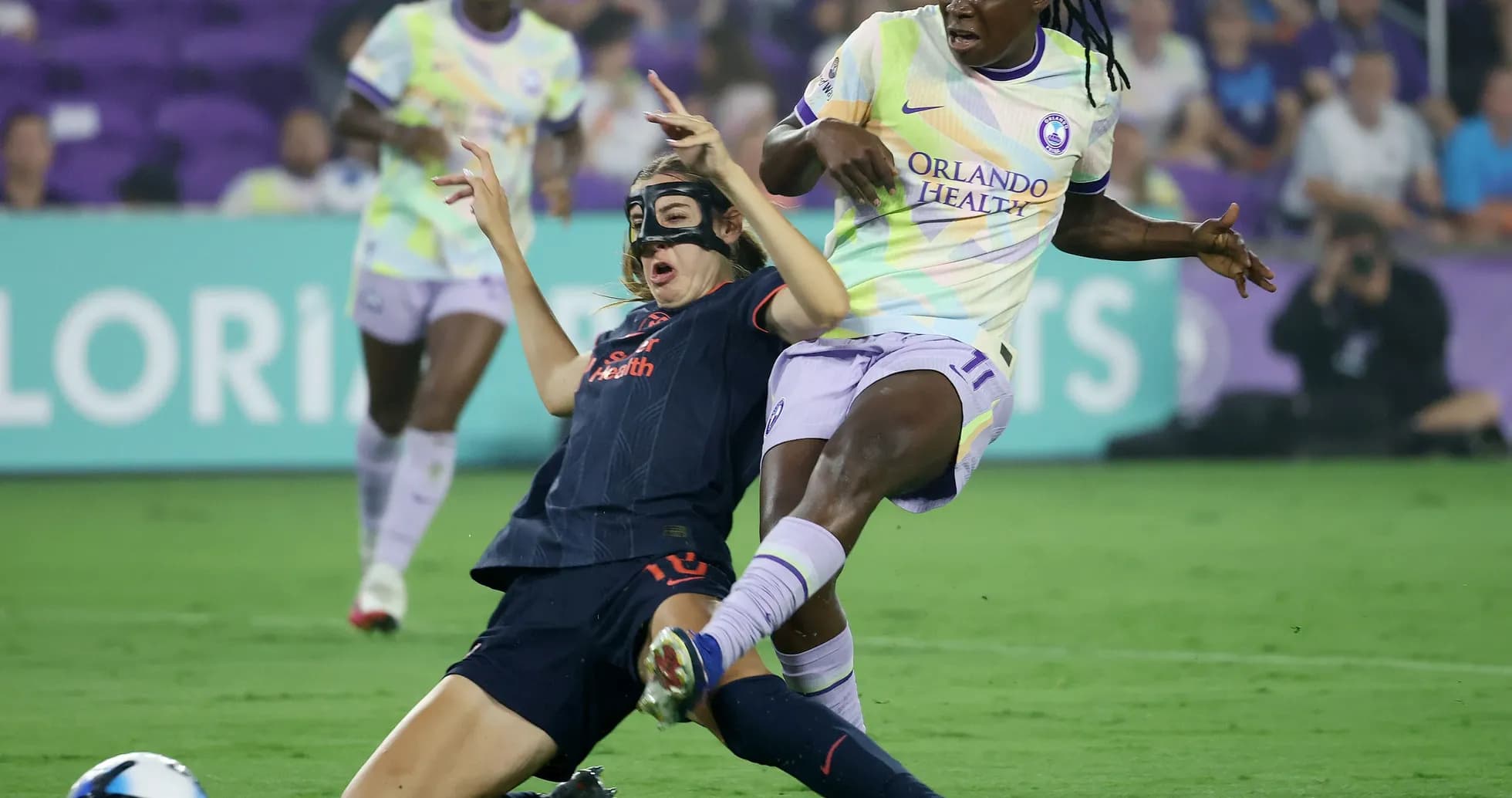
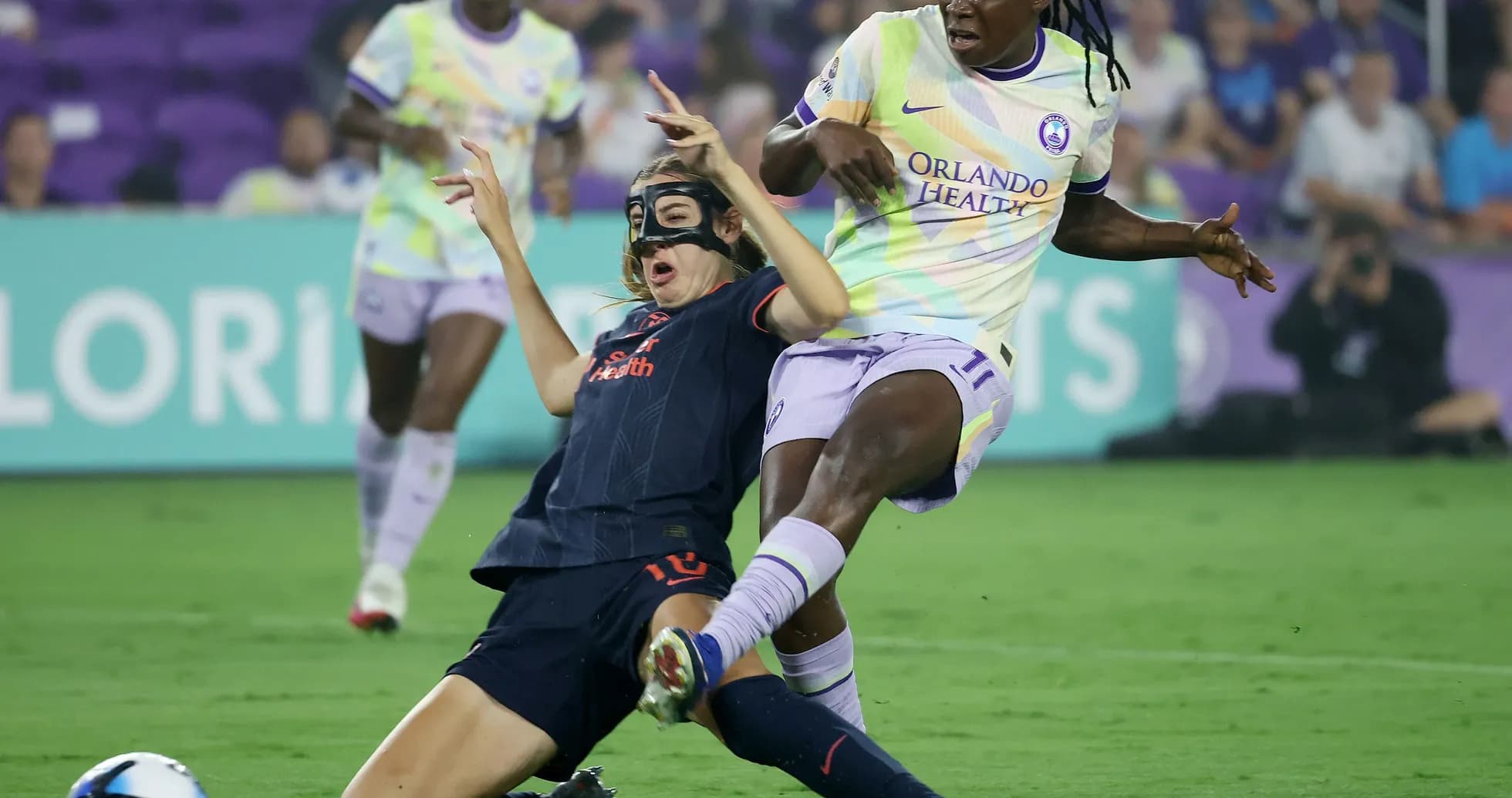
In Orlando, Banda’s presence bent the Courage’s entire defensive shape. Williams, usually a high-flying creator (3 assists, 10 key passes, 283 total passes at 85% accuracy), had to calibrate her forward surges carefully, knowing that any turnover left Banda running at a retreating line. Shiragaki and Staude were forced into narrower starting positions, compressing the central corridor but ceding some width.
The result was a classic striker vs system duel: Banda constantly threatening the space between full-back and centre-back, Courage trying to keep her outside the box and away from high-value shots. Over 90 minutes, Orlando’s season-long attacking averages (overall 1.5 goals per match, 1.4 at home) suggested they would eventually carve out enough chances; the 1–0 scoreline was the product of that persistent pressure.
Engine Room: Angelina / Lemos vs Jackson / Koyama / Matsukubo
If Banda was the tip of the spear, the real contest of ideas happened in midfield. Orlando’s double pivot of Lemos and Hanson, with Angelina and Washington stepping in and out of the half-spaces, sought to control tempo and win second balls. The Pride’s season identity – only 1 match at home where they failed to score, and 3 clean sheets overall – is rooted in that central stability.
North Carolina’s trio was more fluid but less settled. Matsukubo and Koyama are tasked with linking phases, while Jackson offers legs and pressing. Yet the Courage’s overall attacking profile – 9 goals in 8 games, with only 3 on their travels – hints at a midfield that moves the ball but doesn’t consistently create high-quality chances. Their two away clean sheets show they can shut games down, but they have also failed to score in 2 away fixtures.
In this match, Orlando’s engine room had the advantage of structural continuity. Their 4-2-3-1 has been used in all 8 league fixtures, giving them rehearsed rotations and clear pressing triggers. North Carolina, conversely, brought the memory of multiple systems into a 4-3-3 that still feels like one option among many rather than a definitive identity. That difference in tactical “muscle memory” showed in the way Orlando were able to compress central spaces and force Courage wide, limiting Sanchez’s ability to receive between the lines and drive at the back four.
Sanchez herself remains North Carolina’s brightest attacking light: 5 goals, 18 shots (11 on target), 11 key passes, and a 7.35 rating overall. But without a consistently dominant central structure behind her, she was often left trying to manufacture chances from suboptimal zones, rather than arriving onto well-timed breaks.
IV. Statistical Prognosis – xG shadows and defensive solidity
The raw xG figures are not provided, but the season-long trends allow a reasoned projection of how this match likely flowed under the hood.
Heading into this game, Orlando’s overall scoring average of 1.5 goals per match and conceding 1.4 suggested an open, chance-rich environment. At home, their 1.4 goals for and 1.6 against per game pointed toward a side that both creates and concedes opportunities. North Carolina, meanwhile, came in with a more muted attacking output (overall 1.1 goals scored per match, just 0.8 away) but a relatively tight away defence (0.8 conceded).
Overlay those profiles and a plausible xG narrative emerges: Orlando generating the higher cumulative xG, probably in the 1.2–1.8 range, through sustained pressure and Banda’s shot volume; North Carolina limited to lower-quality looks, perhaps around 0.6–1.0, reliant on transitional moments and Sanchez’s individual quality.
Defensively, Orlando’s 3 clean sheets overall, including 2 on their travels and 1 at home, underline that when their structure holds, they can lock games down. The 1–0 here fits that pattern: once ahead, the Pride leaned on a back four led by Rafaelle and Dyke, with Hernández and Mace narrowing late on to protect the box. Moorhouse, fronted by a double pivot willing to absorb pressure, turned the match into a controlled grind rather than a chaotic shootout.
For North Carolina, the defeat reinforces a season-long paradox. On their travels they have now conceded only 4 goals in 5 matches, keeping the away goals-against average close to that 0.8 mark, but their attacking return remains thin. The Courage’s clean-sheet potential is real – 2 shutouts already, both away – yet their inability to consistently convert possession into xG-heavy chances leaves them living on fine margins.
From a forward-looking perspective, Orlando emerge from this fixture as a side whose playoff credentials rest on a clear spine: Moorhouse’s security, a settled 4-2-3-1, and the league’s most decisive hunter in Banda. Their statistical profile suggests that if they can slightly tighten their home defending – shaving that 1.6 goals-against average – they have the attacking power to climb from 7th into a more comfortable playoff berth.
North Carolina, sitting 13th, face a different question. The numbers say they are not being blown away – 11 conceded in 8, a goal difference of -2 – but their constant tactical shifts and modest attacking averages hint at a team still searching for its true self. Leaning more heavily into the chemistry between Sanchez and Williams, whose 3 assists and 10 key passes make her a genuine creative outlet from deep, may be the path to lifting their xG and, with it, their season.
In the end, this 1–0 at Inter&Co Stadium felt less like a one-off and more like a distillation of both teams’ campaigns so far: Orlando efficient, defined, and increasingly ruthless; North Carolina organised but blunt, living in the narrow space where one moment at either end decides everything.