NWSL's Remarkable Transformation at Citi Field
Ten years ago, an NWSL match at a baseball stadium was a punchline. A tiny, makeshift field in a minor-league park, condemned by the league’s own stars as “shocking and embarrassing”, became a symbol of how fragile the project still was.
On Wednesday night in Queens, the same idea looked unrecognisable.
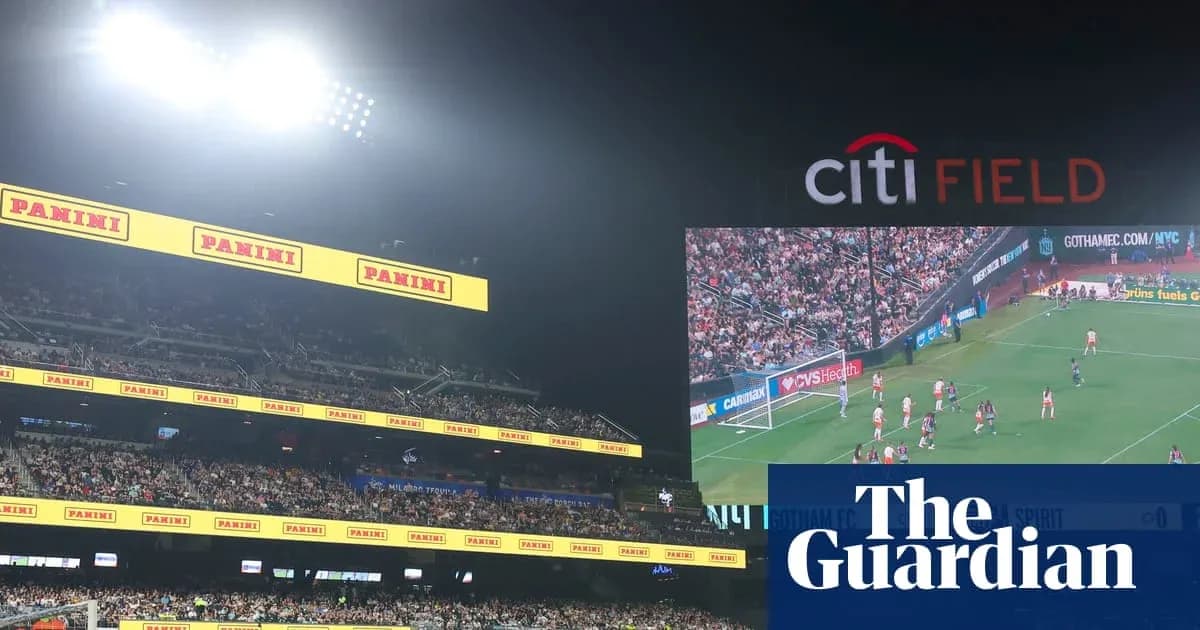
At Citi Field, home of the New York Mets, 42,175 people watched Gotham FC beat the Washington Spirit 1-0 in the so‑called Queens Classic. It was the second-largest crowd in NWSL history and the biggest ever for a women’s sporting event in New York City. A decade ago, the league was begging people to care. Now, it is filling cathedrals of American sport.
A statement night in a tight title race
The NWSL had just emerged from a month-long pause for the men’s World Cup. If the league needed a reset, this was it. A marquee fixture, a vast stage, two contenders who already know what it takes to play deep into October.
San Diego still sit top of the table, but Gotham’s win dragged them level on points with both the Spirit and the Portland Thorns. Washington hold second on goal difference. These are not just rivals; they are the standard-bearers of the league’s modern era. Across the past three seasons, Gotham and Washington have shared two championships (both Gotham), two runners-up finishes (both Spirit) and three more trophies in other competitions. They met in last year’s final. They are used to seeing each other in the way.
So it was fitting that a single, exquisite moment settled it.
In the 37th minute, Rose Lavelle, the midfielder who decided last year’s title game, did it again. She drifted into space, opened her body and bent a brilliant curler beyond the Spirit goalkeeper for the only goal of the night. One touch, one swing, one roar from the stands that cut through the haze.
Washington had their own star turn. Trinity Rodman, wearing that now-familiar No 2, was electric and relentless, buzzing into channels, driving at defenders, taking on the responsibility that comes with being a face of the league. She finished with five shots and no reward, a blur of intent without the finish to match.
Kerr’s return, Gotham’s reinvention
The loudest sound of the night did not greet Lavelle’s strike, though. It came in the 63rd minute, when Sam Kerr finally stepped over the touchline.
Kerr, back in the NWSL after six-and-a-half years at Chelsea, took her first minutes for Gotham to a standing ovation. For the club, it was more than a debut. It was a reckoning with its past.
Before the rebrand, before trophies and transfer coups, Gotham were Sky Blue: a team defined less by results than by horror stories. Players trained at facilities without running water. Resources were sparse. Crowds of 3,000 felt decent. When Kerr left in 2018, the headlines were about dysfunction, not ambition.
Now, she returns to a club that can drop her into a roster already featuring Lavelle, Irish captain Denise O’Sullivan and Norwegian midfielder Guro Reiten, all signed in the past month. Lavelle put it simply: she feels “spoiled” by the calibre of talent arriving.
On Wednesday, the difference between eras was impossible to miss. Gotham, once nomads on the New Jersey side of the river, are already planning a permanent New York home. Last week, the club confirmed a move to the future Etihad Park in 2028. The buildup to this game felt like a big-city event: subway ads, promotions, even a $15 ticket initiative pushed by local politician Zohran Mamdani. The club said 70% of ticket buyers were “new fans”.
“It was really special just to see how many people were there that that was their first Gotham game,” midfielder Jaedyn Shaw said. For a franchise that once begged for relevance, that is a seismic shift.
Washington’s rise, and a league that dared to invest
That the opponent on this night was Washington felt right. The Spirit have also rebuilt from the ground up, dragged themselves away from turmoil and into the league’s elite by embracing investment and ambition in a system that does not always reward either.
“In many ways, this is like a full-circle moment,” NWSL commissioner Jessica Berman said at half-time. Her message was blunt: spend properly, and people show up. Citi Field, heaving on a midweek night, was her evidence.
Over the past 12 months, the NWSL has set new records for attendance, TV viewership and expansion fees. Games at ballparks are no longer a sign of desperation; they are showcases. Wrigley Field in Chicago and Oracle Park in San Francisco have already hosted record crowds. Citi Field just added its own chapter.
Yet the league’s surge has not come without friction.
Heat, haze and the limits of growth
For all the spectacle, Wednesday was played under a sky that looked and smelled like a warning. A punishing heatwave pushed temperatures into the 80s and 90s Fahrenheit, with a heat index north of 100. Smoke from Canadian wildfires drifted over New York, coating the evening in an orange-brown haze. The air quality index sat above 150 – “unhealthy” by Environmental Protection Agency standards – as the ball rolled.
The NWSL has postponed games for air quality before. It has also been hammered for pressing ahead in dangerous conditions, most notably last year when Orlando Pride hosted Kansas City Current in extreme heat on national television and more than a dozen spectators ended up in hospital.
This time, the league stuck to its thresholds. The numbers did not cross the 180-200 range that can trigger a delay, nor the 200+ mark that mandates a postponement. Instead, officials ordered two hydration breaks per half.
The decision satisfied no one completely. Spirit coach Adrián González made clear he disliked the constant pauses, arguing they killed the game’s rhythm, even as he accepted they were necessary. Rodman went further.
“I think on both sides, we were just like, ‘Damn, another break, another break, another break,’” she said. “If we have to have a hydration break every 15 minutes, then we shouldn’t be playing the game, and that’s my opinion. … But at the end of the day, there’s 40,000 people, it’s a whole event. So it is really tough. I think it was a really hard situation for everybody to work around.”
The imperfections extended beyond the air. The temporary pitch, laid over a baseball infield, drew resigned shrugs. It was playable, not pristine. “That’s showbiz, baby,” Lavelle quipped. On television, the league’s big moment also stumbled: ESPN cut the screen in two for an interview just as Lavelle scored, leaving commentators scrambling over each other as the decisive goal went in on half a monitor.
It all felt very NWSL: bold, ambitious, occasionally chaotic, still learning on the fly.
From punchline to proof of concept
Strip it back, though, and the night remains a landmark. The Citi Field crowd more than doubled Gotham’s total attendance across all 12 home matches in their inaugural 2013 season. The league that once squeezed a game onto a tiny rectangle in a minor-league park now draws more than 40,000 to a major-league stadium and debates the fine print of air quality protocols.
Holding those truths together is the point. The NWSL has come a long way. It also has a long way left to travel.
On the field, Gotham took a step that might matter when the standings tighten in the autumn. Off it, the league showcased both its power and its growing pains in a single, hazy, unforgettable night in Queens.
“It’s pretty cool when you’re out there and you realize that this is your job,” veteran Spirit midfielder Andi Sullivan said, “and that this is what your dreams looked like, or maybe what they haven’t looked like along the way.”
The dream now fills baseball stadiums. The question is how far, and how fast, it can keep stretching.