Craig Gordon: A Legendary Journey in Scottish Football
Craig Gordon has spent a career defying logic, surgeons and, at times, gravity. At 43, one of Scottish football’s great modern figures has finally called time on a journey that began in 2001 and stretched over a quarter of a century, more than 760 games and a lifetime of comebacks.
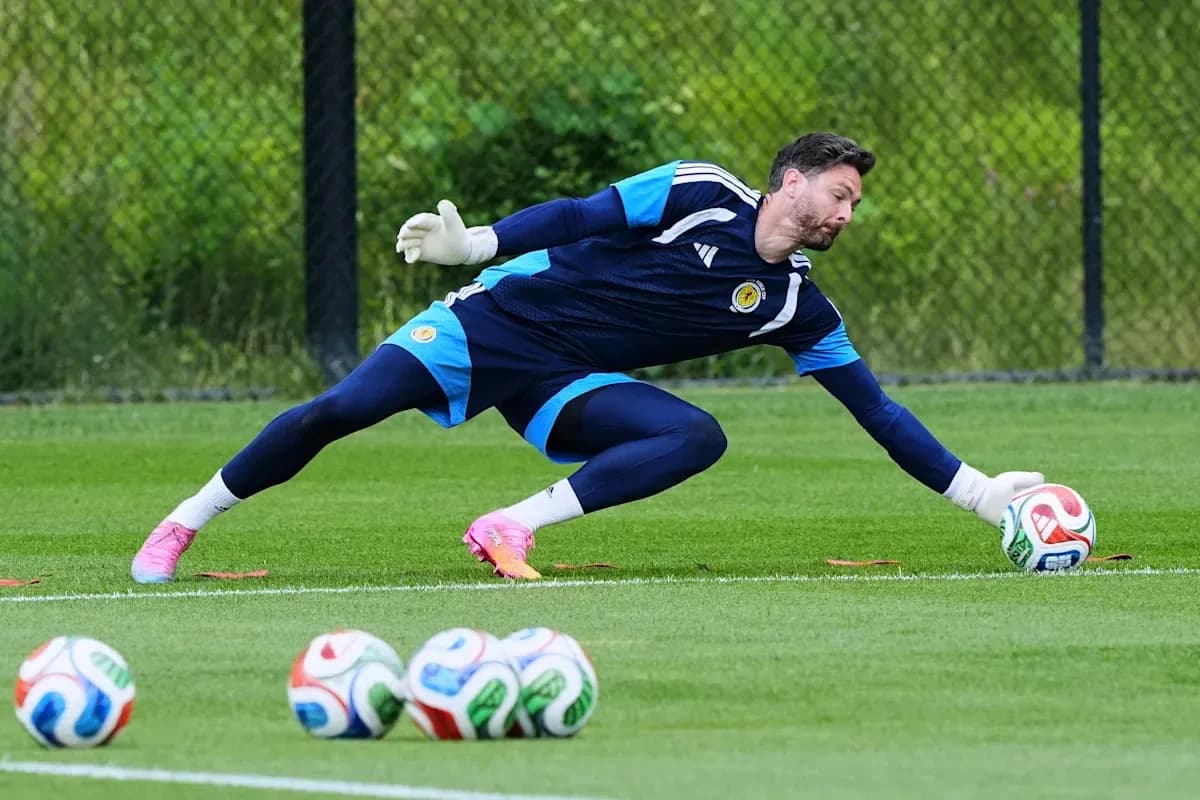
He walks away as Hearts’ prodigal son, a Celtic treble-winner, a former British record signing at Sunderland and a Scotland centurion-in-waiting who stopped at 84 caps only because time, eventually, catches everyone.
From Gorgie to the world stage
Gordon’s story starts where, in his mind, it always had to: Heart of Midlothian. A boyhood fan who graduated from the stands to the pitch, he broke through at Tynecastle in the early 2000s and quickly became the standard by which Scottish goalkeepers were judged.
His first major trophy arrived in the 2005/06 season, lifting the Scottish Cup with Hearts. It would be the first of 15 major honours. By then, he had already made his Scotland debut in 2004, the beginning of an international career that would see him sing the anthem 84 times and stand eye-to-eye with some of the game’s biggest names on some of its grandest stages.
Recognition came quickly. In 2007, at just 24, he was inducted into the Hearts hall of fame – the youngest player ever to receive that honour. For a goalkeeper, that kind of early canonisation is rare. Gordon made it feel inevitable.
A record fee and a save for the ages
That same year, his talent took him south. Sunderland paid £9m to bring him to the Premier League, a British record transfer fee for a goalkeeper at the time. It was a statement signing, and Gordon delivered moments that justified every penny.
In 2010, he produced the stop that would follow him for the rest of his career. Against Bolton, he threw out a telescopic right arm to claw away a close-range effort that seemed destined to burst the net. Years later, that moment was voted the best save in Premier League history. For many, it still is.
Yet even as his reputation grew, so did the damage to his body.
A career on the brink
Gordon’s 25-year career did not glide along untouched. It lurched and staggered through injury: a succession of ankle problems, broken arms, knee surgery. His time at Sunderland became a grim battle with his own frame, until the club and the goalkeeper finally parted ways.
What followed was the kind of silence footballers dread. Around two years out of the game. Rehabilitation, doubt, the gnawing fear that it was over. At one point, he could not walk without pain. He turned to coaching while he fought a career-threatening condition, trying to stay close to the sport that was slipping away from him.
Many players never come back from that. Gordon did.
Reborn in green and white
Celtic offered him a route back, and he seized it. The comeback was not gentle; it was emphatic. At Celtic Park, he re-established himself as a dominant presence and a serial winner.
Six Premiership titles, five League Cups, three Scottish Cups. Gordon became the last line of defence in a side that steamrollered domestic opposition and chased perfection under intense scrutiny. The pressure suited him. So did the responsibility.
His time in Glasgow restored not only his career but his status as one of the finest goalkeepers of his generation in Britain. When his contract finally expired, the story circled back to where it had begun.
Home again – and another fight
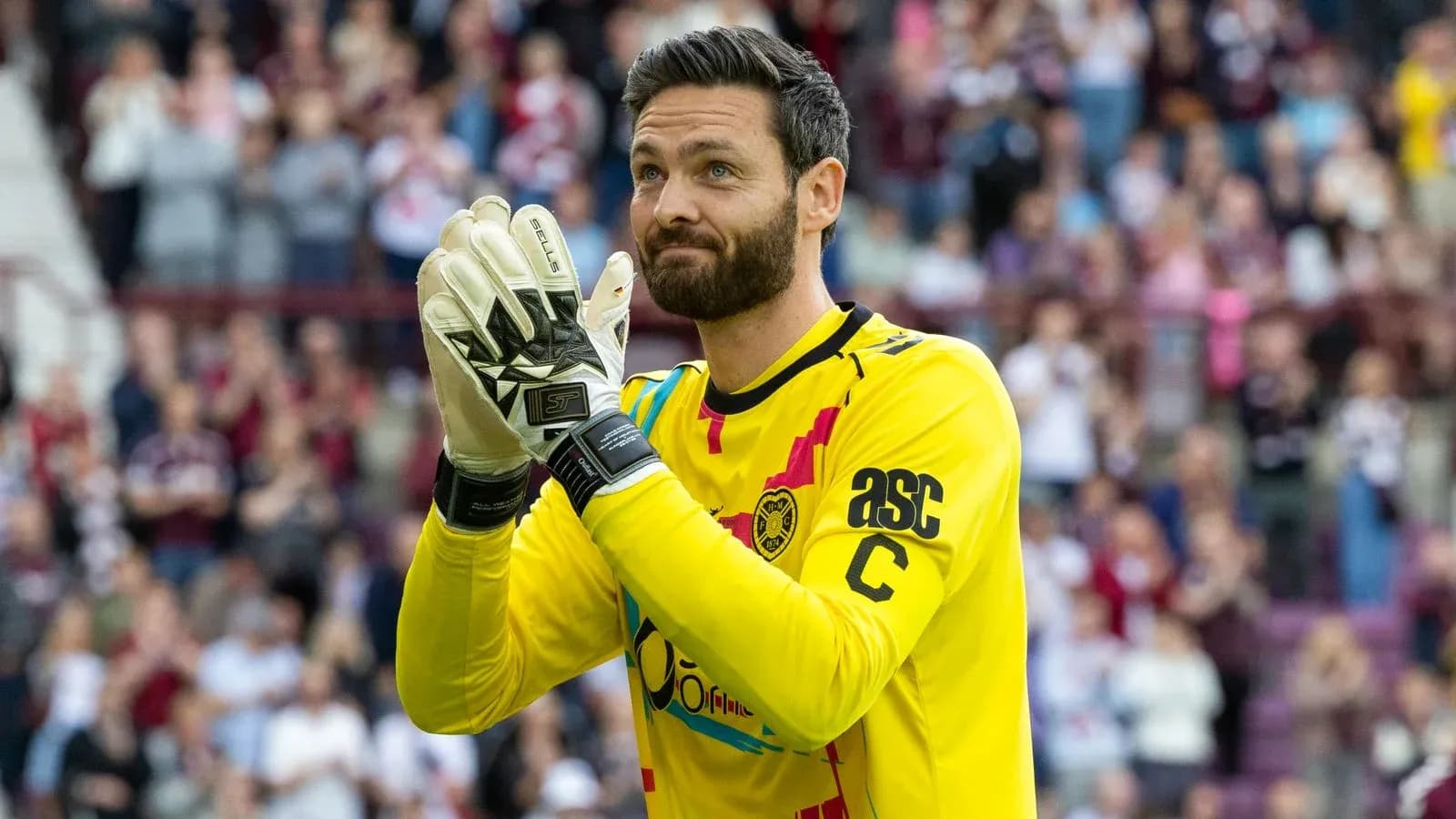
Gordon returned to Hearts, older, wiser, but still driven. The romance of the move never dulled his edge. He impressed again in maroon, anchoring a side with serious ambitions and proving that, even in his late thirties and early forties, his standards had not slipped.
Then came Christmas Eve 2022. A double leg break, the kind of injury that ends careers instantly, especially for a veteran who had already spent years wrestling with his body. His future was again in doubt. The whispers began: surely, this time, he could not come back.
He did. More surgery, more rehab, more stubborn refusal to accept the obvious. Gordon returned once more, pulling on the gloves for Hearts and reclaiming his place in the Scotland setup.
Last season, he played his part as Hearts pushed for the Premiership title, only to fall short on the final day. At 43, he was still in the Scotland squad for the World Cup. The arc of his career, by then, had stopped being impressive and drifted into the territory of the extraordinary.
“I have lived my dreams”
Announcing his retirement in a video released by Hearts, Gordon spoke with the clarity of someone who knows he has emptied the tank.
“I’ve never wanted it to end, but end it must,” he said. “I have lived my dreams and for that, I’m so thankful.”
Those dreams were simple, and in their simplicity lay their power: play for Hearts, play for Scotland. He did both. He did them for longer, and at a higher level, than most would dare to imagine.
He talked about the hard work, the sacrifices, the setbacks. About going from the stands to the pitch at Tynecastle. About wanting to do himself, his family and the fans proud. He joked he was “not much of a singer” but had improved after 84 renditions of the national anthem. He remembered the biggest names, the biggest stadiums, the biggest stages – and how he savoured them all.
There was gratitude, too. For team-mates and coaches who pushed him. For opponents who drove him on. For medical staff who pieced him back together, time and again. For loved ones who stood beside him when walking pain-free felt like a distant ambition.
“Now the gloves are finally off and I bid farewell to my playing career,” he said. “You, the fans, have given me everything, and it has been a privilege to represent you. I hope you’ve enjoyed it as much as I have. From the bottom of my heart, thank you.”
A legacy built on resilience
Numbers will tell part of Craig Gordon’s story: 760-plus games, 84 caps, 15 major honours, a British record fee, the greatest save in Premier League history. The rest lies in the gaps between those figures – the years when he should have faded away, but refused.
He leaves the game not just as one of Scotland’s finest goalkeepers, but as a symbol of perseverance in a sport that rarely offers second chances, let alone third or fourth.
The gloves are off now. The question is not what he has left to prove. It is what he chooses to conquer next.