Nigeria’s Super Falcons Aim for 11th WAFCON Title in Morocco
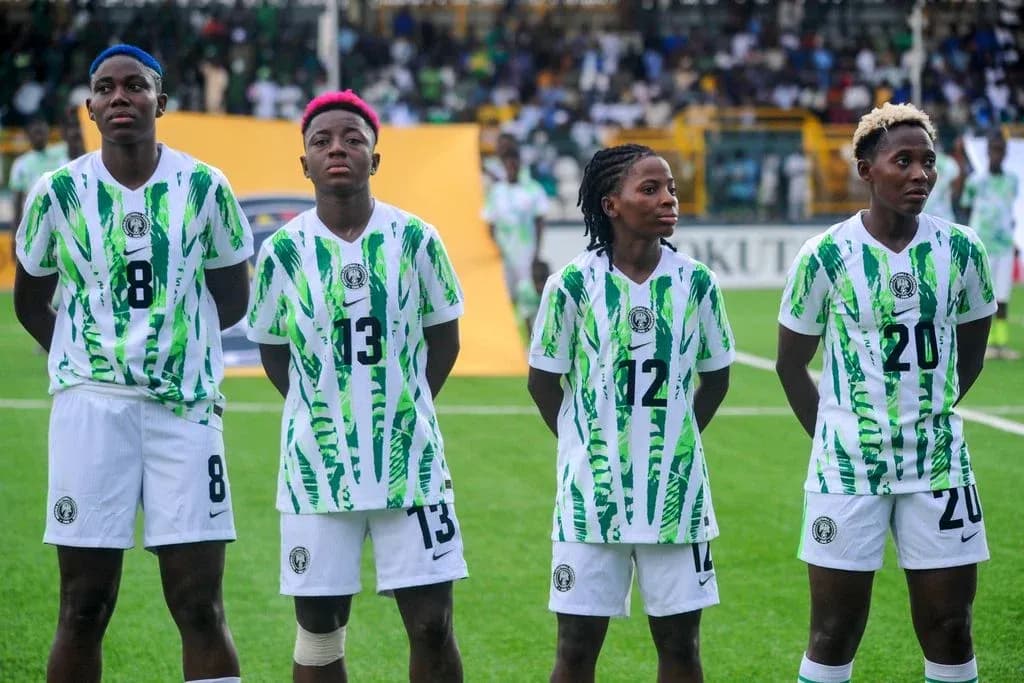
Nigeria’s Super Falcons have drawn back the curtain on their latest ensemble, a 25-woman squad tasked with extending one of African football’s most intimidating dynasties at the 2026 Women’s Africa Cup of Nations in Morocco.
This is not a rebuilding job. It is a title defence. And a hunt for an 11th continental crown.
Madugu’s Mix of Old Steel and New Energy
Head coach Justine Madugu, speaking through the Nigeria Football Federation announcement, has gone for balance: established leaders, big-league regulars, and younger players pushing hard from behind.
Rasheedat Ajibade wears the armband and the responsibility that comes with being the heartbeat of the midfield. Asisat Oshoala, six-time African Women’s Player of the Year and still the headline act in attack, is back to lead the line.
Behind them, Chiamaka Nnadozie stands as the undisputed No. 1. The Brighton & Hove Albion goalkeeper has grown into one of the continent’s most reliable shot-stoppers, and she will again anchor a team built to go deep into the tournament.
There is, however, one notable absence. Ashleigh Plumptre, a key figure in defence in recent years, misses out as she continues her recovery from surgery. For a side with serious ambitions, that is a sizeable gap, and Madugu will need others to step into that space quickly.
The Most Decorated Side in African Women’s Football
Nigeria arrive in Morocco with a weighty history on their shoulders. Ten WAFCON titles. A dominance that has defined African women’s football for decades.
Their most recent triumph came in dramatic fashion, a 3-2 victory over hosts Morocco in the previous edition’s final. That win did more than add another star to the jersey; it reasserted the Super Falcons’ authority at a time when the chasing pack has grown stronger and more organised.
Now they return to the same country, not just as defending champions, but as the benchmark everyone else measures themselves against.
Madugu’s list is structured for a long tournament: three goalkeepers, eight defenders, five midfielders, nine forwards. Depth everywhere. Competition in almost every position.
Department by Department
In goal, Nnadozie is joined by Comfort Erhabor of Portsmouth Ladies and Fatima Oloko of Abia Angels. Both understudies bring domestic and overseas experience, but the hierarchy is clear. This is Nnadozie’s box.
The defensive unit blends veterans and emerging names. Osinachi Ohale and Michelle Alozie bring familiarity and composure, while Oluwatosin Demehin and Rofiat Imuran add youthful legs and aggression. Shukurat Oladipo, Glory Ogbonna, Sikiratu Isah and Christy Ucheibe round out a back line that will be asked to protect leads as much as build from deep.
Midfield is where Nigeria’s rhythm will be set. Ajibade leads a group that includes Halimatu Ayinde, Deborah Abiodun, Toni Payne and Jennifer Echegini. It is a combination that offers bite, control and creativity, with Ajibade the clear reference point in transitions and high-pressure moments.
Then comes the firepower.
Oshoala headlines a forward line that looks built to overwhelm. Folashade Ijamilusi, Esther Okoronkwo, Chinwendu Ihezuo, Francisca Ordega, Gift Monday, Uchenna Kanu, Omorinsola Babajide and Joy Omewa give Madugu options of every kind: pace out wide, physical presence through the middle, and the kind of depth that can change games from the bench.
Many of these players operate weekly in Europe’s biggest leagues; others come from North America, Asia and the Nigerian Women’s Football League. The mix of international polish and home-grown edge has long been a Super Falcons trademark. It remains so here.
Group C: Old Scores and New Tests
Nigeria’s path begins in Group C, alongside Zambia, Egypt and Malawi. On paper, it is a group they should control. On grass, it will demand focus from the first whistle.
The campaign opens against Malawi on Tuesday, July 28, at Al Madina Stadium in Rabat. Malawi are debutants at this level, and this will be the first senior competitive meeting between the nations. For Nigeria, it is the kind of game where standards must be set early: tempo, intensity, ruthlessness.
Then comes the grudge match.
On Saturday, August 1, at the same venue, the Super Falcons face Zambia. Nigeria have won two of their three previous meetings with the Copper Queens, but the outlier still stings: Zambia’s 1-0 win in the 2022 WAFCON third-place playoff. That defeat stripped Nigeria of a podium finish and sent a clear message that the hierarchy in African women’s football is shifting. This fixture will carry that memory into every tackle.
The group stage closes against Egypt on Wednesday, August 5, at Rabat Region Stadium. The history between the two at this tournament is brutal and one-sided: a 6-0 win for Nigeria at the inaugural African Women’s Championship in 1998. But Egyptian women’s football has moved on since then, investing, improving, closing the gap. Nigeria will still be favourites, but any hint of nostalgia would be dangerous.
More Than a Trophy on the Line
WAFCON 2026 is not just about continental bragging rights. It doubles as Africa’s qualification route to the 2027 FIFA Women’s World Cup in Brazil. Reach the semi-finals, and a World Cup ticket comes with it.
For a team of Nigeria’s stature, failing to secure one of those four spots would be unthinkable. Yet the margins at the top are thinner than ever.
The squad is set. The stage is familiar. The expectations are immense.
Now the Super Falcons must show whether this generation can not only defend a crown, but stretch a dynasty even further into the future.