Mourinho’s Second Coming: A Dramatic Debut with Real Madrid
José Mourinho stayed put.
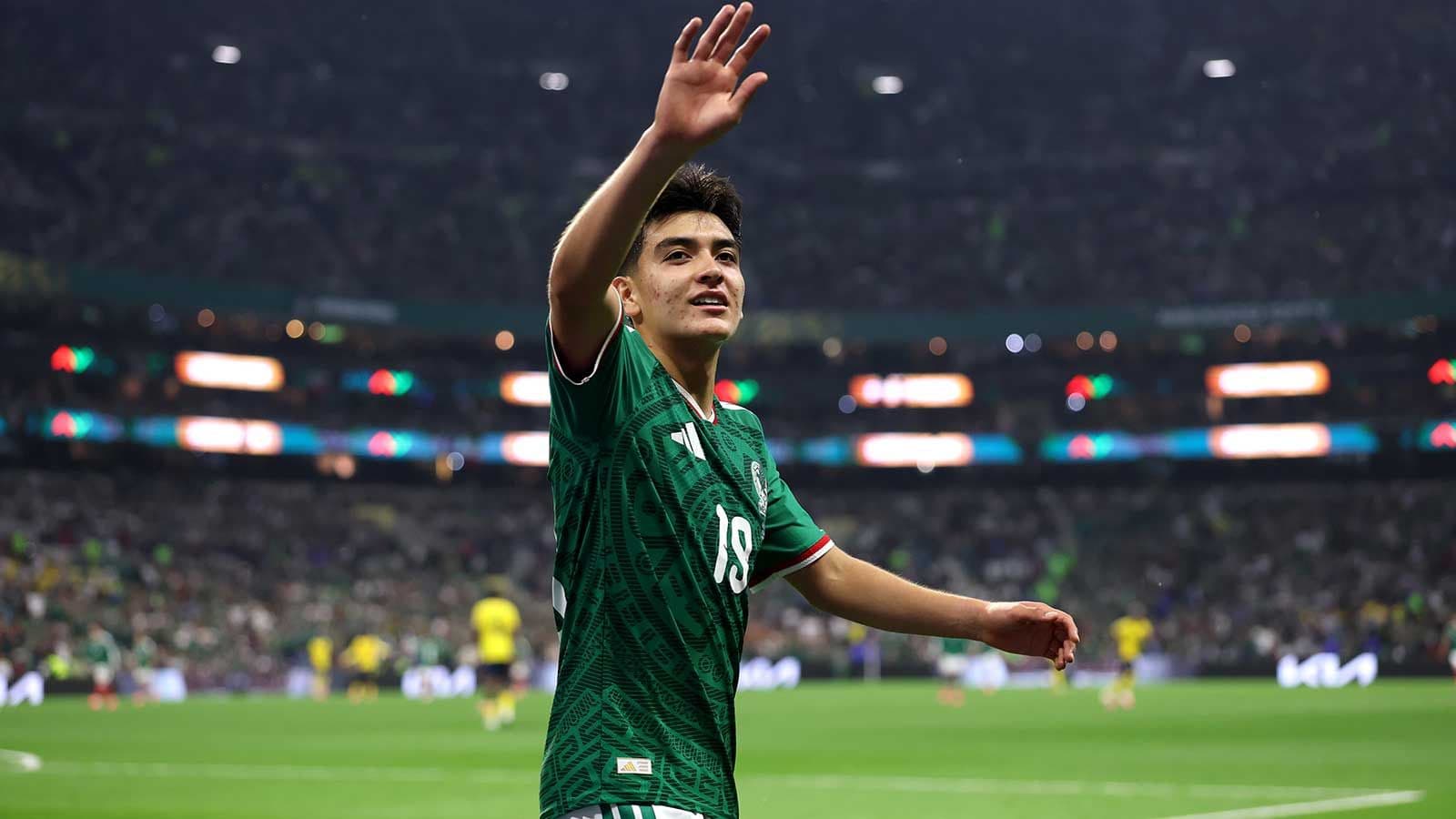
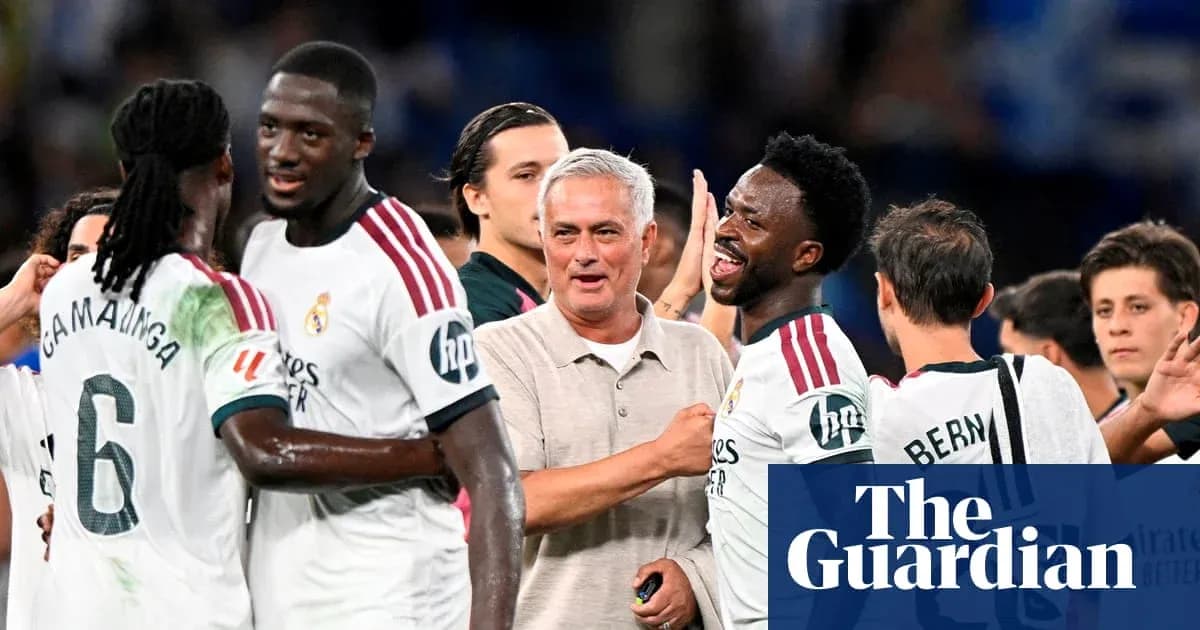
As the Real Madrid bench exploded past him, substitutes and staff sprinting along the touchline to hurl themselves at Carlos Espí in the corner, the new coach on his second debut did not join the pile-on. He just rose slowly, fists clenched, and walked behind them, eyes fixed on the chaos and his match-winner. Then he pulled Fede Valverde aside for a quiet word. It might as well have been: “We got away with that.”
Because this was not the grand unveiling many had scripted. It was scruffy, tense, and rescued in the 90th minute by a 21-year-old striker who six months ago was barely a footnote in La Liga.
Mourinho’s second coming, decided by an unexpected No 9
For all the glitter around him – Kylian Mbappé, Vinícius Júnior, Jude Bellingham, and the record signing Yan Diomande – the night belonged to Espí, the old-fashioned centre-forward Real Madrid did not know they needed until he arrived from Levante.
Last season, his goals had dragged Levante away from relegation. Now he lives at Valdebebas, just like his coach, the pair sharing breakfast each morning. He was brought in for a specific purpose: to offer something different, a classic No 9 with weight in the area, a body to hit when the pretty patterns break down.
That is exactly how the winner came. A messy, broken move, the ball ricocheting in the Espanyol box, Mbappé stretching but losing control. And then Espí, in the right place, forcing it over the line. A simple finish, a complicated question: is this a profile Madrid can really afford to keep in reserve?
On this night, at least, the answer was obvious.
Cameras, nostalgia and a reality check
Mourinho’s first Real Madrid match since that 4-2 win over Osasuna in May 2013 started as a spectacle before a ball was kicked. Photographers abandoned their spots behind the goals to crowd around the bench, lenses trained on him, not the pitch.
It ended very differently: Mourinho hugging Espanyol coach Manolo González, slapping palms with the referee, then disappearing down the tunnel with three points and a reminder of how hard this job will be.
Between those two moments, the romanticism faded and reality walked in. He had warned that Espanyol were a good side. They proved it. Madrid created more chances, but Manolo’s team largely succeeded in fencing them off, dragging the game into exactly the kind of awkward contest that exposes a side still learning its own shape.
Old flaws resurfaced. The defensive lapses, the lulls in intensity, the difficulty sustaining pressure. It is only the first match, but the doubts that had followed this squad did not vanish just because Mourinho was back on the touchline. They were only pushed aside for a night.
There will be bigger games than this. There will certainly be bigger storms for Mourinho’s temperament to withstand.
Pérez’s favourite and the myth of the architect
When Madrid met Benfica in the spring, Mourinho had described his previous spell here as “three hard, intense, sometimes violent years”. Time softens the edges. The bad memories drift away; the good ones stay framed.
Mourinho insists he is not a man who “misses anything”, not someone who dwells on regrets. Others at the club did miss him, though. Florentino Pérez most of all. In a world where coaches are often treated as a necessary evil, the president has always made an exception for the Portuguese. Mourinho is the only manager he has truly liked.
Many around Madrid had longed for exactly this: the edge, the confrontation, the iron surgeon who cuts deep and goes to war with rivals, who imposes his will on a dressing room. For Pérez, the pull never really went away. He clung to the belief that the six Champions League titles in the 11 years after Mourinho left were, in some way, built on foundations he had laid. Mourinho would never say it outright, but he did not exactly deny it either.
On the eve of this match, he told a revealing story. After every trophy Madrid won, Pérez called him. Mourinho says he always replied the same way: “No, no, no, it was nothing to do with me.” Which, of course, was a neat way of suggesting it had a little bit to do with him. Pérez has said similar himself. Thirteen years after Mourinho’s first appointment, the president finally acted on that lingering urge.
And why not? The last great comebacks – Zidane, Ancelotti – ended in more silverware. The experiments in between had failed. Mourinho even paused, mid-story, to ask if it was only Zidane and Ancelotti who had actually won anything since he left. The diagnosis was clear: Madrid needed his surgery again.
Like in 2010, they had slipped behind Barcelona. They have not lifted a major trophy in two years. That, inside the club, is seen as a cultural problem as much as a tactical one.
“Non-negotiable” demands and a squad reset
Mourinho’s starting point is simple: effort. “We have to try not to negotiate things that are non-negotiable,” he said. “Commitment can’t be missing.” He has the authority to demand that, and for now, he has the backing to enforce it.
Habits have already shifted. Training sessions have changed, or at least the players’ attitude towards them has. Diomande declared himself ready to “die” for his new coach. Mourinho brushed it off as just a phrase, but he did not hide his satisfaction at hearing it.
There are other reasons for optimism. Vinícius’s future is no longer a soap opera, his status clarified, the resentment and uncertainty cleared. The World Cup is gone, no other major distraction looming. For once, the calendar does not offer easy excuses.
Mourinho pointed out that Brazil, France and England have all found a way to get the best from Vinícius, Mbappé and Bellingham individually. Doing it with all three at the same time is another level. “I don’t think they’re incompatible,” he insisted. Last season, it often looked like they were. Bellingham admitted they sometimes ended up in the same spaces, stepping on each other’s toes.
Here, all three started.
Bellingham strikes first, intensity fades
Bellingham played as a pure No 10, right where Mourinho wants him. “For me this is his position,” the coach said. “The connection with the forwards, he can score goals. He has to play close to the goal. Playing at 6 or 8 we’re losing his closeness to the goal.”
It took nine minutes for that plan to pay off. Vinícius was fouled on the left – already a recurring theme, Alex Calatrava had earlier raked his studs down the Brazilian’s back, prompting Mourinho to fling his arms up in protest – and Arda Güler stood over the free-kick. His delivery was superb. Bellingham rose above everyone and powered his header past Marko Dimitrovic.
Mourinho barely reacted. Sitting on the far left of the bench, he stood, slid his hands into his pockets and strolled down the touchline to where the overflow of his sizeable staff sat in the stand. There he shook hands with Sami Khedira, his in-house assistant, and analyst Roberto Merella. Businesslike. Controlled. Job done, or so it seemed.
For a while, the gap looked huge. Madrid pressed high, Espanyol struggled to breathe. This, they might have thought, was the glimpse of the future. But the intensity dropped. The line retreated. And Espanyol took the invitation.
When Dean Huijsen needed treatment for a cut, Madrid’s players drifted towards Mourinho for instructions. The game, though, started to slip from them. Espanyol pushed up a few metres. Then a few more. The equaliser came soon enough.
Thibaut Courtois saved from Riedel, but Roberto Fernández could not keep his follow-up down. Madrid survived that scare, only to concede from a move of real quality. Tuy Dolan and Javi Hernández combined neatly, Calatrava arrived and finished. Mourinho stayed almost motionless on the touchline, absorbing it.
Espanyol threaten the upset, Madrid cling on
Mbappé burst free twice, forcing Dimitrovic into saves from both sides of the area, but Espanyol should have gone in ahead at the break. Again they worked the ball into a dangerous pocket, this time down the right. Omar El Hilali whipped in a brilliant cross. Dolan slid in but could not quite reach it inside the six-yard box. Fernández then headed the loose ball straight at his own feet when a cleaner contact might have buried Madrid.
The pattern did not change immediately after half-time. From a Güler corner, Bellingham thumped a header against the bar, Dimitrovic getting a touch, and the rebound dropped to Mbappé at the back post. Somehow, from almost on the line, he steered it wide. He will not want to see that one again.
Valverde struck the post. Mbappé dragged another effort off target. The clock ticked and the anxiety grew. Madrid pushed but could not find a way through a disciplined Espanyol defence that refused to crack.
Mourinho turned to the cavalry behind him: Marc Cucurella, Diomande, Eduardo Camavinga, Trent Alexander-Arnold, Espí. One by one, they entered the fray. One by one, they tried to tilt the game. Only in the final minute did it finally break.
Espí’s finish did more than win a match. It gave Mourinho breathing space. It gave his second era a launchpad rather than a stumbling start.
At full time, his verdict was measured. “I think we deserved to win, but Espanyol didn’t deserve to lose,” he said. On a night loaded with emotion, he chose humility.
The war will be fought elsewhere. This was just the first skirmish.