Morocco's World Cup Final Bid Faces Political Struggle
The battle to host the 2030 World Cup final has burst out of closed meeting rooms and onto the political stage in Morocco.
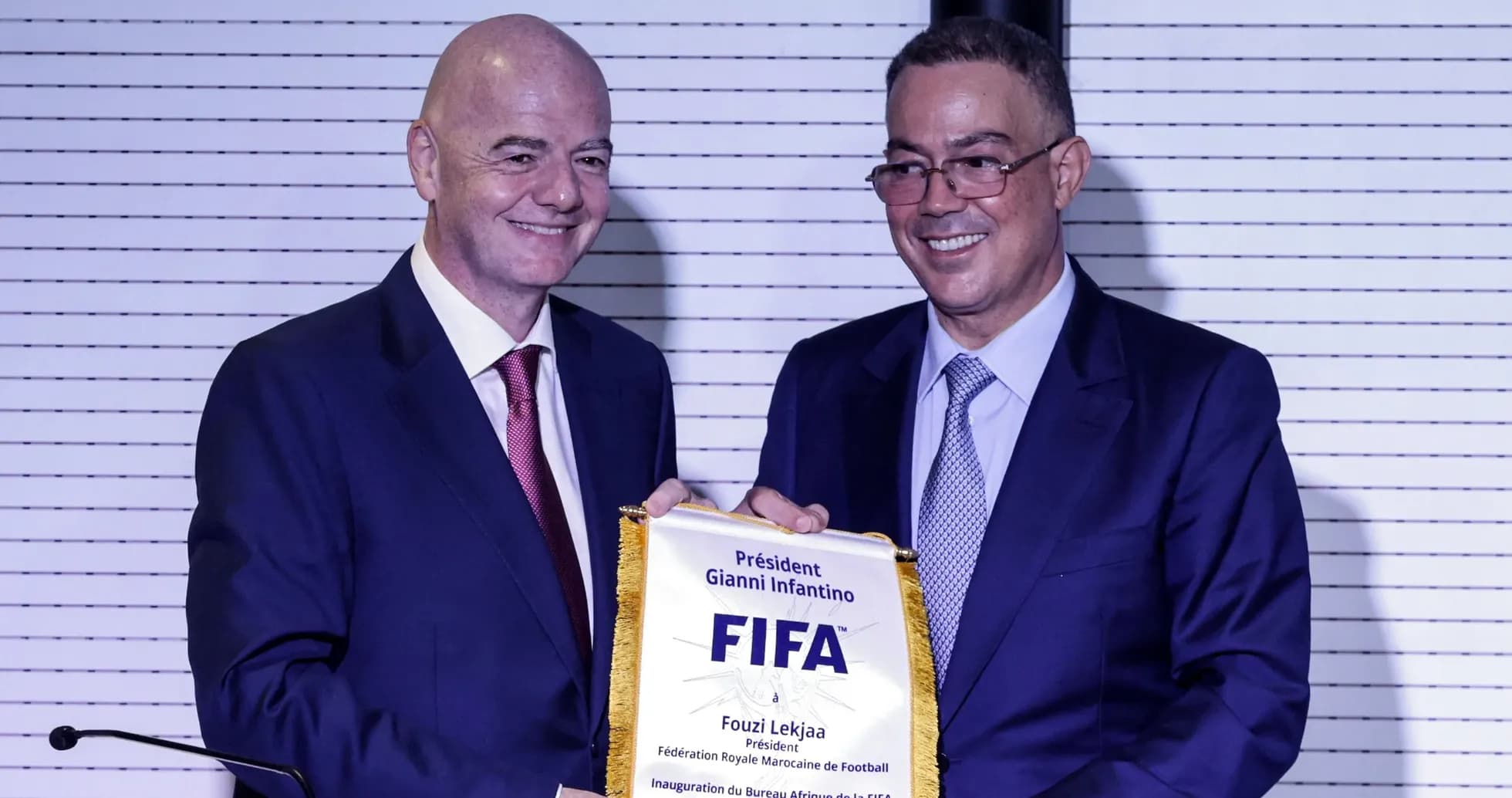
Prime Minister Aziz Akhannouch has publicly warned Fouzi Lekjaa, president of the Royal Moroccan Football Federation (RMFF), to stop promising that Casablanca will stage the showpiece match – a decision that FIFA has not yet made and one that must be shared with co-hosts Spain and Portugal.
The message was blunt. And it was delivered in front of a crowd.
“There should be some respect, brothers”
Tension flared after Lekjaa told a political party event that Morocco’s planned new mega-stadium in Casablanca would have the “honour” of hosting the 2030 World Cup final. That line went far beyond what has been agreed.
Akhannouch moved quickly to shut it down.
Speaking at a rally, he called out the federation chief directly: “Do not offer to host the big final game in Morocco while we still have not discussed the matter with our allies, Spain and Portugal. There should be some respect, brothers. Stop using electoral promises to pull the rug out from under us. These are huge matters. Deciding where the final will be held is a major issue.”
It was more than a gentle reminder. It was a political slap on the wrist, aimed at preventing a public rift with Madrid and Lisbon just as the three countries prepare to co-host a centenary World Cup spread across two continents.
The 2030 tournament, shared by Morocco, Spain and Portugal, will also feature opening fixtures in South America to honour the competition’s origins. The symbolism is delicate. So are the egos.
FIFA waits, rivals push
For now, FIFA is keeping its cards close. World football’s governing body has said only that “a decision will be made in due course” regarding the final venue.
That vacuum has created space for national lobbying. And both Morocco and Spain are pushing hard.
Morocco wants to bring the World Cup final back to Africa for the first time since Johannesburg in 2010. The government is pouring political capital and money into that dream. Central to the bid is a vast new 115,000-seat stadium near Casablanca, designed to become the largest football-specific arena on the planet and a symbol of the country’s ambition.
Across the Mediterranean, Spain is just as assertive.
Rafael Louzan, president of the Spanish football federation (RFEF), has made no attempt to hide his conviction that the final belongs on Spanish soil. “Even though no decision has been taken, I believe Spain is the place because it cannot be any other way,” he told Cadena SER radio. “As you know, we are currently world champions. I believe Spain’s organisational capacity for major events is beyond question and that is why reality dictates that the grand final cannot and must not be held anywhere other than in Spain.”
Spain’s case leans on recent success and established infrastructure. Their men’s national team claimed a second World Cup title this past summer, defeating Argentina, and the country can already point to elite, modern venues.
The renovated Santiago Bernabeu in Madrid is now a multi-purpose arena built for global events. Barcelona’s Spotify Camp Nou is in the middle of a major expansion. Between them and a network of upgraded grounds, the RFEF believes it holds the strongest hand when negotiations intensify.
Stadiums, status and a long game
Morocco’s answer is scale and symbolism.
The Casablanca project is intended not just to match Spain’s legendary venues, but to eclipse them in size. A 115,000-seat football cathedral would dwarf even the grandest European arenas and send a clear message about Morocco’s place in the global game.
Yet Akhannouch’s intervention shows that, domestically, there is a line between ambition and overreach. The government wants to drive the bid, not be dragged by electoral rhetoric or unilateral declarations from the federation.
The timeline works in their favour. The 2026 World Cup final venue in the United States – ultimately awarded to New Jersey – was not confirmed until early 2024. With that precedent, the 2030 hosts know they are in for a long campaign, not a sprint.
For now, Morocco’s leadership seems determined to cool the temperature, manage expectations at home and avoid inflaming tensions with Spain and Portugal.
The stadiums will rise, the lobbying will intensify, and the centenary World Cup will inch closer. The only question is whose flag will fly over the stadium that stages football’s biggest night.