Mikel Arteta's Masterplan for Arsenal's Resilience
Mikel Arteta is not leaving Arsenal’s resilience to chance. He is engineering it.
Delayed flights, late arrivals, overheated dressing rooms, even players eating at odd hours – none of it, he insists, should ever come as a shock. Because they’ve already lived it before the real thing.
Arteta’s chaos lab
Arsenal’s trip to Italy this week should have been routine. It was anything but.
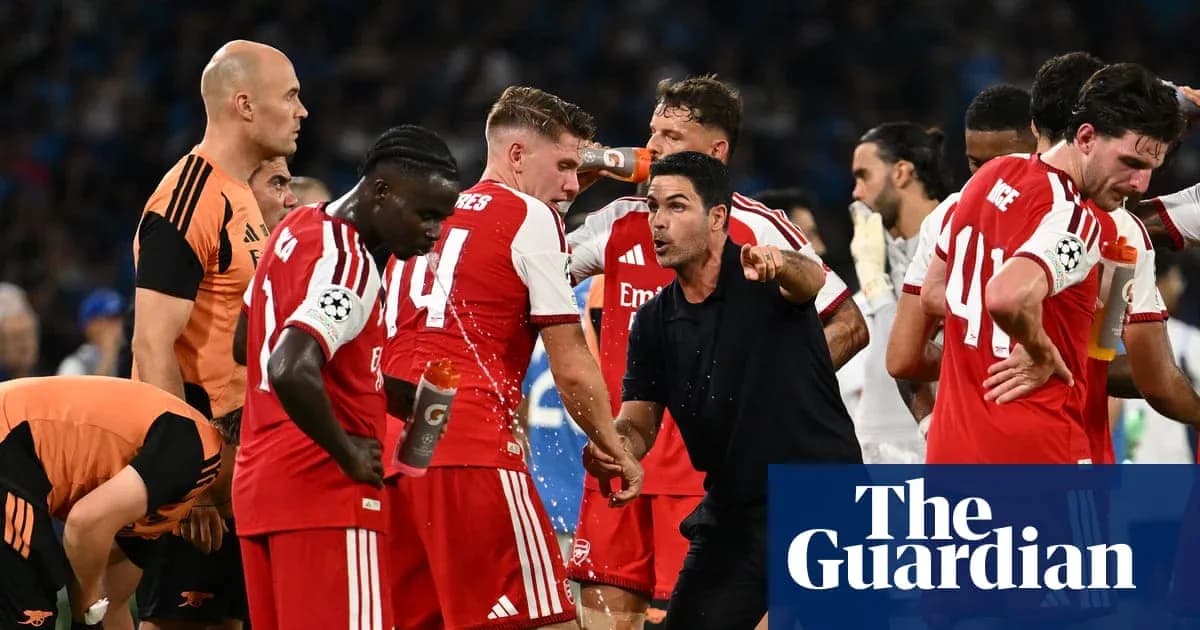
Their flight for the Champions League opener against Napoli was held up for more than five hours. By the time the squad finally landed in Naples, it was close to 10pm local time. Arteta had to scrap his pre-match press conference. Preparation, on paper, lay in ruins.
On the pitch, it didn’t matter. Arsenal ground out a 1-0 win, Martin Ødegaard striking in the second half to secure a 13th straight victory in the league phase of European competition.
For Arteta, that was no accident. This is exactly the kind of disruption he has been rehearsing.
“I love those challenges. I try to create them in pre-season,” he explained. “So when they happen, we already experience them and we already know.”
This is the same manager who has hired pickpockets during pre-season camps to jolt players’ awareness, and blasted crowd noise through speakers at training before a trip to Anfield. Now, he is leaning even harder into controlled chaos.
“So, get to the stadium very late, change the routine as soon as the players have to do something else,” he said. “Because when it happens, and it can happen, you can miss the flight, the train can be delayed, there’s so much traffic, and I don’t want the players, the staff as well, panicking.”
The message is blunt: you don’t control the circumstances, but you do control the response.
“So, when that happens, adapt to it. ‘OK, we have another two or three hours on the plane, how can we use them?’ Play together, spend some time together, sleep, use it, but certainly don’t complain and then use it as an excuse because that’s not helpful at all.”
Hotter rooms, fewer comforts
Arteta’s list of tweaks sounds minor. It is anything but.
“Just delay the meals, delay the transport, take a different route,” he said. “We have done many things: make the dressing room hotter, more difficult, more challenging, less [massage] beds.”
Every small discomfort is deliberate. Less comfort, more edge.
“Those kind of things. Because we are going to have to adapt to different contexts and we will try to anticipate it and create the best possible conditions. But when there is that element of stress or surprise on matchday, it’s important [to be prepared].”
The theory is simple: when the real storm hits – a late kick-off, a broken-down coach, a suffocating away end – Arsenal should feel like they’ve been there before.
Sunderland next, and a reminder
The next test comes on Saturday night at Sunderland, where Arsenal return with a perfect start to protect and a memory to correct.
Last season at the Stadium of Light, they were dragged into a 2-2 draw. Leandro Trossard put Arsenal 2-1 up, only for Brian Brobbey to snatch a late equaliser. Two points slipped, and a warning delivered.
They go back now with the same ambition but a different steel. At least, that is what Arteta is trying to build.
Trossard, Jesus and the ‘bad cop’
That steel is not limited to travel plans and dressing-room temperature. It runs through how Arteta handles his squad, even when the conversations turn cold.
Leandro Trossard left for Besiktas in July, but was back at the Emirates last week, watching Arsenal’s win over Chelsea, still close enough to the group to walk back into the dressing room.
“What is important is normally what happens three months later, six months later,” Arteta said. “When Trossard comes in, he’s in the dressing room with all of us, the atmosphere and the relation you have with all the players that they left, at some point their relationship has been really good. I hope that’s the same case.”
The contrast with Gabriel Jesus is stark. The Brazilian, now at Barcelona, claimed: “No one told me nothing,” after being made to train away from the main squad before his move.
Arteta sounded taken aback.
“Very surprised, to be fair, especially because with Gabriel I had an individual talk in the dressing room,” he said. “And the words that we used for each other, it was all about gratitude. So, I don’t know. It’s OK.”
He knows how these moments play out publicly. He also knows someone has to front them.
“Sometimes I understand when you have to deliver bad news or news that people don’t expect. Those things are reactive. Somebody has to be the bad cop; if I have to be, I have to be.”
Bad cop, disruptor, meticulous planner – Arteta is leaning into all of it. The question now is whether this Arsenal, hardened by deliberate discomfort and emotional edge, can turn those rehearsed crises into a season that doesn’t crack when the real pressure comes.