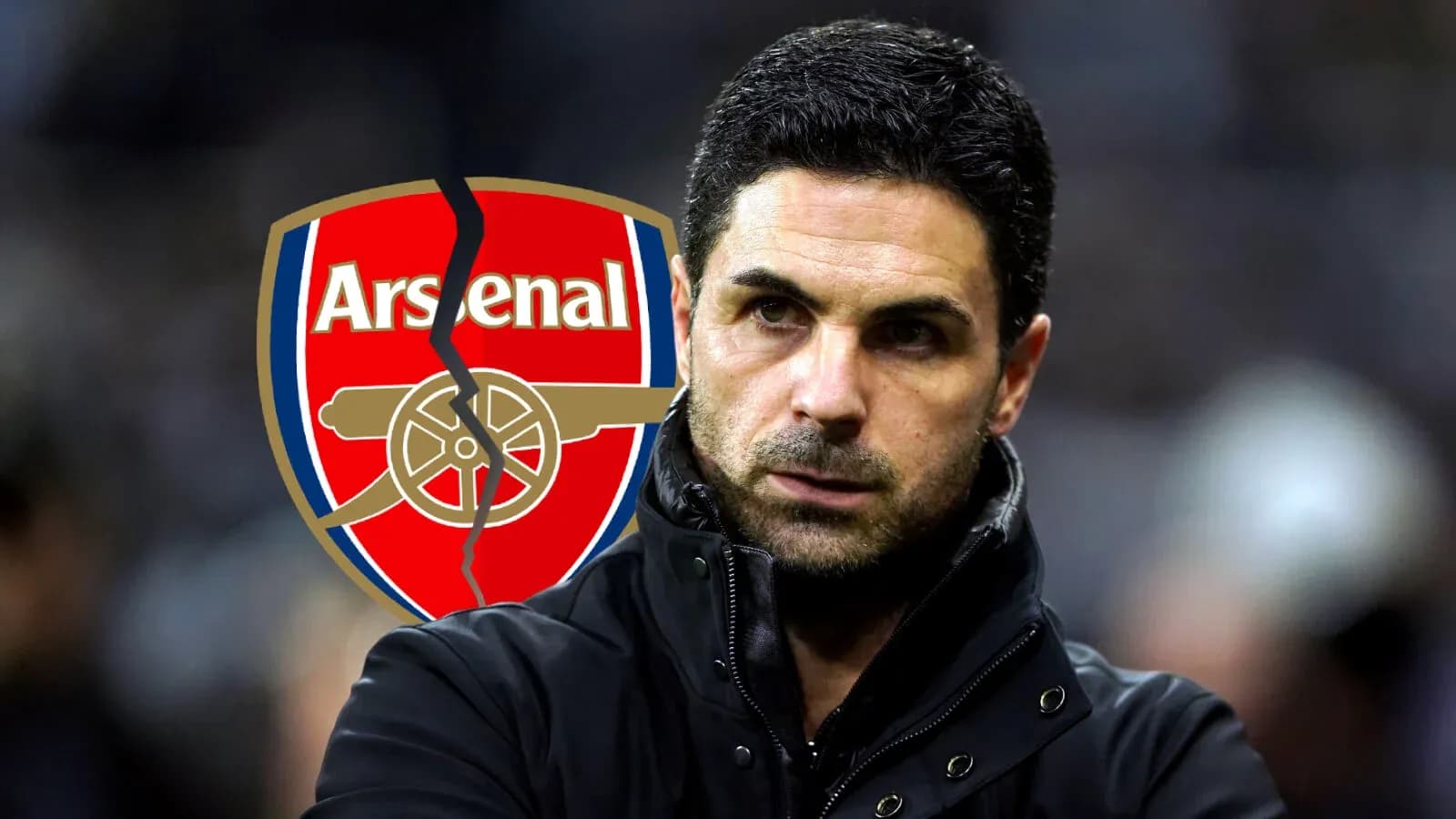
Mikel Arteta and Gabriel Martinelli: Transfer Storm Explained
Arsenal’s summer has barely started and already the noise around Mikel Arteta and Gabriel Martinelli has been cranked up to full volume. Reports claim the dressing room is “unhappy”, that players are “siding” with Martinelli, that the manager is “forcing him out”.
Except the substance behind those headlines is wafer-thin.
The fee, the form and the fury
The starting point is simple enough: Arsenal are prepared to cash in on Martinelli, with figures around £40–50m mentioned, and Al-Hilal circling. That price has sparked outrage in some quarters, especially with Tottenham reportedly ready to pay £85m for Savinho.
In the Daily Mirror, John Cross framed the key question bluntly: why is Martinelli cheaper?
On the surface, it looks jarring. Two highly rated attacking talents, one linked with a blockbuster move across north London, the other seemingly on the way out of the champions for significantly less. But scratch at the numbers and the picture shifts.
Martinelli’s last campaign produced one goal and four assists in the league. For a wide forward in a title-winning side, that return is stark. He is also effectively into the final year of his deal, even if Arsenal hold an option for another 12 months. That combination – modest output and contract situation – drags the fee down in any negotiation.
Savinho’s price, by contrast, is inflated by the deliberately skewed nature of the Omar Marmoush deal, a piece of internal market engineering that has helped distort the headline figure. It is a daft number, but a very particular kind of daft.
So when Cross insists “£50m just does not seem enough”, the counter-argument is obvious: in this context, it probably is. Clubs like Chelsea and Manchester City have spent years building a machine to maximise outgoing fees. Arsenal are only just entering that phase.
The comparison that Martinelli’s “stats measure up against the likes of Yildiz” also wilts under scrutiny. Kenan Yildiz is four years younger, hit double figures in Serie A last season and added seven assists. Different age, different trajectory, different market.
Even the question posed in the same piece – “has he really kicked on in the past two seasons?” – lands on a blunt answer: no. And that, ultimately, is why £50m feels about right.
Dressing-room revolt? Not quite
The more dramatic strand of the story comes from the supposed backlash inside Arsenal’s dressing room. Multiple outlets – the Daily Mirror, Daily Star and Goal – ran with lines about players “siding with Gabriel Martinelli” and being “unhappy” with Arteta as the forward edges towards a move.
All of them pointed to the same source: ESPN Brasil.
Drill down into that report and the “civil war” boils down to one translated paragraph:
“At the start of this season, the Brazilian wasn’t even included in Arsenal’s matchday squad and didn’t even receive a medal for winning the English Super Cup after beating Manchester City 3-0, something that even caused some discomfort among other players in the team.”
That’s it. A single reference to “some discomfort” among teammates over Martinelli’s exclusion from the Community Shield squad and the absence of a medal. Twelve words of that sentence have been stretched into claims of a squad “unhappy” with the manager and “siding” with the player.
There is a world of difference between colleagues feeling sympathy for a long-serving teammate who has been frozen out ahead of a sale, and a mutinous dressing room turning on the manager. One is basic human reaction. The other is clickbait.
Martinelli has been at Arsenal for seven years. Of course players like Gabriel Magalhaes and Declan Rice are not going to be delighted to see him pushed to the margins. It would be far stranger if they were.
Alvarez, £130m and a “condition” that isn’t one
On the incoming side, the Daily Mirror floated another eye-catching Arsenal line: “Mikel Arteta sets one condition for £130m Julian Alvarez transfer as Arsenal plan emerges.”
The implication is of a hardline ultimatum from the manager for a nine-figure deal. The reality is more mundane.
Arteta, the piece says, is ready to push for a £130m move for Alvarez but wants assurances the Argentina forward actually wants to join Arsenal. That’s not a quirky clause or a bold stance. It’s the absolute minimum requirement for any transfer of that scale.
You don’t greenlight a £130m signing and then check afterwards if the player fancies it. That’s not a condition; it’s common sense dressed up as drama.
Newcastle, time-wasting and a late twist
Elsewhere, the Premier League’s new era of added-time scrutiny has already caught out a newcomer. Ian Ladyman in the Daily Mail took aim at Newcastle head coach Matthias Jaissle after a late penalty denied his side victory against Liverpool.
Ladyman argued that Jaissle was wrong to blame referee Stuart Attwell for the spot-kick, pointing to clear contact from Lewis Hall on Victor Munoz. He then turned the spotlight back on the German’s own decisions.
Jaissle brought on Fabian Schar for Yoane Wissa in the dying moments, a move Ladyman described as “clearly designed to waste some precious moments”. Attwell responded by adding 30 seconds. Fifteen seconds into that extension, Munoz drove at Hall and won the penalty.
New guidelines this season state that players must leave the pitch within 10 seconds of their number going up or risk a booking, which strips much of the value from old-school time-wasting substitutions. The message is blunt: if you try to steal seconds, the referee will simply hand them back.
Whether the change was purely about running down the clock or also a defensive adjustment is open to interpretation. What is not is the impact: the extra half-minute gave Liverpool the window they needed.
United, Baleba and a “plan” after the fact
Manchester United have also been framed as strategic masterminds this week. The Manchester Evening News declared: “Manchester United’s transfer plan has paid off with £45million boost.”
The thrust of the piece is that Carlos Baleba, who would supposedly have cost around £115m last summer, is now available for about £70m. United, by that logic, have saved £45m by waiting.
It is a generous reading of events. Delaying a move, watching the player endure a season of underperformance, then still paying a huge fee – and doing so after the campaign has started, having already dropped points to promoted Hull with a midfield that cannot run – does not scream masterplan.
It also ignores the fact that United’s midfield strategy has veered across several names: Elliot Anderson, Mateus Fernandes, Sandro Tonali. Baleba now looks more like the latest turn in a reactive chase than the end point of a carefully plotted route.
Arsenal’s real question
Strip away the noise, and Arsenal’s situation is far less sensational than the headlines suggest. A winger whose development has stalled, whose numbers dipped badly last season and whose contract is winding down is being moved on for a substantial fee. Some teammates are uncomfortable with how cold that process looks. A manager wants to ensure a £130m target actually wants to sign.
That is not a club in crisis. It is a club trying to act like an elite operator in a brutal market.
The real test is not whether Arsenal can squeeze a few extra million out of Martinelli’s sale, or survive a day of overcooked headlines. It is whether they can turn those decisions into a squad that goes one step further than last season.
Because if this is the new, ruthless Arsenal, the only verdict that will matter comes in May.