Max Dowman Shines in Arsenal's Victory Over Ipswich
Max Dowman waited. Then, in six ruthless minutes at Portman Road, he reminded everyone exactly who he is.
Arsenal’s 16-year-old prodigy, starved of senior minutes this season, walked back into the spotlight in a 4-2 win over Ipswich and played like he’d never been away.
The first goal was pure déjà vu.
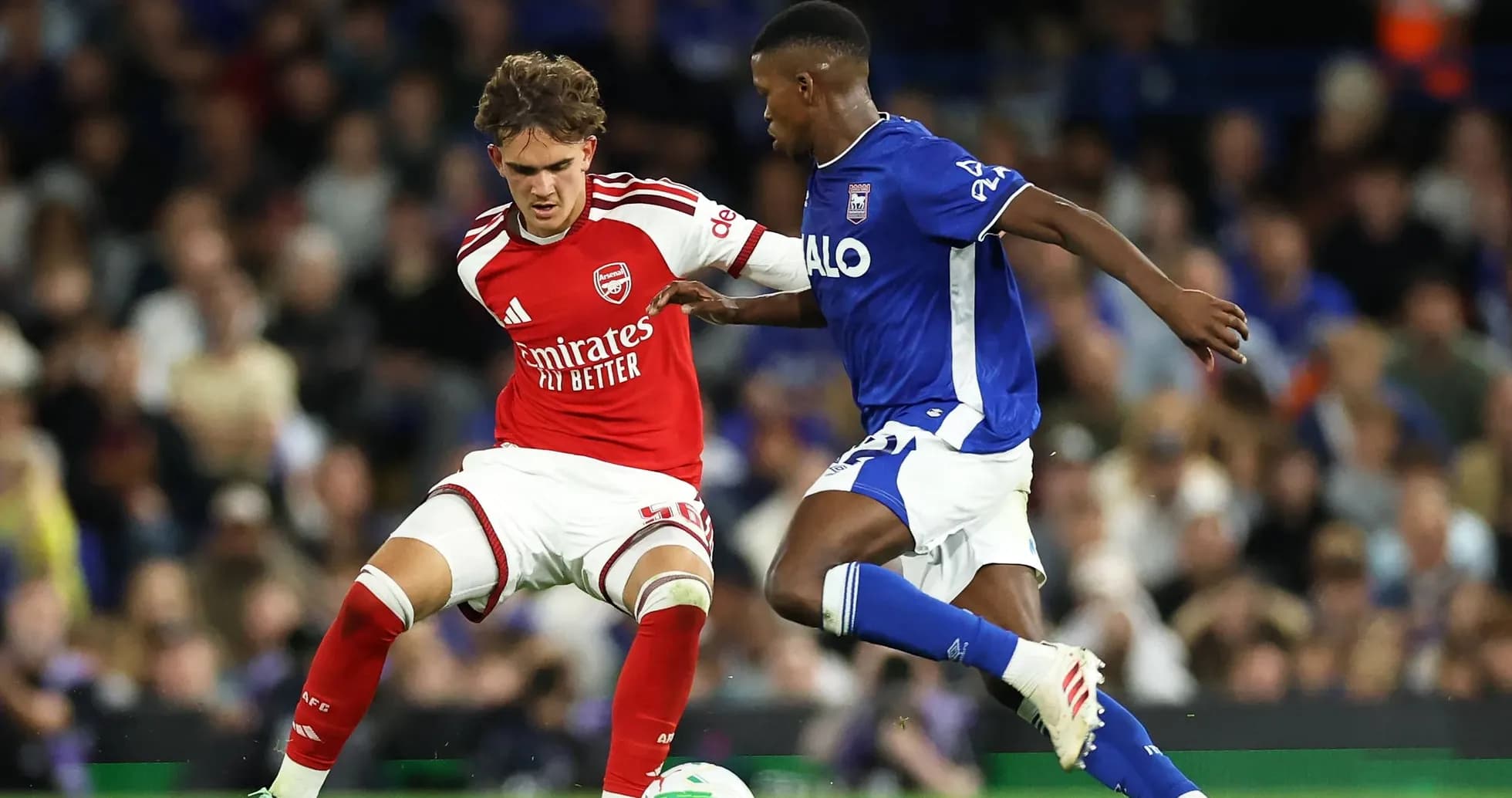
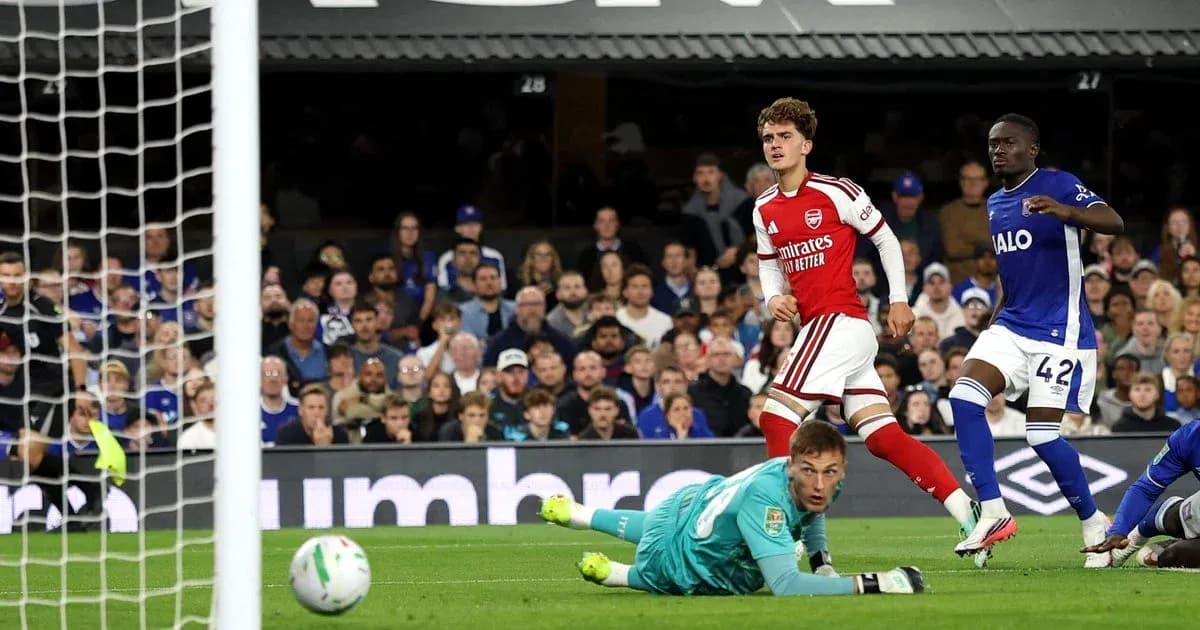
He picked up the ball and went. Full throttle, straight at a retreating back line, two brisk touches with his right to gather speed, then that now-familiar swerve of the hips. One sharp shift onto his stronger left left Cedric Kipre on the turf, before Dowman sold Christian Walton with his eyes and rolled a right-footed finish into the near bottom corner.
You’d seen it before. Everton, March. The night he became the Premier League’s youngest scorer, sending Kiernan Dewsbury-Hall one way, the Emirates the other, and the stadium into chaos. This was the same move on a different stage, the same calm in the chaos from a teenager who doesn’t seem to understand nerves.
He has already shown he can glide past seasoned professionals. He did it on a rough pitch at Mansfield Town in the FA Cup last season, when Mikel Arteta described his speed with the ball as “incredible”. The surface at Ipswich was kinder, the impression he left just as sharp.
And he wasn’t finished.
His second goal brought another flash of audacity, a nutmeg finish swept into the far corner to underline the gap in class. Two goals, two different angles, the same icy composure.
Arteta, speaking afterwards, sounded less surprised than simply satisfied that Dowman was doing what he already knew he could.
“That’s something very natural for him, and he can deliver those actions effortlessly, I would say,” the Arsenal manager said of what is fast becoming the trademark Dowman shimmy. “That’s his biggest quality. And defensively, his application, his capacity as well to sustain the actions, which is not easy.
“He’s 16 and he can create moments but consistently to go through the game, every phase with the demands that we put on him. To be able to do that is extremely difficult. And he’s coping better and better and better.”
This was not a cold reintroduction. Dowman has been ticking over with the Under-21s, playing 90 minutes and assisting their only goal in a 1-1 draw with Crystal Palace on August 22, then getting an hour in a 5-0 defeat to Chelsea on September 12. Those outings were not a demotion, simply the reality of fewer midweek fixtures for the first team, a pattern that also applied to Myles Lewis-Skelly early in his own breakthrough campaign.
Arteta had promised chances would come. On the night Arsenal’s seniors beat Sunderland 2-0 while the Under-21s lost to Chelsea, he insisted Dowman’s time would arrive. At Ipswich, the teenager repaid that faith with more than just goals.
His pressing set the tone. It was Dowman who harried Walton into the mistake that led to Noni Madueke’s strike for 2-0, a detail that did not escape his manager.
“He did the action where he regained the ball and wins it for the first goal, too,” Arteta pointed out. “That’s the thing that we need to reiterate with him because he’s an unbelievable player.
“He really wants to do it (pressing). The more he plays, the more he trains with us, and the more ready he is physically to sustain that level, he will do it. And that will help in his attacking phase because he will force errors from the opponent, and then be in a really open situation to exploit his qualities.”
The appetite to be Arsenal’s “first defender” carried deep into the second half. So did something else: a more nuanced use of his starting position.
Last season, most of his senior minutes came from the right wing. He grew up in the Arsenal academy as a midfielder, but the path into the first team often runs through the flanks, where the traffic is lighter and the spaces wider. He started centrally only twice last year, at Mansfield and Crystal Palace.
At Portman Road, he was back in the middle.
This time, though, he was not locked into a single pocket of space like Martin Odegaard or Ethan Nwaneri have been in previous seasons as Arsenal’s chief creators. Dowman roamed. He drifted left to open passing lanes for Bruno Guimaraes, popped up early around the box, and constantly offered a moving target.
When he eventually shifted out to the right as the game began to lose its edge, his intensity didn’t dip. One lung-busting recovery run to shut down a Jack Clarke counter-attack drew loud chants of “Super Max Dowman” from the away end. It was a defensive sprint that said as much about his mentality as any flick or feint.
Arteta knows what all of this means: the talent is obvious, the hype unavoidable, the responsibility his.
“If he does what he does on the pitch, I understand it’s not easy (to quieten the hype),” he said. “We have to look after him. He’s 16. You don’t see that in this league. In other leagues in Europe, that’s a totally different context. But with the demands that the (Premier League) has, we need to make sure every time we throw him in, he’s in the right context with the right preparation.
“You don’t (normally) see players (of Dowman’s age) with the capacity to handle just the physicality of the game. Not only that, but the demands that you have to put your body through in the week to be able to be in a good condition to compete, the amount of information, the challenges that you have to face. But he’s doing it really well.
“But he will dictate that in terms of how he behaves every single day and how many reasons he gives to play because he’s part of our squad.”
The context matters because there is almost no roadmap for what Arsenal are trying to do with him.
Last season, at 15 and 16, Dowman played 13 times for the first team. Nwaneri debuted at 15 years and 181 days but did not truly break through until he was 17 in the 2024-25 campaign. Barcelona’s Lamine Yamal stepped onto a first-team pitch at 15 years and 289 days in April 2023, then waited until the following season, at 16, to rack up 37 La Liga appearances.
Arteta is right about the difference in physicality. Cesc Fabregas, Jack Wilshere and Lionel Messi all made their first senior appearances at 16 for Arsenal and Barcelona, but their first full seasons did not come until they turned 17. Even Wayne Rooney’s 2002-03 explosion, when he played 33 league games (14 starts) as a 16/17-year-old, feels like a separate case, such was his physical dominance.
So when Dowman produces another “wow” moment, the temptation is to rush the story. Arsenal are trying not to. His rise will not be measured in viral clips alone, but in how carefully they manage the weeks and months between them.
The next step could come quickly. England’s first youth squads of the season are due to be named this week, and a move up from the Under-19s looks like the natural progression.
If that call doesn’t come yet, nothing really changes. Arsenal know what they have. England do too. The real question now is how far, and how fast, they dare let a 16-year-old rewrite the rules.