Manchester United's Pursuit of Manu Kone: A Midfield Dilemma
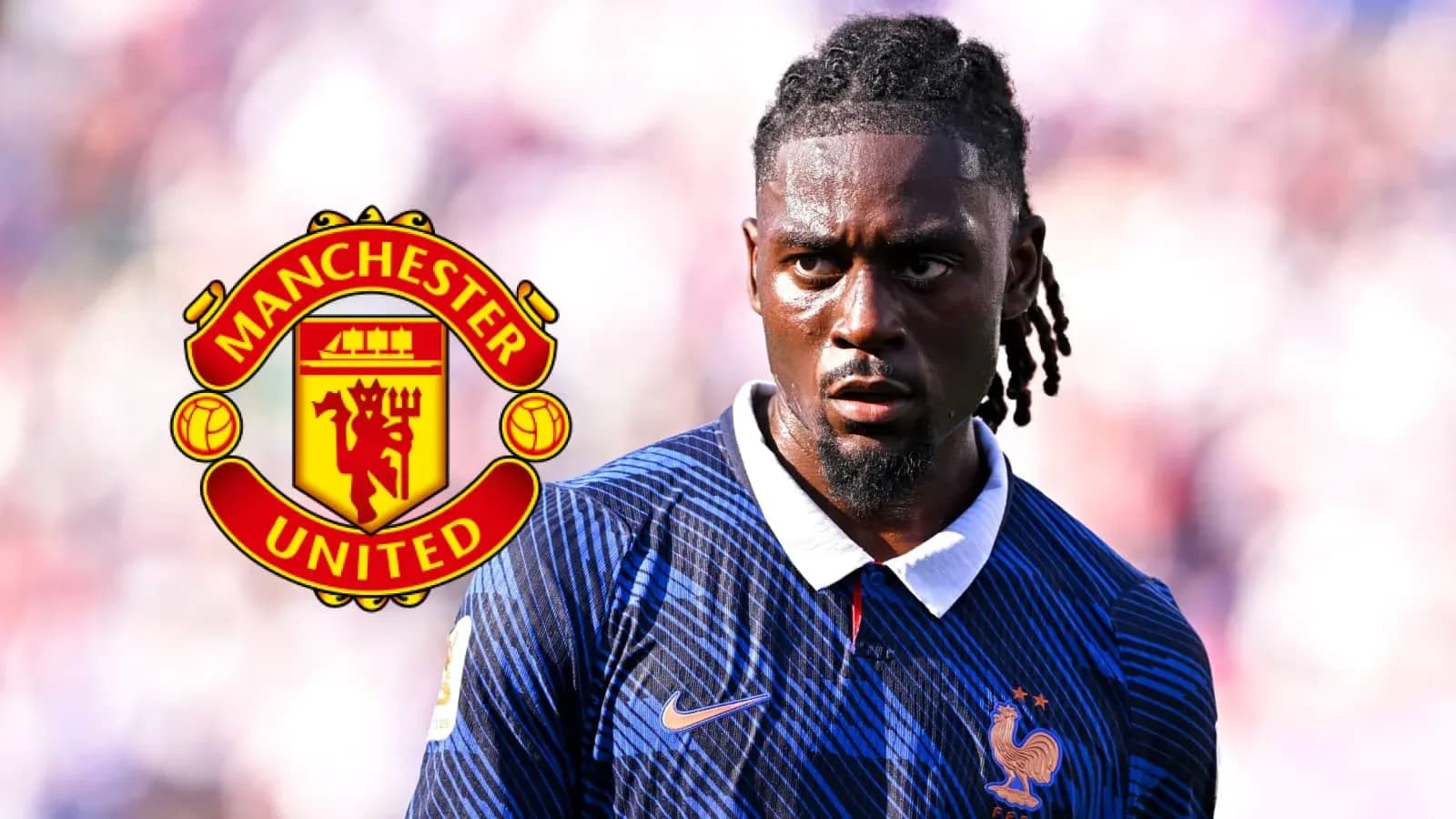
Manchester United’s search for a new midfield anchor has taken them to Manu Kone. On paper, he ticks plenty of boxes. On grass, he’s a very different answer to the question they’re trying to solve.
United’s rebuild in the middle of the pitch has been brisk and bold. Andrey Santos and Youri Tielemans have arrived to help absorb the loss of Casemiro, who walked away as a free agent, and the blow of Manuel Ugarte’s serious injury. The numbers are back up, the experience is there, the department no longer looks thin.
But the profile is still wrong for what they truly lack.
United want a Carrick, not a runner
Michael Carrick, now tasked with fixing the very problem he once solved as a player, needs his own version of… Michael Carrick. Not a destroyer. Not a pure ball-winner. A specialist who lives in front of the back four, dictates tempo, and knits the whole structure together.
Carrick the player was never an all-action enforcer. He read danger, intercepted, recycled. He anchored. That’s the kind of “six” United still don’t have.
And that’s where the risk with Kone begins.
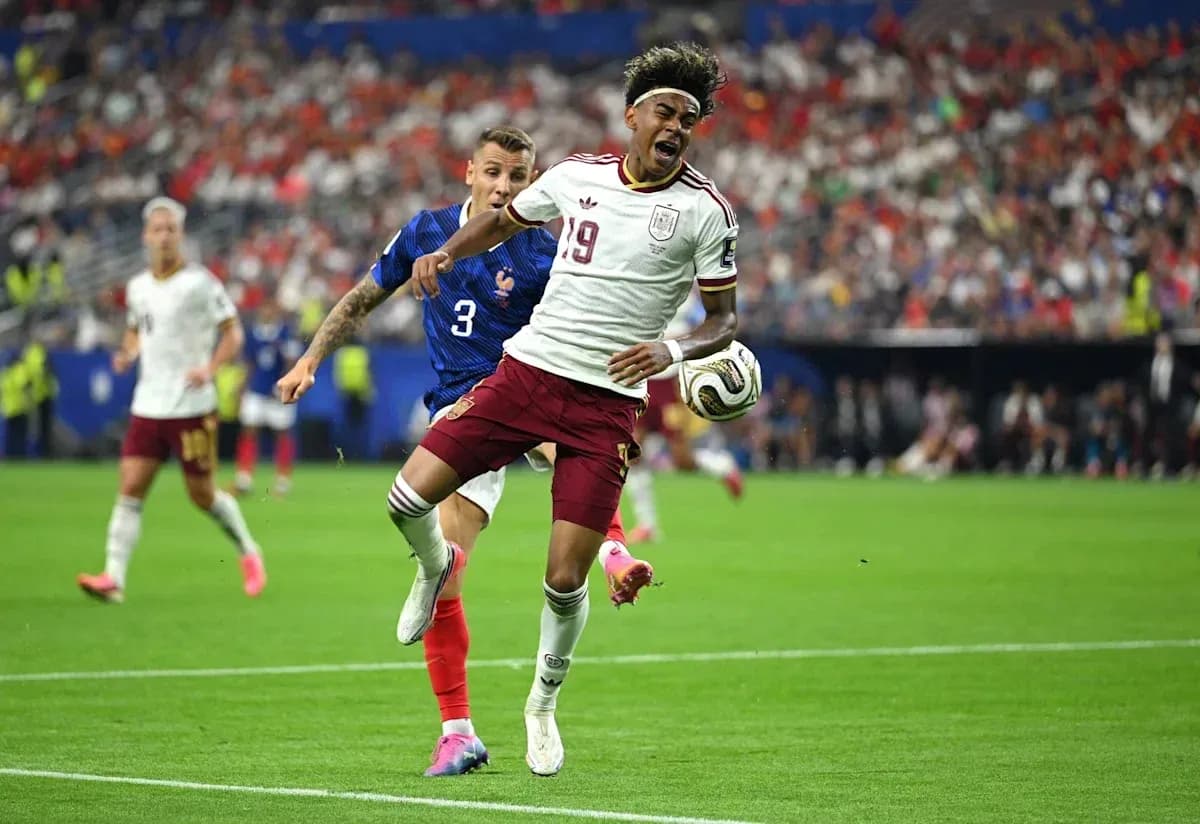
Kone has caught the eye for France at the World Cup, a tournament that can distort reputations but, in his case, has largely mirrored his club form. Now 25, he’s entering his prime after five seasons spread across the Bundesliga with Borussia Monchengladbach and Serie A with Roma. This is not a prospect. This is a fully formed top-level midfielder.
Roma treat him like one of their jewels. He arrived on deadline day in the summer of 2024 and immediately injected energy into their midfield. The impact was obvious. Just not in the way United seem to be hoping for.
A number eight in a number six conversation
Kone’s standout trait in Italy has been his ball-carrying. He doesn’t just glide; he barges. Time and again he has driven Roma up the pitch, shrugging off challenges, turning defence into attack with those surging runs that bend the shape of a game.
That’s the work of a number eight, not a holding midfielder.
His role shifted under Gian Piero Gasperini. When the coach arrived, the expectation was that Kone would be a natural fit for that high-intensity, man-to-man system honed at Atalanta. Instead, Gasperini asked him to rein it in. Kone often dropped into the defensive line when Roma built from the back, stepping in as an auxiliary defender rather than a marauding carrier.
He still had a good season. Just a quieter one. The big strides up the pitch came less often, the influence more understated. The numbers back that up: even with the handbrake partially on, he still ranked in the 78th percentile among Serie A midfielders for the average distance of his progressive carries. When he goes, he goes far.
The lesson for any buyer is obvious. You can park him in front of the defence, but you’re paying a premium to mute his best quality.
United’s history of miscasting midfielders
United should know this danger better than most. The Fred–Scott McTominay double pivot became a symbol of a club asking players to be something they’re not. Both were industrious, both had strengths, yet together they were miscast as a functional shield. It never truly worked, and the midfield has been in a state of repair ever since.
Casemiro briefly looked like the solution. For a spell, he gave United presence, leadership, and big moments. But they signed him at 30, not 25, and the decline came quickly. The dream was always a younger version of that player; reality never matched.
Then came Ugarte, whose tackling numbers in Ligue 1 with PSG suggested a natural fit as a Premier League “six”. Those metrics haven’t translated cleanly into United’s system either.
Now Tielemans and Santos have arrived with a different brief. Neither is there to be the deepest midfielder. That label is being loosely attached to Kone, as if he can simply be dropped into the slot and told to stay.
He can “do a job” there. That’s not the same as being the right man for the job.
A box-to-box midfielder with blunt edges
Kone’s limitations are as important to understand as his strengths. If he is to convince fully as a box-to-box midfielder, his finishing has to improve. Four goals in 82 games for Roma tell their own story. He reaches promising positions but often lacks conviction in the final third.
Gasperini himself addressed it in December, when Kone finally scored his first goal of the 2025–26 campaign. The coach admitted that if Kone added regular goals, he’d already be operating at a higher tier than Roma. The numbers since then have barely shifted the perception: 22 more appearances for club and country, just one additional goal.
That return feeds a lazy assumption. Because he doesn’t score and because he can tackle, he must be a defensive midfielder. But at his best, he isn’t. He’s a central midfielder who can handle defensive work, not a dedicated shield.
There are other rough edges. His off-the-ball movement when his team has possession still needs sharpening. Too often last season he failed to drift into the right pocket to offer a passing option, or he clogged a passing lane by occupying the wrong space. For a pure holding midfielder, that positional detail is non-negotiable.
The price of potential and the cost of confusion
The market muddies everything. How do you price a midfielder whose game is built more on carrying and duels than on goals and assists? Recent deals suggest output isn’t the only currency. Elliot Anderson delivered fewer than 10 goal contributions last season and still fetched £116m from Manchester City. Spurs spent £85m on Mateus Fernandes, another midfielder United admired before stepping away.
Roma will push Kone into that bracket of premium assets. Their asking price is expected to sit at £50m or more, especially after his World Cup exposure. They already rejected an offer of around £38m from Inter last year.
At that level, any buyer has to be absolutely clear about what they are getting. United, in particular, cannot afford another expensive compromise.
How Kone could work – and where he might fit better
United’s 4-2-3-1 shape does offer a possible solution. Kone could operate in a double pivot with Tielemans or Santos, sharing the responsibilities. One goes, one stays. Then they swap. Simple on a tactics board, harder to execute over 50 games.
The model is already there. For France at the World Cup, Kone has played alongside Adrien Rabiot and Aurelien Tchouameni, both comfortable sitting when he bursts forward. At Roma, Bryan Cristante often provided that balance, even if the Italian himself pushed on at times.
For United, the blueprint would be clear: when Tielemans roams, Kone holds; when Kone drives, Tielemans drops. It has to be genuinely shared, not a situation where one player becomes the de facto holder and the other the permanent runner. Tilt that balance too far and you either expose the defence or waste Kone’s engine.
Other clubs may be better placed to give him that platform. Atletico Madrid have hovered around his name. Arsenal were linked before turning their attention towards Bruno Guimaraes. In north London, Kone could, in theory, thrive with Martin Zubimendi as the fixed anchor, much as Declan Rice benefited from a deeper partner before being unleashed higher up.
Liverpool remain a name to watch. They tracked Kone during his Bundesliga days and are again in the market for a number six. If Andoni Iraola leans into a 4-2-3-1, pairing Kone with someone like Ryan Gravenberch could produce a dynamic, rotating double pivot that suits his strengths.
A top player – if you let him be one
Kone is a high-quality midfielder. He’s not the finished article, but he has time and the tools to close the gaps in his game. The club that lands him this summer will be getting a serious talent.
Whether they get a solution or another expensive puzzle piece depends on one decision: do they sign Manu Kone to sit, or do they sign him to run?