Manchester United's Left-Back Dilemma: Risks and Decisions
As the clock nudged past 23:00 BST on 1 September and the transfer window finally slammed shut, one question echoed around Manchester United’s fanbase.
What about a left-back?
All summer, as arguments raged over Michael Carrick’s first full rebuild and where the money should go, one weakness seemed obvious. United had a soft spot on the flank. Everyone could see it.
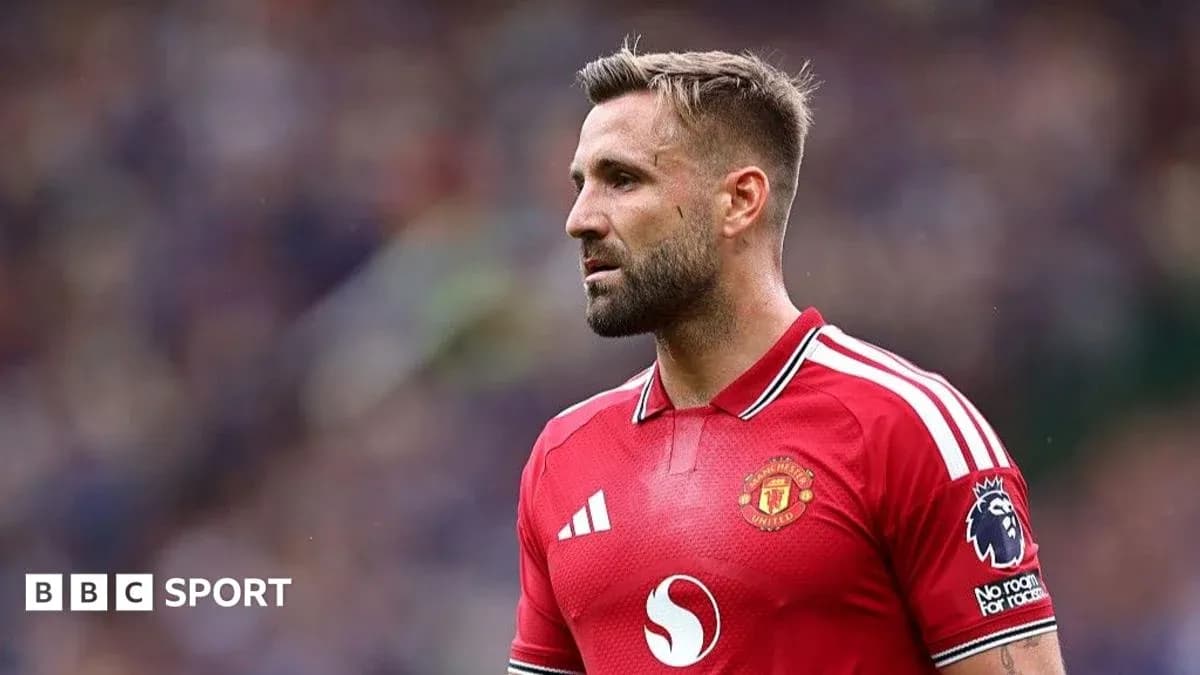
Luke Shaw, at 31, remains the only senior specialist left-back. He started all 38 Premier League games last season, a remarkable feat given his injury history and the sheer physical load. But Tyrell Malacia’s contract was allowed to run down and he departed at the end of June. A new campaign could stretch beyond 60 matches across four competitions. No club with serious ambitions would willingly walk into that with one orthodox option.
Yet that is exactly what United have done.
Targets identified, deals denied
It was not for lack of drawing up a list. United went through options: Lewis Hall at Newcastle, Alejandro Balde at Barcelona, Jorge Salinas at Racing Santander. Names with upside, resale value, and the kind of profile the club now prefers.
The shortlist eventually narrowed to a bold, politically charged idea – Rayan Ait-Nouri, on loan, crossing Manchester from City. The concept made football sense. The reality did not. City refused. For any deal to progress, United would have had to include an obligation to buy later. They chose not to bend and instead decided to wait for what they regard as first-choice targets.
By then, the clock was ticking. The deadline has now passed. United and Carrick are locked into a plan that looks less like oversight and more like a deliberate, calculated gamble.
The Hall question – and a £70m answer
Inside Old Trafford, there is no doubt about how highly they rate Lewis Hall.
If Newcastle had been open to a sensible deal, United would have pushed it through. But Newcastle, already stripped of key players by Premier League rivals this summer, made it clear: prising away a 22-year-old they see as a cornerstone would cost a huge fee.
United’s budget was finite. Something had to give.
Faced with that reality, the club doubled down on what they viewed as the real priority – midfield. The result was a £70m commitment to sign Carlos Baleba from Brighton. The message internally was simple: Hall can wait until next summer. The left-back issue, they believe, can be managed for one more season.
Elsewhere on the list, the story was similar. United would have taken Balde on loan. Barcelona would only sell. Salinas had a relatively low release clause, but Atletico Madrid were always favourites and stayed there. By the time United turned to Argentina defender Nicolas Tagliafico, they missed out and, in truth, had already started looking away.
That late move for Ait-Nouri, prompted by an agent’s approach that had initially been parked, betrayed a nagging doubt. United might be committed to the path they’ve chosen, but they are not completely convinced by it.
Shaw, Mazraoui… and a teenager in limbo
The plan, laid bare, is stark.
Shaw remains first-choice. Noussair Mazraoui, naturally a right-back and often used there, becomes the primary back-up on the left. He plays that side for Morocco and can tuck in, invert, and build from deep. Behind them, Diogo Dalot is expected to switch flanks when required, as he has done before. Then comes Harry Amass.
Amass is the odd case in all this. A natural left-back, 19 years old, from United’s academy. He impressed during a loan spell at Sheffield Wednesday last season before injury struck soon after he moved to Norwich in the winter window. This pre-season, he shadowed Shaw and caught the eye with mature, composed performances.
Yet United were willing, even planning, to let him go.
Two years ago, Erik ten Hag left him out of the Community Shield squad, a decision that raised eyebrows given Amass had handled himself well against Mo Salah in a pre-season game in the United States just a week earlier. Ten Hag’s concern was physicality. Amass, he felt, wasn’t ready for the demands of senior football.
Two years on, he is bigger, stronger, and further along his development curve. Interest has been constant. Multiple clubs have asked about taking him, and his absence from United’s Premier League 2 match against Leicester on Monday only fuelled the belief that a loan was imminent.
No move came. The window closed. Amass stayed.
Now, his role is unclear. Is he a genuine part of Carrick’s senior plans, or an emergency option who will train with the first team and play with the second? United have not answered that question publicly. The squad list will do it for them soon enough.
Yoro’s switch and the full-back experiment
One reason United feel comfortable stretching the definition of “cover” at full-back lies on the opposite flank.
Leny Yoro, signed from Lille for £52m in 2024 as a central defender, has been repurposed in pre-season as a right-back. Carrick used him there repeatedly over the summer. Against Ipswich on Sunday, Yoro came on for Dalot on the right at the same time Mazraoui replaced Shaw on the left. The shape shifted, but the idea was clear: United want defenders who can move across the line.
At 20, Yoro is raw in the role. He is still learning the angles, the timing of overlaps, when to step into midfield and when to hold the width. But he has pace, strength, and composure on the ball. United fans only need to look across the city at Josko Gvardiol, who arrived at Manchester City as a central defender and has since grown into a formidable full-back, to see how such experiments can pay off.
This is the bet United have placed. Versatility over volume. Quality over a quick fix.
Scar tissue from past mistakes
The other side of the argument is written in recent history.
United have been here before – late-window signings to plug gaps, deals done because the clock demanded action, not because the player truly fit the plan. Alex Telles. Matteo Darmian. Sergio Reguilon. All arrived with hope, none reached the standard a club of United’s stature demands.
This summer, the club took a hardline stance on fees. They refused to pay more than they believed a player was worth. They walked away from negotiations rather than cave to demands they saw as inflated. That discipline has been missing in previous eras. It has cost them, on and off the pitch.
So they stuck to their principles. No panic buy. No Telles 2.0. No short-term plaster over a long-term wound.
On paper, it makes sense. On balance, it is probably the right call.
But football does not live on paper. It lives in the chaos of a December injury crisis, in the away end at Anfield when Shaw pulls up on 20 minutes, in the spring run-in when every point feels like a verdict on the season’s strategy.
United have chosen to trust Shaw’s body, Mazraoui’s adaptability, Dalot’s versatility, Yoro’s education, and a teenager whose future role is still undefined.
The logic is clear. The risk is obvious.
The next few months will decide which one wins.